

You can now add Healthify as a preferred source on Google. Click here to see us when you search Google.
Ageing – what's normal and when to seek medical advice
Key points about ageing – what's normal
- Although many young people fear getting old, for most people the latter part of life can be a time of great enjoyment, activity and usefulness.
- But your body changes as you age and it's good to know what to expect and when to seek advice.
- There's no such thing as a typical older person, as everyone ages differently. Some people in their 80s are still as mentally and physically active as people 50 years younger.
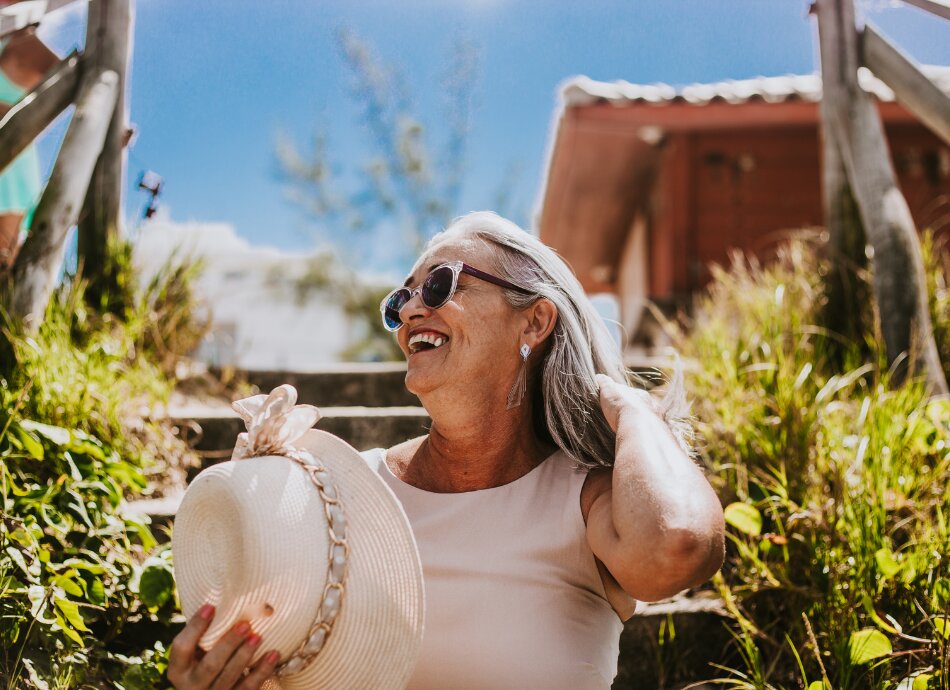
As you get older your body changes, which affects your body systems and organs.
These changes happen because of damage to your cells which builds up over time. Gradually your ability to do things mentally and physically slows down and your risk of illnesses gets higher. These changes are not only to do with your age in years, but also the places you’ve lived and the people and events in your life.
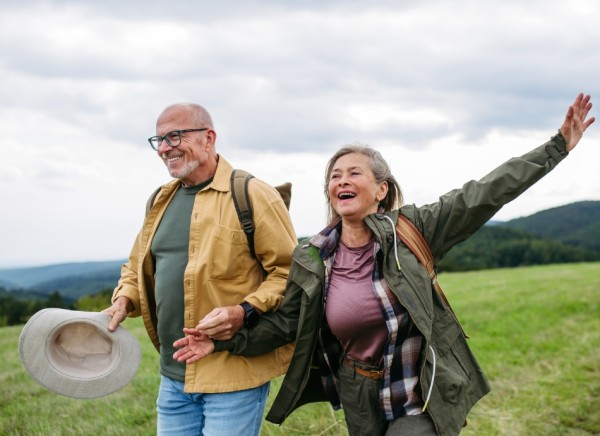
Image credit: Canva
Here's what's happening in different parts of your body as you age, and what you can do to stay fit and healthy for longer.
Your blood vessels become less stretchy, meaning your heart has to work harder to pump the blood through them. This can lead to high blood pressure.
The way your cardiovascular system adjusts to changes in activity and body position may not work as well as you get older. Your heart doesn’t speed up as much when you exercise. You’re more likely to have a low heart rate (bradycardia) or a large drop in blood pressure when you stand up (postural hypotension).
It will help if you:
- stay physically active every day
- eat a healthy diet
- don’t smoke
- manage your stress
- get enough sleep.
Read more about cardiovascular health.
Bones tend to shrink and lose their density, meaning they become less strong and can break more easily. You might notice you're not as tall as you used to be. Joints repair more slowly. Muscles lose strength and become less flexible impacting on your co-ordination, balance and stability.
It will help if you:
- get plenty of calcium
- get enough vitamin D
- stay physically active including weight-bearing exercise
- don’t smoke and limit alcohol.
Read more about bone density.
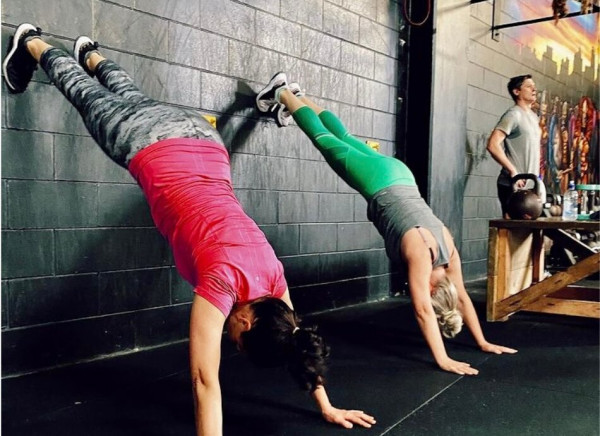
Image credit: Healthify He Puna Waiora
Your metabolism slows down in your 50s and 60s, meaning that you don’t use energy from food in the same way. It’s common to have a larger body than when you were younger.
Or you may find you lose too much weight, especially in your 80s and beyond. This can be because of poor appetite. Both your sense of taste and your sense of smell get less sensitive as you age. Your stomach may not be able to stretch as much as it used to, so you feel fuller faster.
Weaker muscles between your oesophagus (food pipe) and your stomach can cause heartburn. Your gut may not be as efficient at absorbing nutrients from your food.
Your large intestine moves more slowly as you age making it more likely you’ll get constipated. Being less active, not drinking enough water, not eating enough fibre and taking some medicines can make it worse.
It will help if you:
- stay physically active every day
- eat a healthy diet including whole grains, vegetables and fruit – especially kiwifruit
- drink plenty of water
- go to the toilet whenever you feel the urge to have a bowel movement (poo) and don’t hold on.
- put your feet up on a low stool when you sit on the toilet.
Read more about healthy eating, constipation and serving sizes for people of different ages.
Your bladder may not stretch as much as you get older, meaning you need to urinate (wee) more often. Weakening of your bladder muscles makes it harder to completely empty your bladder and you may lose some bladder control (urinary incontinence). For men, this can be made worse by having an enlarged prostate.
It will help if you:
- empty your bladder regularly
- aim for a healthy weight
- don’t smoke
- do pelvic floor exercises
- avoid things that can irritate your bladder – caffeine, acidic foods, alcohol and fizzy drinks can make incontinence worse
- avoid getting constipated (bowel blocked up).
Read more about pelvic floor exercises for men and pelvic floor exercises for women.
Your sexual needs and enjoyment may change as you get older. Sex may become uncomfortable for women due to vaginal dryness and men may find it more difficult to get or keep an erection.
It will help if you:
- talk to your partner about what is happening for you and what you need
- remain physically active
- talk to your healthcare provider as there may be treatment that can help.
Read more about sex and ageing.
As your brain gets older you may find your memory isn’t as good as it was (eg, you forget names or words) or you can’t think as clearly.
These types of memory are expected to get worse when you get older
- Working memory – short term storage and processing of information over seconds or minutes, such as a person’s name or phone number, or directions.
- Prospective memory – remembering to do something in the future, such as taking your medicines at the same time each day.
- Episodic memory – remembering events and the situation they happened in. You may be able to learn new information and recall recently learned information, but the memories might be less accurate and detailed, and older memories will likely stay longer than newer ones.
These types of memory are usually held longest
- Semantic memory – your lifetime of knowledge, ideas and concepts, such as historical knowledge and vocabulary.
- Procedural memory – learned skills needed to do things, such as how to ride a bike and how to unlock a door.
It will help if you:
- stay physically active every day
- stay mentally active with activities and 'thinking' games such as Scrabble or Sudoku
- learn new things
- stay socially active to improve your mental wellbeing
- eat a healthy diet and limit alcohol as it can add to confusion
- don’t smoke
- wear hearing aids and glasses if you need them
- treat cardiovascular risk factors (eg, high blood pressure, high cholesterol and diabetes) as they may increase loss of cognitive abilities.
Read more about forgetfulness.
Your vision and hearing can deteriorate as you age. This can affect your social connections, which affects how active your brain is.
The whites of your eyes look yellower as you get older, and you make fewer tears so your eyes may feel drier. Your close-up vision tends to get blurrier, and from your 60s you might notice colours are less bright and it's harder to see in dim light.
It will help if you:
- have regular check-ups
- wear glasses and hearing aids if you need them
- wear sunglasses and a wide-brimmed hat to protect your eyes when you’re outside
- wear ear plugs when you're around loud noises.
Read more about vision problems (cataracts, macular degeneration and glaucoma) and hearing loss.
Your gums might recede (pull back from your teeth) as you get older, and some medicines can give you a dry mouth. This makes tooth decay more likely.
It will help if you:
- brush your teeth twice a day and floss (or use an interdental cleaner) once a day
- have regular check-ups.
Ageing skin gets thinner, becomes more fragile and bruises more easily. Your skin may get drier as the natural oils decrease. You lose the normal fat under your skin in some places. Healing takes longer. Wrinkles, sagging, broken blood vessels, age spots and skin tags are normal signs of ageing.
You also sweat less, so it can be harder to cool off when it’s hot.
Your hair is made in hair follicles in your skin. You’re born with all of your hair follicles, and after many years hair growth slows. Your hair starts to lose its colour – you go grey, and then white. One by one hair follicles stop growing hair, which causes your hair to thin. This is usually most noticeable around your hairline.
Genes for hereditary hair loss make this happen sooner and in a different pattern.
It will help your skin if you:
- are gentle with your skin, bathe in warm rather than hot water, use mild soaps or moisturisers
- use sunscreen and cover up when outside
- don’t smoke.
Read more about skin cancer.
It will help your hair if you:
- let your hair air dry or blow dry it on a low heat
- let your hair dry for a while before combing it.
By about the age of 60, most people start to experience lighter, more disturbed sleep. As you get older, the time you spend in deep sleep falls and the time spent in light sleep increases. Your sleep tends to be interrupted by periods of wakefulness. Being awake between 30 to 50 minutes at night is normal for a 60-year-old.
Older people tend to fall asleep earlier in the evening (8 to 9pm) than younger people and wake up earlier (4 to 5am). You may find you need fewer hours of sleep to feel awake during the day.
Sleep difficulties can be caused by health conditions that come with ageing, such as joint pain from osteoarthritis or breathlessness from heart failure. Don't assume this is a normal part of ageing, talk to your healthcare provider.
Read more about sleep problems.
Some changes in how your body works can be explained by natural ageing processes. However, it's important to seek advice from a healthcare provider if you're concerned that something else might be going on.
If you notice changes in your patterns (sleep, bowel, appetite) or symptoms (pain, shortness of breath) don’t assume it’s something you have to put up with just because you’re getting older. There may be a treatable reason, so talk to your healthcare provider and make a plan to improve your quality of life.
Talk to your healthcare provider if you're experiencing any of these:
- frequent falls – also see falls prevention
- significant memory loss
- incontinence (loss of bladder or bowel control)
- difficulty in walking
- anxiety or depressed mood
- painful joints
- change in your bowel habits such as constipation, blood in your poo (faeces, stools) or diarrhoea (runny poo)
- pains in your chest or indigestion
- breathing problems.
Brochures
Eating for healthy older people(external link) HealthEd, NZ, 2021
Physical activity for older people (65+)(external link) Ministry of Health, NZ, 2013
People living in aged residential care(external link) interRAI, NZ, 2020
Apps
Exercise apps for older adults
Healthy ageing and wellness apps
Self-management apps
References
- Ageing and health(external link) World Health Organization
- Healthy ageing – the skin(external link) Better Health, Australia, 2023
- Managing constipation in older people(external link) BPAC, NZ, 2019
- Age-related cognitive decline – prevention and future planning(external link) BPAC, NZ, 2020
- What's normal (and what's not) as you age(external link) WebMD, US, 2025
- Hair loss – who gets and causes(external link) American Academy of Dermatology Association, US, 2026
Institute of healthy ageing – rehabilitation, ageing, and clinical studies(external link) Waikato District Health Board, NZ
Kaumātuatanga– the needs and wellbeing of older Māori(external link) Te Whānau o Waipareira Trust, NZ, 2018
Maximising the health of our older patients(external link) Goodfgellow Unit MedTalk NZ, 2018 (Duration 15:50) Dr Helen Fulcher, Goodfellow GP Advisor, talks with University of Auckland Head of School of Population Health and general practitioner Professor Ngaire Kerse.
See also Healthy ageing strategy for healthcare providers.

HealthEd, NZ, 2021
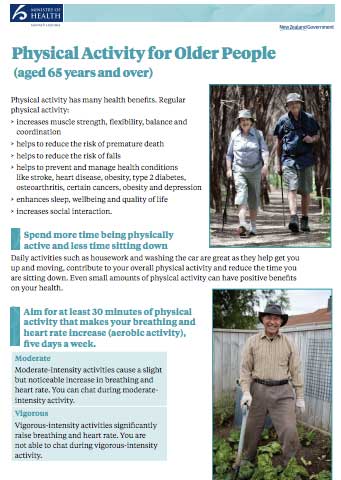
Ministry of Health, NZ, 2013
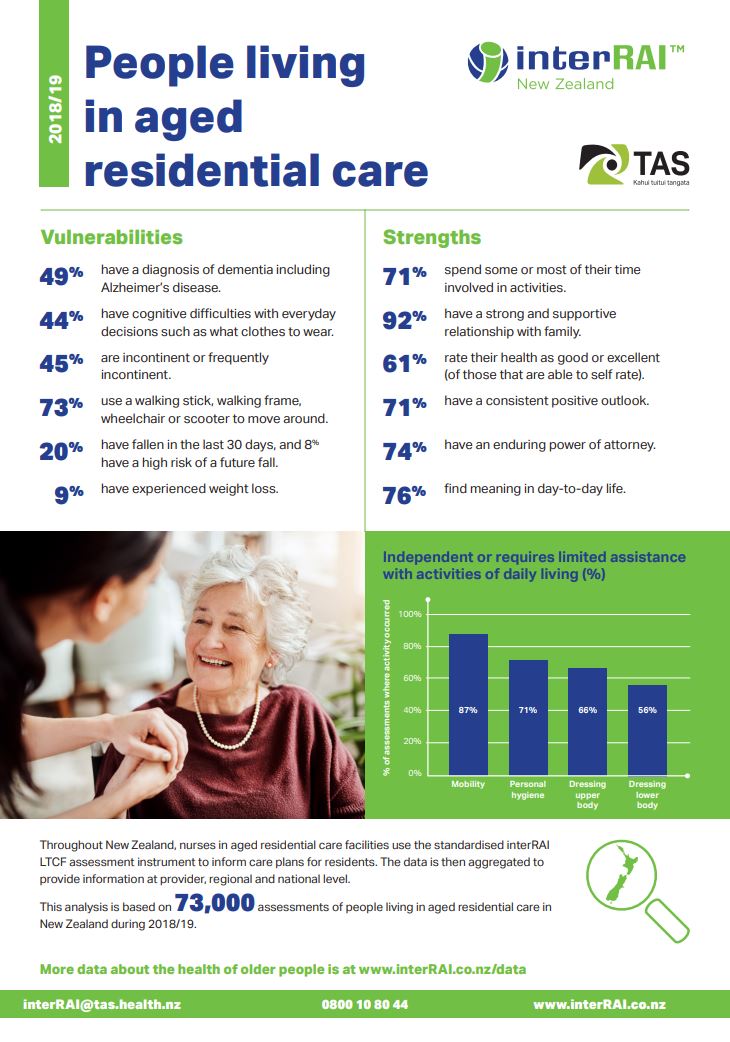
interRAI, NZ, 2020
Need help now?

Credits: Healthify editorial team. Healthify is brought to you by Health Navigator Charitable Trust.
Reviewed by: Dr Emma Dunning, Clinical Editor and Adviser
Last reviewed: