

You can now add Healthify as a preferred source on Google. Click here to see us when you search Google.
Kidney injury – acute
Sometimes called acute kidney failure
Key points about acute kidney injury
- Acute kidney injury (AKI) means that your kidneys have suddenly stopped working as well as they used to.
- It usually happens over hours or days.
- Acute kidney injury can happen to anyone, but it’s more common if you're an older adult and already unwell with other conditions.
- It affects both your kidneys and can range from minor loss of kidney function to complete kidney failure.
- The earlier it’s detected, the better the chances are that treatment can help your kidneys fully recover.
- If you’re at increased risk of AKI, you need to take steps to protect your kidneys.

Acute kidney injury (AKI) means that your kidneys have suddenly stopped working as well as they should. This might have happened in the past few hours, days, or rarely weeks. AKI is sometimes called acute kidney failure.
The term acute kidney injury means that something has stopped your kidneys from working properly – this most often happens if you're unwell from another illness. It doesn't necessarily mean that your kidneys have been physically damaged by an accident or injury.
AKI affects both your kidneys and can range from minor loss of kidney function to complete kidney failure. If it's not picked up in time, your kidneys can get worse quickly and stop working. This can lead to permanent damage and can be life-threatening if not found within hours and treated quickly.
AKI is not the same as chronic kidney disease (CKD), which is when you lose kidney function gradually over a long period of time. Read more about chronic kidney disease.
You can also read about how your kidneys work.
AKI most often happens because there's poor blood flow to your kidneys. This can be caused by:
- low blood volume due to bleeding, vomiting or diarrhoea, or severe dehydration
- your heart pumping out less blood than normal due to heart failure, liver failure or sepsis
- medicines that reduce blood pressure or blood flow to your kidneys, eg, ACE inhibitors, some diuretics or non-steroidal anti-inflammatories NSAIDs.
AKI might also be caused by:
- a problem with your kidneys, such as inflammation of the filters in the kidney (glomerulonephritis), the blood vessels (vasculitis), or other parts of the kidney
- a reaction to some medicines, infections or the dye used in some types of X-rays
- a blockage affecting the drainage of your kidneys, eg, due to an enlarged prostate, ovarian or bladder cancer, or kidney stones
- physical trauma, such as from an accident or injury.
Acute kidney injury (AKI) can happen at any age, but it's more common for older adults and people who are in hospital for surgery or another medical problem (eg, heart failure or liver failure).
You’re at increased risk of AKI if you:
- are dehydrated, eg, when you have diarrhoea, vomiting, or 'gastro' (a tummy bug)
- are taking certain medicines (see below), especially if you take them while you're unwell
- are over 65 years of age
- have a long-term condition, eg, heart failure, liver disease or diabetes
- have an existing kidney problem, such as chronic kidney disease or inflammation of your kidneys
- have a severe infection – particularly an infection of your kidneys
- have a blockage of one or both of the tubes (ureters) leading from your kidneys to your bladder (eg, because of kidney stones), bladder cancer or an enlarged prostate .
If you're at increased risk of AKI, it's important to protect your kidneys.
Medicines and acute kidney injury
Taking some medicines increases your risk of getting AKI, especially if you take these medicines while you’re dehydrated, or if you take a combination of these medicines.
The combination of an ACE inhibitor or angiotensin receptor blocker (ARB) with a diuretic is often used to treat high blood pressure and heart failure. It's NOT safe to take these medicines together with non-steroidal anti-inflammatories (NSAIDs). This is called the ‘triple whammy’ effect and can damage your kidneys.
Examples of medicines that can increase your risk of AKI
- non-steroidal anti-inflammatory medicines (ibuprofen, diclofenac)
- ACE inhibitors (enalapril, lisinopril, quinapril)
- ARBs (losartan, candesartan)
- diuretics (furosemide, spironolactone)
- lithium
- some antibiotics
- dyes used in some X-ray tests
Rarely, proton pump inhibitors (omeprazole, lansoprazole, pantoprazole) may cause kidney inflammation.
Symptoms of acute kidney injury include:
- passing less urine (pee/mimi) than usual
- nausea (feeling sick) or vomiting (being sick)
- feeling tired and short of breath
- loss of appetite
- swelling of your legs or other parts of your body
- feeling confused, anxious and restless, or sleepy.
You may also have symptoms of the underlying condition that’s caused AKI, such as kidney stones or infection. Sometimes AKI can happen without any signs and symptoms and is only picked up by a blood test and/or urine test that’s done for another reason.
Acute kidney injury (AKI) is usually diagnosed when your kidney blood test (creatinine) rises quickly. High levels of creatinine mean that your kidneys aren’t getting rid of waste products as well as they should. Read more about kidney function blood tests.
Sometimes a sample of urine will be checked for blood and protein (dipstick test) and an ultrasound scan of your kidneys may be done to pick up any blockages. Other tests may also be done to look for an underlying cause of your AKI.
In rare cases, a kidney biopsy may be needed to work out what’s causing your AKI. This involves taking a very small sample of tissue from one kidney using a fine needle. The area will be numbed with local anaesthetic first.
It's essential that acute kidney injury (AKI) is detected early and treated as soon as possible.
If you have AKI you’ll usually be referred to hospital if you’re not already in hospital for another condition. Treatment aims to manage your symptoms and treat the underlying cause.
Treatment may include:
- intravenous (IV) fluids given through a drip in one of your veins
- antibiotics if you have an infection
- stopping medicines that are causing, or contributing to, AKI
- a urinary catheter to drain your bladder if there’s a blockage
- regular blood tests and treatment with medicines or through a drip if the levels of minerals and salts aren’t right
- a restricted diet to help get the balance of proteins and salts right
- surgery for a blockage
- dialysis if AKI is severe – this is where a machine filters your blood to get rid of harmful waste, extra salt and water. This can generally be stopped once your kidneys are working properly again.
If you’ve had acute kidney injury (AKI), there are things you can do to protect your kidneys, including:
- eating foods low in salt
- eating more fruits and vegetables
- getting your blood pressure checked
- taking medicine to treat high blood pressure
- managing diabetes
- avoiding dehydration.
Read more about how you can protect your kidneys.
You should make sure that any healthcare providers you have contact with know that you’ve had an AKI as it means you’re at increased risk of developing chronic kidney disease. This will need to be monitored and taken into consideration in your ongoing care. It’s recommended that you have your kidney function checked by your healthcare provider at least once a year for the first 3 years after an AKI.
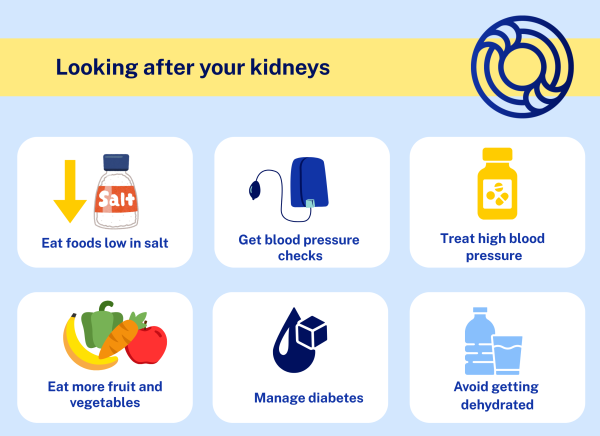
Image credit: Healthify He Puna Waiora
If you’re at risk of acute kidney injury (see above), there are things that can be done to reduce the risk especially if you’re unwell with another condition or if you begin to feel unwell.
- If you’re in hospital, you’ll have regular blood tests for AKI and regular checks of how much urine (pee) you’re passing.
- Regular blood tests should also be done if you become unwell or start a new medicine.
- If you have any warning signs of AKI, such as vomiting or producing little pee, you should be tested and treated straight away.
- If you’re dehydrated or at risk of dehydration, you may need intravenous (IV) fluids, usually through a drip in your arm.
- Medicines that cause kidney damage may need to be stopped or used at the lowest possible dose for the time being.
- You can increase the amount of fluid you drink on hot days or when you’re unwell unless you’ve been told by your healthcare provider to restrict the amount of fluid you drink.
After acute kidney injury (AKI) you can make a full recovery after treatment and have normal kidney function or you may make a partial recovery with lower levels of kidney function.
After AKI, your kidney function can continue to recover over time. However, people who have a history of AKI have a higher risk of chronic kidney disease which can lead to kidney failure. It's recommended that you get your kidney function checked by your healthcare provider every year for the first 3 years following AKI.
AKI can be fatal, especially if it’s severe, although the cause of death is often an underlying condition that caused the kidney problems rather than AKI itself.
The following links provide further information on acute kidney injury. Be aware that websites from other countries may contain information that differs from New Zealand recommendations.
Acute kidney injury(external link) Kidney Health Australia
Acute kidney injury(external link) NHS, UK
Acute kidney injury – patient information(external link) BMJ Best Practice, UK
Apps
Diabetes apps
Heart failure apps
Blood pressure apps
Kidney disease apps
References
- Overview of the management of acute kidney injury (AKI) in adults(external link) UpToDate, US, 2023
- Acute kidney injury(external link) NHS, UK, 202
- Acute kidney injury(external link) Patient, UK, 2025
- Acute kidney injury – patient information(external link) BMJ Best Practice, UK, 2020
- Acute kidney injury(external link) Auckland HealthPathways, NZ, 2020
See the acute kidney injury section on the kidney topics for healthcare providers page.
What is an acute kidney injury?
Acute kidney injury (AKI) refers to sudden loss of kidney function that’s most often caused by poor blood flow to your kidneys. It can happen, for example, as a result of severe dehydration, heart failure or some medicines. It can range from a minor loss of kidney function to complete kidney failure. Despite the name, AKI isn’t necessarily the result of a physical blow to your kidneys, but it means that something has stopped them from working properly.
How can I prevent acute kidney injury?
There are things you can do to help protect your kidneys such as eating foods low in salt, eating more fruits and vegetables, getting your blood pressure checked, taking medication to treat high blood pressure, managing diabetes, and avoiding dehydration. Ask your healthcare provider before using NSAIDs and certain combinations of blood pressure medications.
If you’re in hospital and you’re at risk of acute kidney injury, you’ll have regular blood tests to check for AKI and the amount of pee you pass will be monitored.
Can acute kidney injury be cured?
Acute kidney injury can be reversed if it’s diagnosed and treated early enough. Some people make a full recovery and don’t need further treatment while others continue to have some loss of kidney function and may develop chronic kidney disease.
What's the difference between acute kidney injury and chronic kidney disease?
Acute kidney injury is when your kidneys suddenly stop working as well as they should, usually over hours or days, whereas chronic kidney disease is when you lose kidney function gradually over a long period of time. AKI increases your risk of developing CKD.
Need help now?



Credits: Healthify editorial team. Healthify is brought to you by Health Navigator Charitable Trust.
Reviewed by: Dr Grace Lee, FRNZCGP and Clinical Educator
Last reviewed: