

You can now add Healthify as a preferred source on Google. Click here to see us when you search Google.
Angiotensin receptor blockers (ARBs)
Key points about angiotensin receptor blockers (ARBs)
- Angiotensin receptor blockers or ARBs are used to treat many conditions such as high blood pressure, heart failure and kidney disease caused by diabetes.
- The ARBs available in Aotearoa New Zealand are candesartan, losartan, losartan with hydrochlorothiazide.
- Find out about ARBs and how to take them safely.

Angiotensin receptor blockers or ARBs are used to treat many conditions such as high blood pressure, heart failure and kidney disease caused by diabetes.
Examples of ARBs
Most ARBs have names that end in 'sartan'. The following ARBs are available in Aotearoa New Zealand:
ARBs have many different effects on your body and are used to treat many conditions. They may be used for:
- High blood pressure by relaxing and widening your blood vessels and lowering your blood pressure.
- Heart failure to help your heart pump blood more easily – this can help to relieve symptoms such as shortness of breath and swelling of feet, legs and abdomen (tummy/puku).
- Diabetic kidney disease (diabetic nephropathy) to protect your kidneys and help them to function.
- After a heart attack (myocardial infarction) to protect your heart and prevent future heart attacks or strokes.
If you're pregnant or planning a pregnancy
ARBs can affect your baby's kidneys, especially if it's taken in the second and third trimesters of pregnancy. This can result in long term damage to your baby's kidneys.
If you're already pregnant: Talk to your healthcare provider straight away. Usually your healthcare provider will be able to prescribe a different medicine that's safe to take in pregnancy. ARBs should be stopped by the time you're 12 weeks pregnant at the latest.
If you're planning a pregnancy: Use contraception and talk with your healthcare provider before trying to get pregnant. They'll check your health and medicines. Most women stop taking ARBs before pregnancy, but some may continue until they have a positive pregnancy test and then stop. Your healthcare provider will discuss what's best for you, based on your medical condition and the risks and benefits of ARBs.
Severe allergic reaction (angioedema)
You shouldn't take ARBs if you've had a severe allergic reaction to an ARB in the past, eg, swelling of your face, lips, mouth or tongue (called angioedema). Angioedema is a rare but potentially serious side effect and it can be fatal. It can occur at any time, including in people who have been taking ARBs for years. Read more about angioedema from ARBs in the side effects section below.
A blood test is usually done before starting an ARB, and about 1 to 2 weeks after you've started the treatment. You may also require further blood tests as your dose increases. These tests are done to check how well your kidneys are working and your sodium and potassium levels. The kidneys are affected in a small number of people who take an ARB. While you're taking an ARB you will need to have blood tests every few months.
Here are some things to know when you're taking ARBs. Other things may be important as well, so ask your healthcare provider what you should know about.
Have a sick day plan
- If you have diarrhoea (runny poo) or vomiting (being sick) from a stomach bug, or you're dehydrated from another illness, it’s important to let your healthcare provider know.
- They may advise you to stop taking your ARB for a few days or decrease the dose and start again when you feel better. The reason for this is that ARBs can increase the amount of potassium salts in your blood, particularly if you're dehydrated.
Be careful when taking some pain relief medicines
ARBs can be used to protect your kidneys from damage if you have diabetes.
- However, if you're taking an ARB and a diuretic (water pill), the combination of these with NSAIDs (anti-inflammatory pain relief medication) can be very harmful to your kidneys.
- It can cause acute kidney injury.
- This combination is called the 'dangerous trio' or 'triple whammy'.
- You have a higher risk of harm to your kidneys if you're also an older adult (over 65 years) or you're dehydrated.
If you are taking an ARB with a diuretic, do not use NSAIDs for pain relief.
Talk to your healthcare provider about safe pain-relief options for you. Read more about NSAIDs and protecting your kidneys.
- Examples of NSAIDs are ibuprofen (Nurofen, Brufen SR), diclofenac (Voltaren), naproxen (Noflam, Naprosyn), mefenamic acid (Ponstan), celecoxib (Celebrex), tenoxicam (Tilcotil).
- Examples of diuretics are furosemide, bumetanide, bendroflumethiazide, chlortalidone, hydrochlorothiazide, indapamide, spironolactone, eplerenone and metolazone.
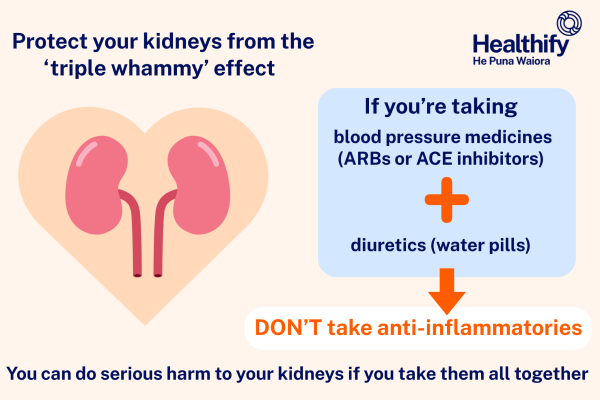
Image credit: Healthify He Puna Waiora
Read more about the triple whammy effect.
Like all medicines, ARBs can cause side effects, although not everyone gets them. Often side effects improve as your body gets used to the new medicine. Common side effects include headache and nausea (feeling sick) or vomiting (being sick). Some people may get a change in their taste, but this is rare. Other side effects to be aware of are dizziness and allergic reaction.
Dizziness
Dizziness is quite common when you first start taking an ARB, especially after the first or second dose. During this time, you are at increased risk of falls, especially when you stand up from sitting or lying down. Your healthcare provider will start you on a low dose and slowly increase how much you take. When starting an ARB get up slowly out of bed or stand up slowly, take a few minutes to sit on your bed or on a chair first. The dizziness goes away after a while. If the dizziness is severe or ongoing, tell your healthcare provider.
Allergic reaction
Some people taking ARBs may develop an allergic reaction, which causes swollen lips and breathing difficulties. This is rare but can happen any time from 2 weeks to 2 years after starting an ARB. If this happens, seek medical attention immediately.
Read more about medicines and side effects and reporting a reaction you think might be a side effect.
References
Brochures
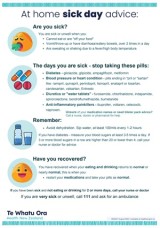
At home sick day advice
Health New Zealand | Te Whatu Ora, 2023
Medicines and side effects
Healthify He Puna Waiora, NZ, 2024
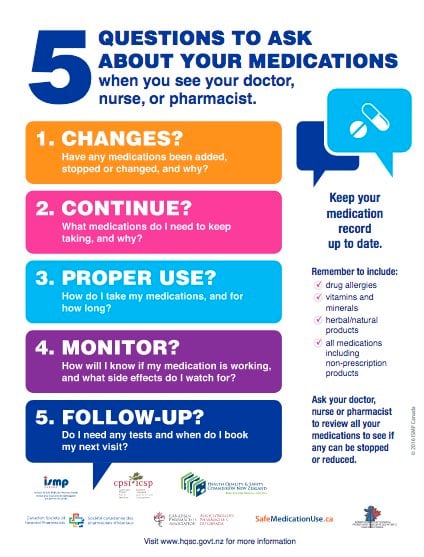
Health Quality and Safety Commission, NZ, 2019 English, te reo Māori
Credits: Healthify He Puna Waiora Pharmacists. Healthify is brought to you by Health Navigator Charitable Trust.
Reviewed by: Maya Patel, MPharm PGDipClinPharm, Auckland
Last reviewed:
Page last updated: