

You can now add Healthify as a preferred source on Google. Click here to see us when you search Google.
Topiramate
Sounds like 'toe-pye-rah-mate'
Key points about topiramate
- Topiramate is used to treat epilepsy and to prevent migraine headaches.
- Topiramate can seriously harm your unborn baby and is not recommended if there's a chance you could become pregnant.
- Find out how to take it safely and possible side effects.

Topiramate is used to treat epilepsy by preventing seizures and to help prevent migraine headaches. It reduces how often you get migraines but it will not treat a migraine once it has started. Topiramate works by reducing bursts of electrical activity in your brain and restoring the normal balance of nerve activity.
Topiramate is not recommended if there's a chance that you could become pregnant. If taken during pregnancy, topiramate can harm a baby's development, causing birth defects and lifelong learning difficulties.
If you're pregnant or think you might be pregnant, keep taking your medicine at the right dose, and contact your healthcare provider straight away – tell them you think you're pregnant and make an urgent appointment to see them.Use effective contraception to avoid pregnancy
Note: The information on this page is for adults taking topiramate. For information on how to give topiramate to children, see topiramate information for parents and carers(external link).
Topiramate comes as tablets (25 mg, 50 mg, 100 mg and 200 mg) and sprinkle capsules (15 mg and 25 mg).
- Always take your topiramate exactly as your healthcare provider has told you. The pharmacy label will tell you how much to take, how often to take it and any special instructions.
- The dose of topiramate will be different for different people.
- Your healthcare provider will start you on a low dose and increase it slowly over a few weeks to reduce side effects such as drowsiness.
- Topiramate is usually taken twice a day but sometimes when starting topiramate it's taken once a day for a week or more.
- Timing: You can take topiramate with or after food. Take topiramate at the same times each day.
- If you're taking it twice a day, take your doses in the morning and night.
- If you're taking it once a day, then it's best taken at bedtime.
- Swallow your tablets or capsules whole with a full glass of water, milk or juice: Don't chew them. If swallowing the capsules is a problem, you can open the capsules and carefully sprinkle the beads onto a small amount of soft food such as a teaspoon of porridge, yoghurt or custard. Swallow all of the food straight away. Don't chew the beads.
- Missed dose: If you forget to take your dose, take it as soon as you remember if it's within 4 hours of when your dose was due. But if more than 4 hours have passed since the dose was due, just take the next dose at the right time. Don't take double the dose.
- Keep taking topiramate every day: It may take a few weeks before you notice the full benefits of topiramate. Don't stop taking topiramate suddenly; talk to your healthcare provider before stopping because it can cause seizures if you stop taking it suddenly.
Here are some things to know when you're taking topiramate. Other things may be important as well, so ask your healthcare provider what you should know about.
Use reliable contraception while you're taking topiramate
Topiramate is not recommended if there's a chance that you could become pregnant. If you're taking topiramate, you must use reliable contraception, even if you're not currently sexually active.
- Reliable contraception means using methods that have a very low chance of pregnancy, such as an intrauterine device (IUD) or the progestogen-only implant. Fewer than 1 in every 100 people who use them become pregnant during 1 year of typical use.
- Less reliable contraception includes Depo Provera injection, the combined oral contraceptive pill or the progestogen-only pill. Extra protection like condoms or not having sex is needed with these methods. You should also think about switching to a more reliable way to prevent pregnancy.
- Unreliable contraception includes using condoms, withdrawal, or fertility awareness. These aren't recommended as your main form of contraception because they're more likely to fail. Read more about epilepsy and contraception.
Know which brand of topiramate you’re taking
In Aotearoa New Zealand, topiramate is available as different brands (Topamax, Arrow-Topiramate, Topiramate Actavis). It’s important to know which brand of topiramate you’re taking and to keep using the same one. This helps make sure your medicine works well and keeps you stable, especially when it's used for epilepsy. If you're unsure which brand you're taking, ask your pharmacist. If your medicine looks different, check with your pharmacist.
If you're driving, cycling or operating machinery
Topiramate can make you feel drowsy, dizzy or light-headed especially when you first start taking it. Don't drive, cycle or operate machinery until you know how this medicine affects you. See driving and medicines.
Drink plenty of water
Make sure you drink plenty of water to keep well hydrated while you're taking topiramate. It's important because topiramate can increase your body temperature and reduce sweating – especially during hot weather and when you exercise. This can put you at risk of getting dehydrated and can cause kidney stones.
Taking other medicines
Topiramate can interact with some other medicines and herbal supplements, so check with your healthcare provider or pharmacist before starting topiramate and before starting any new medicines or products.
Like all medicines, topiramate can cause side effects, although not everyone gets them. If you're concerned about any symptoms you think might be related to your medicine, talk to your healthcare provider. The following information offers some guidance but doesn't include all possible side effects.
Common side effects
Tell your healthcare provider if these side effects bother you.
- Feeling sleepy, drowsy or dizzy: Be careful when you're driving or using tools until you know how this medicine affects you. Limit or avoid alcohol as this can make these side effects worse. Read more epilepsy/seizures and driving(external link).
- Diarrhoea (runny poo) or constipation (hard to pass poo).
- Stuffy, runny nose and sore throat.
- Dry mouth or changes in taste.
- Tingling in the arms and legs.
- Difficulty concentrating.
- Tremor.
Tell your healthcare provider immediately or phone Healthline free on 0800 611 116 if these occur
- Signs of kidney stones such as sudden pain in the stomach (tummy) area, difficulty passing urine (pee) or blood in your urine.
- Low mood, suicidal thoughts – thoughts of harming yourself.
-
Problems with your eyesight. Topiramate can cause increased pressure in your eye. This can cause symptoms such as blurred vision, eye pain, nausea (feeling sick), vomiting (being sick), and headache. This can happen within 1 month of starting treatment.
Read more about medicines and side effects and reporting a reaction you think might be a side effect.
The following links provide further information on topiramate:
Topamax(external link) Medsafe Consumer Information Sheets, NZ
Topiramate for children(external link) New Zealand Formulary for Children, NZ
Brochures
5 questions to ask about your medications(external link) Health Quality and Safety Commission, NZ, 2019 English(external link), te reo Māori(external link)
References
- Avoid switching brands of topiramate(external link) Medsafe, NZ, 2020
- Prescribing issues associated with anticonvulsant medications for epilepsy(external link) BPAC, NZ, 2009
- Topiramate(external link) New Zealand Formulary
- Topamax(external link) New Zealand datasheet
- Topiramate: New measures and advice to prevent exposure during pregnancy(external link) Medsafe, NZ, 2025
Brochures
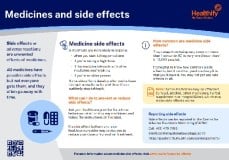
Medicines and side effects
Healthify He Puna Waiora, NZ, 2024
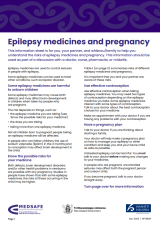
Epilepsy medicines and pregnancy
Medsafe, NZ, 2025
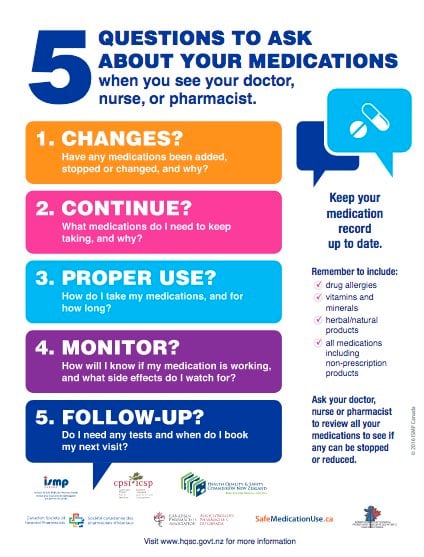
Health Quality and Safety Commission, NZ, 2019 English, te reo Māori
Free helplines


Credits: Sandra Ponen, Pharmacist, Healthify He Puna Waiora. Healthify is brought to you by Health Navigator Charitable Trust.
Reviewed by: Angela Lambie, Pharmacist, Auckland
Last reviewed: