

If you're a frequent visitor to Healthify, why not share our site with a friend? Don't forget you can also browse Healthify without using your phone data.
Medicines for osteoarthritis
Key points about medicines for osteoarthritis
- There are a number of medicines for osteoarthritis that help to reduce pain, improve joint health and make it easier for you to stay active.
- While medicines can't cure osteoarthritis, they can help manage the symptoms.
- Learn more about medicines for osteoarthritis.

There are a number of medicines for osteoarthritis to help reduce pain, improve joint health, and make it easier to stay active. While medicines can't cure osteoarthritis, they can help manage the symptoms. Read more about osteoarthritis.
It's important to remember that exercise has been found to reduce osteoarthritis pain as much as most medicines but without the side effects.
- If you're taking medicines for pain, it's best to try lower risk medicines first such as paracetamol, and anti-inflammatory creams, gels or sprays.
- If these don't provide enough relief, other medicines such as NSAIDs tablets or capsules may be considered – usually for a short time, to reduce the risk of side effects.
- To treat flares, steroid injections into the affected joint may be recommended for some people..
Some medicines are not recommended for osteoarthritis
- Opioid medicines such as codeine, morphine or tramadol are not recommended for osteoarthritis because they don't really help and can cause serious side effects, including drowsiness, falls, constipation, and addiction.
- There's not enough evidence that complementary or alternative therapies such as glucosamine, chondroitin, or fish oil work. Some may offer short-term relief for some people, but they can interact with other medicines. Always talk to your healthcare provider before trying them.
Before starting medicines for osteoarthritis, it’s important to understand how they work and how to take them correctly. See questions to ask about your osteoarthritis medicines below.
Paracetamol is usually the safest pain relief option to try first. Paracetamol acts on the nervous system to reduce pain but it doesn't affect symptoms such as joint swelling or stiffness.
- When it's taken as directed, paracetamol works well for pain relief. However, it's important that you read and follow the instructions provided on the packaging carefully.
- Depending on how severe your pain is, your healthcare provider may advise that you take regular doses or take it only when you need it for pain relief.
- If you get pain now and again, or the pain is mild, it may be best to paracetamol only when you have discomfort. It works best if you take it before the pain gets too strong.
- If your osteoarthritis pain is ongoing, taking paracetamol at set times can help to maintain consistent pain relief.
- Keep track of the timing of your doses and check when it was last taken before taking it again.
Your dose of paracetamol will depend on the strength you're taking.
500 mg tablets and capsules
- Brands include Panadol®, Pacimol®, Ethics Paracetamol®, Paracare Paracetamol®, Tylenol®.
- They can be bought at supermarkets or over the counter from pharmacies.
- The usual dose for adults is 1 or 2 tablets every 4 to 6 hours when required for pain or fever. Don't take more than 4 doses in 24 hours (8 tablets in 24 hours). Taking more than the recommended dose can harm your liver.
- Depending on your weight and how well your liver is working, your healthcare provider may recommend a lower dose.
665 mg tablets
- Brands include Apo-Osteo®, Panadol Osteo®, Paracetamol Osteo-Tab®.
- This higher strength tablets are used only for osteoarthritis. These are modified-release tablets, where the dose is delivered over a longer period of time. This means you take fewer doses throughout the day.
- The usual dose for adults is 2 tablets every 6 to 8 hours when required for pain. Don't take more than 6 tablets in 24 hours. Taking more than the recommended dose can harm your liver.
- Depending on your weight and how well you liver is working, your healthcare provider may recommend a lower dose.
If paracetamol doesn't provide enough pain relief when used alone, it can be combined with other pain relief options such as NSAIDs.
- When taking paracetamol it's important to avoid any over-the-counter products that contain paracetamol, such as cold and flu medicines.
- It's important to keep your alcohol intake within recommended limits and drink plenty of water to keep well hydrated.
- If you need to take paracetamol regularly, use dosing aids (eg, pillboxes) to help you take the correct doses at the correct times. Taking your paracetamol dose too soon after the previous dose, or taking more than your daily limit, can cause serious liver problems.
There are a number of pain relief creams, gels and rubs that can be bought from a pharmacy, supermarket or health shop. They may be a good option if you only have pain in a few joints or muscles. Pain relief creams, gels and rubs are generally safe, but they can cause skin reactions.
Non-steroidal anti-inflammatory (NSAID) gels
Non-steroidal anti-inflammatory (NSAID) gels contain the anti-inflammatories:
- diclofenac 1% (Voltaren Emulgel®, Evoflex Gel®)
- diclofenac 2% (Voltaren Osteo Gel®)
- ibuprofen (Deep Relief Gel®).
These are used by applying a small amount of the gel to the affected joint 3 to 4 times daily. The medicine goes through the skin and helps to reduce pain and swelling in that area. Some studies suggest they can work as well as anti-inflammatory tablets or capsules but have fewer side-effects. You're likely to feel improvements in your symptoms within the first week of treatment, and there may be further improvements in the following weeks. Using NSAID gels can cause side effects such as stomach bleeding but the risk is lower than when taking NSAID tablets or capsules. The main side effects of NSAID gels or sprays are redness or itching on the affected area. Don’t apply these gels to broken or inflamed skin.
Capsaicin cream
Capsaicin cream is only available on prescription with special approval.
- Apply a small amount of cream to the affected joint 4 times daily. You may get a burning sensation which eases quickly.
- It’s important to wash your hands after applying capsaicin cream to avoid the cream getting into your eyes and mouth.
- You may need to use the cream for 1 to 2 weeks before you notice an improvement in your pain. You can then reduce using it to twice a day.
- Talk to your healthcare provider about whether capsaicin cream is suitable for you. Read more about capsaicin.
Common examples of NSAID tablets and capsules include ibuprofen (Ibugesic®, I-Profen®, Nurofen®), diclofenac (Voltaren®), naproxen (Noflam®, Naprosyn®) and celecoxib (Celebrex®).
- These are useful if you have ongoing pain and discomfort despite treatment with paracetamol, and have severe symptoms or a flare.
- NSAIDs are effective in reducing the signs of inflammation including redness, warmth, swelling and pain.
- They can cause serious side effects, such as stomach bleeding, increased risk of heart attacks and stroke, and kidney problems. They're not suitable for everyone and they're not usually recommended as a long-term treatment. However, some people may need to take them on an ongoing basis.
- Check with your healthcare provider if NSAIDs are suitable for you. They should be used at the lowest possible dose for the shortest possible time.
- They also interact with several other medicines, so check other medicines you are taking with your healthcare provider or pharmacist before starting an NSAID.
- Read more about the safe use of NSAIDs.
These are also called intra-articular corticosteroid injections (also called cortisone injections). Examples include triamcinolone, dexamethasone and methylprednisolone.
- These steroids are given as injections into the painful joint.
- They may provide short-term pain relief, usually for a month, but they don't improve joint function or stiffness.
- They're used for treating flares.
- Repeating steroid injections every 3 months doesn't reduce pain and may cause increased cartilage loss. Regular steroid injections are not recommended.
- Injections into the joints have a very small risk of causing infection.
Read more about cortisone injections.
Opioids
Opioid medicines (eg, codeine or tramadol) are not recommended for managing pain from osteoarthritis. Opioids are no better than other pain-relieving medicines for improving your ability to do your daily activities. They may provide small improvements in pain and function but these need to be balanced against the side effects. Side effects include falls, drowsiness, constipation and addiction. Read more about opioid painkillers.
Complementary or alternative therapies
Complementary or alternative treatments are not usually recommended in the treatment of osteoarthritis, due to a lack of evidence to show that they help. Some people may find them beneficial but it's not always clear how they're working. Some products may interfere with prescribed medicines. It's a good idea to talk to your healthcare provider or pharmacist if you're thinking about using any of these.
Glucosamine, chondroitin and fish oil have been suggested for use in osteoarthritis. The evidence suggests that fish oil doesn't help people with osteoarthritis. Glucosamine or chondroitin may reduce pain to a small degree that's not enough for most people, and the effect is only short-term.
If you're considering the use of complementary or alternative treatments, it's important to consider the risks, benefits and costs. Read more about the considerations of using complementary or alternative therapy.
Understanding how your osteoarthritis medicines work and how to take them correctly helps you manage your pain better. Here are some questions you can ask your healthcare provider.
- What medicine should I take for my osteoarthritis pain?
- How does this medicine help me?
- How soon will I feel better?
- What side effects might I get?
- Is this medicine safe with my other medicines or health problems?
- How long can I take this medicine?
- What should I do if it doesn’t help or stops working?
- Are there safer, non-medicine options that could help?
Brochures
Medicines and side effects [PDF, 91 KB] Healthify He Puna Waiora, NZ, 2024
5 questions to ask about your medications(external link) Health Quality and Safety Commission, NZ, 2019 English(external link), te reo Māori(external link)
References
- Managing pain in osteoarthritis – focus on the person(external link) BPAC, NZ, 2018
- Towheed T, Maxwell L, Anastassiades TP, et al. Glucosamine therapy for treating osteoarthritis(external link) Cochrane Database of Systematic Reviews, 2005
- Singh JA, Noorbaloochi S, MacDonald R, et al. Chondroitin for osteoarthritis(external link) Cochrane Database of Systematic Reviews, 2015
- Osteoarthritis and soft-tissue disorders(external link) New Zealand Formulary
Brochures
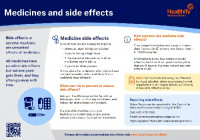
Medicines and side effects
Healthify He Puna Waiora, NZ, 2024
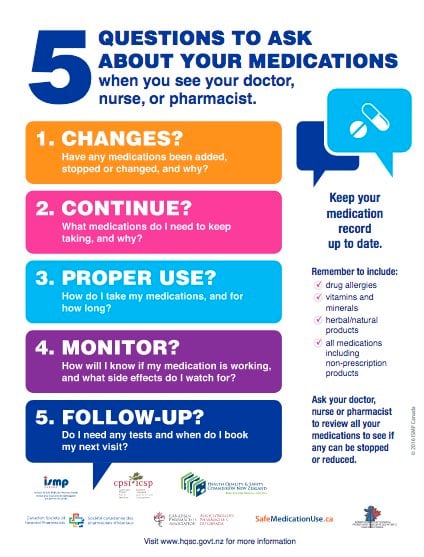
Health Quality and Safety Commission, NZ, 2019 English, te reo Māori
Credits: Healthify editorial team. Healthify is brought to you by Health Navigator Charitable Trust.
Reviewed by: Angela Lambie, Pharmacist, Auckland
Last reviewed: