

You can now add Healthify as a preferred source on Google. Click here to see us when you search Google.
Lisdexamfetamine
This information is intended for use ONLY after you have been prescribed lisdexamfetamine.
Key points about lisdexamfetamine
- Lisdexamfetamine is used to treat attention deficit hyperactivity disorder (ADHD).
- It belongs to a group of medicines known as stimulants.
- Lisdexamfetamine is also called Vyvanse.
- From 1 December 2024, lisdexamfetamine will be funded for people with ADHD who meet certain eligibility criteria.

Lisdexamfetamine is used to treat attention deficit hyperactivity disorder (ADHD) in adults and children (6 years and older). It can help you to concentrate better, be less impulsive, and feel calmer.
- It's not known exactly how lisdexamfetamine works. It's thought to boost the levels of chemicals called dopamine and noradrenaline in your brain.
- This can increase activity in the parts of the brain that control attention and behaviour, to reduce hyperactivity or impulsivity and improve concentration.
Medication is just one part of treatment for ADHD and is used to support other changes to your lifestyle and behaviour. Read more about ADHD in adults and ADHD in children.
Factsheet: Lisdexamfetamine
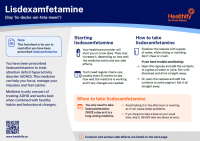
Healthify He Puna Waiora, NZ, 2024
Is lisdexamfetamine the same as dexamfetamine?
- Dexamfetamine is similar to lisdexamfetamine and works in the same way.
- When it's absorbed, lisdexamfetamine is converted to its active form 'dexamfetamine'.
- Dexamfetamine is short-acting and is usually taken as a tablet 2 to 4 times a day.
- Lisdexamfetamine is long-acting and comes as a capsule taken once a day.
- Find out more about dexamfetamine.
Stimulant medicines for ADHD, such as lisdexamfetamine, can be more complex than other medicines because of special prescribing, dispensing and funding rules that apply to them.
Lisdexamfetamine is a controlled drug
In Aotearoa New Zealand lisdexamfetamine is a controlled drug, which means it's carefully monitored and regulated to make sure it’s used safely. This is because it affects the brain and can be addictive or misused if not taken properly. Because of this, prescribers need to follow special rules when prescribing it, and pharmacies must keep records when they dispense it.
- You can get a prescription with repeats that cover up to 3 months, depending on your prescriber’s decision, but pharmacies can only dispense lisdexamfetamine in 30-day supplies at a time.
- You usually need to pick up the medicine within 7 days of the prescription being written, or the prescription may expire or require reauthorization.
Lisdexamfetamine is funded under a Special Authority
In Aotearoa New Zealand lisdexamfetamine is funded under a Special Authority, for people who meet the criteria.
- The term 'Special Authority' refers to a specific kind of approval needed for funding certain subsidised medicines by Pharmac.
- Pharmac is the government agency in New Zealand that decides which medicines and medical devices are publicly funded. Pharmac uses this process to ensure medicines are funded for people who will benefit most from the treatment. Read more about Special Authority.
- Who can apply? Applications for Special Authority for stimulant medicines used to treat ADHD can be made by any relevant prescriber.p>
- Does the Special Authority expire? For stimulant medicines used to treat ADHD, the Special Authority does not expire, as the renewal criteria were removed in 2024, making the approval valid for the patient’s lifetime.
In Aotearoa New Zealand lisdexamfetamine is available as capsules, which come in 3 different strengths: 30 mg, 50 mg and 70 mg.
- Always take your lisdexamfetamine exactly as your doctor has told you. The pharmacy label on your medicine will tell you how much to take, how often to take it, and any special instructions.
- The dose of lisdexamfetamine will be different for different people.
- Your doctor will usually start you on a low dose and increase the dose depending on how you respond. This allows your body to get used to the medicine and reduces side effects.
- Timing: Lisdexamfetamine can be taken with or without food, once each day, in the morning.
- Swallow the capsules whole with a glass of water whilst sitting or standing. This is to make sure that they reach the stomach and don't stick in your throat.
- If you have trouble swallowing the capsules they can be opened and the contents added to a glass of water or orange juice, or to yoghurt. Stir the liquid until it's fully dissolved and then drink straight away.
- Missed dose: If you forget to take your capsules then take them as usual the next morning. Don't take a double dose to make up for a forgotten dose. Avoid taking lisdexamfetamine in the afternoon or evening because it can cause sleep problems.
Here are some things to know when you're taking lisdexamfetamine. Other things may be important as well, so ask your healthcare provider what you should know about.
Taking other medicines
Lisdexamfetamine interacts with some medications, herbal supplements and rongoā Māori, so check with your doctor or pharmacist before starting lisdexamfetamine and before starting any new products.
Alcohol and lisdexamfetamine
Limit drinking alcohol while you're taking lisdexamfetamine. Lisdexamfetamine and alcohol affect your heart and blood pressure, increasing your risk of side effects. Lisdexamfetamine is a stimulant that increases your body’s activity, while alcohol is a depressant and lowers your level of functioning. Since they have opposite effects, lisdexamfetamine can mask the effects of alcohol making it take longer to feel the effects of alcohol which can risk alcohol poisoning.
Driving or using tools
Be careful when driving or using tools until you know how this medicine affects you. Lisdexamfetamine may cause blurred vision, make you feel dizzy, or affect your focus especially when you start taking it.
Roadside drug testing
The purpose of roadside drug testing is to pick up unsafe drivers. Stimulant medicines used to treat ADHD or narcolepsy help improve driving safety. Police have said the roadside saliva devices do not pick up amphetamines, so lisdexamfetamine shouldn't cause a positive roadside result. The video below provides more information.
Video: Roadside drug testing and ADHD medication
You may need to take lisdexamfetamine for several months or even years, but it's unlikely that you'll need to take it for the rest of your life.
- Regular check-ups: You'll have regular check-ups, usually every 6 months or so, to see how well the medicine is working and if any changes are needed. Your doctor will check your blood pressure, heart rate and weight.
- Medicine holiday: Your healthcare provider may recommend stopping lisdexamfetamine for a while, or reducing the dose. For children, this will normally be during the school holidays and can be called a 'medicine break'. This is to check whether it’s still helping.
- Teenage reassessment: As your child gets to puberty, or just after, they will be assessed to see if the medicine is still needed. If the medicine is still helping, it may be recommended your child keeps taking it, even as an adult.
- Don't stop lisdexamfetamine suddenly: Talk to your healthcare provider first, it might be best to reduce the dose gradually. This reduces the risk of having side effects when you stop taking this medicine.
Like all medicines, lisdexamfetamine can cause side effects, although not everyone gets them. If you're concerned about any symptoms, talk to your healthcare provider. The following information offers some guidance but doesn't include all possible side effects.
Common side effects
Tell your healthcare provider if these side effects bother you.
- Dizziness.
- Trouble sleeping: Take your dose in the morning. If you're taking more than one dose per day, take it before early afternoon.
- Headache.
- Reduced appetite, weight loss.
- Sweating.
- Dry mouth.
Tell your healthcare provider immediately or phone Healthline free on 0800 611 116 if these occur
- Anxiety, nervousness, irritability, changes in mood.
- Problems with your vision.
- Chest pain, seizures or feelings of increased heart rate.
- Suicidal feelings or behaviour such as agitation, aggression, self-harm, worsening of low mood.
Read more about medicines and side effects and reporting a reaction you think might be a side effect.
References
- Lisdexamfetamine dimesilate(external link) NZ Formulary, NZ
- Vyvanse(external link) Medsafe Consumer Information, NZ
- Spotlight on lisdexamfetamine(external link) Medsafe Prescriber Update, March 2024
- Attention: Safety of medicines used to treat ADHD in adults(external link) Medsafe, NZ, 2025
Brochures
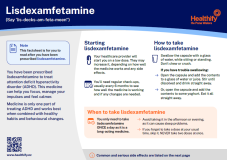
Healthify He Puna Waiora, NZ, 2024
English, te reo Māori, Samoan, Tongan, Simplified Chinese
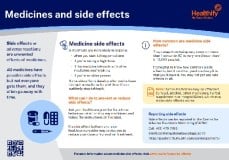
Medicines and side effects
Healthify He Puna Waiora, NZ, 2024
Free helplines

Credits: Sandra Ponen, Pharmacist, Healthify He Puna Waiora. Healthify is brought to you by Health Navigator Charitable Trust.
Reviewed by: Angela Lambie, Pharmacist, Auckland; Sara Ammar, Senior Pharmacist Mental Health, Te Toka Tumai Auckland
Last reviewed:
Page last updated: