

You can now add Healthify as a preferred source on Google. Click here to see us when you search Google.
Medicines for ADHD in adults
Also known as attention deficit hyperactivity disorder
Key points about ADHD medicines for adults
- Medicines for ADHD can help to manage symptoms and lessen the effects of ADHD on daily life.
- While they don't cure the condition, they're often used as part of a broader treatment approach that includes lifestyle and behavioural interventions.
- Examples of medicines to treat ADHD include methylphenidate, dexamphetamine, lisdexamfetamine and atomoxetine.

In Aotearoa New Zealand, medicines used to treat ADHD in adults include:
Benefits of ADHD medicines
ADHD medicines can help reduce symptoms and make daily life easier. They may help people:
- Pay attention for longer and stay focused on tasks.
- Feel calmer and less restless.
- Think before acting and better manage emotions.
- Plan, organise, and complete tasks.
- Improve behaviour at school, work, or home.
- Get along better with others
ADHD medicines don't work the same for everyone. They're most helpful when used together with behavioural strategies, lifestyle changes, and other supports.
How do these medicines work?
- Methylphenidate, dexamphetamine and lisdexamfetamine are called stimulant medicines. They're thought to boost the levels of dopamine and noradrenaline in the brain.
- Your brain has natural chemicals called dopamine and noradrenaline that help control your mood, thoughts, feelings, and how you see and understand things. Stimulant medicines work by blocking noradrenaline and dopamine from being taken back up into the nerve cells in the brain after being released. This results in higher levels of noradrenaline and dopamine between the nerve cells.
- Atomoxetine is a non-stimulant medicine that works by stopping your brain from removing noradrenaline too quickly, so more of it stays available.
Note: The information on this page is about medicines for attention deficit hyperactivity disorder (ADHD) in adults. For information about medicines for ADHD in children, see medicines for ADHD in children.
Methylphenidate is the preferred first choice for ADHD
Methylphenidate comes in a variety of tablets and capsules. It may take some time for your healthcare provider and you to find the most effective dose and timing.
- Dexamphetamine, lisdexamfetamine or atomoxetine are usually prescribed if you're unable to take methylphenidate, if it hasn't worked well to improve your symptoms, or if there are supply issues.
ADHD medicines aren’t suitable for everyone
- They may not be safe if you have certain medical conditions, such as heart problems, thyroid issues (hyperthyroidism), epilepsy, glaucoma, tic disorders, or a history of stroke.
- Some ADHD medicines may not be recommended in pregnancy or while breastfeeding.
- ADHD medicines can interact with other medicines you may be taking, including medicines or supplements you can buy over the counter, so this must be carefully checked.
Your healthcare provider will review your health and suggest safe alternatives if needed.
Stimulant medicines (methylphenidate, dexamfetamine and lisdexamfetamine) have special prescribing, dispensing and funding rules.
Stimulant medicines are controlled drugs
In Aotearoa New Zealand methylphenidate, dexamfetamine and lisdexamfetamine are classed as controlled drugs, which means they're carefully monitored and regulated to make sure they're used safely. This is because they affect the brain and can be addictive or misused if not taken properly. Because of this, prescribers need to follow special rules when prescribing them, and pharmacies must keep records when they dispense them.
- You can get a prescription with repeats that cover up to 3 months, depending on your prescriber’s decision, but pharmacies can only dispense 30-day supplies at a time.
- You need to pick up the medicine within 7 days of it being prescribed, or the prescription may expire or require reauthorisation.
Stimulant medicines are funded under a Special Authority
In Aotearoa New Zealand methylphenidate, dexamfetamine and lisdexamfetamine are funded under a Special Authority for people who meet the criteria.
- The term 'Special Authority' refers to a specific kind of approval needed for funding certain subsidised medicines by Pharmac.
- Pharmac is the government agency in New Zealand that decides which medicines and medical devices are publicly funded. Pharmac uses this process to ensure medicines are funded for people who will benefit most from the treatment. Read more about Special Authority.
Who can apply? Applications for Special Authority for stimulant medicines used to treat ADHD can be made by specialists such as a psychiatrist. General practitioners (GPs) or nurse practitioners can also apply if they have a special interest in this area or if they have a written recommendation from a specialist.
Does the Special Authority expire? For stimulant medicines used to treat ADHD, the Special Authority does not expire, as the renewal criteria were removed in 2024, making the approval valid for the patient’s lifetime. Ongoing prescriptions for these medicines can be written either by a specialist, or by a GP or nurse practitioner.
Medicines for ADHD can help to manage symptoms and lessen the effects of ADHD on daily life. While they don't cure the condition, they're often used as part of a broader treatment approach that includes lifestyle and behavioural interventions.
Treatment is provided by a mental healthcare professional experienced in working with people with ADHD. It includes:
- education to help you understand how to work with your brain, rather than expecting it to work like someone else’s
- cognitive behavioural therapy (CBT)
- social skills training
- support for any drug or alcohol addiction
- treatment for any related conditions or issues caused by ADHD
- helping you get support from friends or family who can be encouraging rather than critical or controlling.
Read more: How can I care for myself with ADHD.
What to expect when starting ADHD medicines
When you start ADHD medicine, your healthcare provider will check how well it’s working and whether you have any side effects. This usually involves:
- Regularly reviewing your symptoms, such as focus, impulsivity, mood, and sleep.
- Encouraging you to keep a diary or log of how you feel, your energy, and any side effects. This helps you and your provider see patterns.
- Checking your health, such as blood pressure, heart rate, and weight.
- Adjusting the dose or type of medicine if needed.
- Reviewing other medicines you may be taking. It's important to check any new medicines, including those you buy yourself from a pharmacy, with your healthcare provider to make sure they're safe to take with your ADHD medicines.
How long do I need to take my ADHD medicine?
ADHD medicine is usually taken every day. Some people take it for a few months, others for many years. Your healthcare provider will help decide what’s right for you. Sometimes they may suggest a planned, supervised break to see how you manage without it. Never start, stop, or change your medicine on your own.
It's important to keep a diary to track your concentration, mood, sleep, energy, and side effects. This helps you and your provider see patterns and make better decisions.
References
Brochures
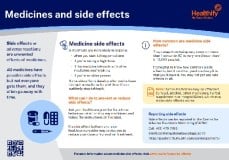
Medicines and side effects
Healthify He Puna Waiora, NZ, 2024
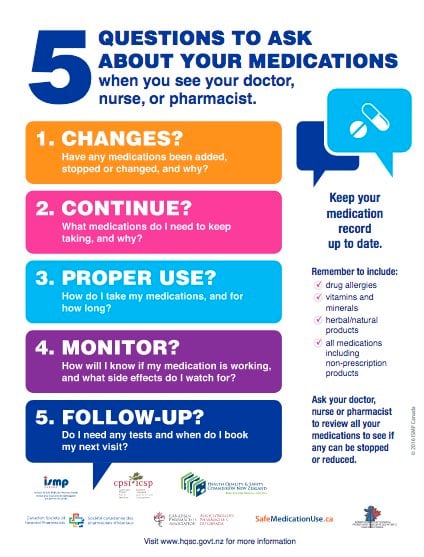
Health Quality and Safety Commission, NZ, 2019 English, te reo Māori
Free helplines

Credits: Sandra Ponen, Pharmacist, Healthify He Puna Waiora. Healthify is brought to you by Health Navigator Charitable Trust.
Reviewed by: Angela Lambie, Pharmacist, Auckland
Last reviewed: