

You can now add Healthify as a preferred source on Google. Click here to see us when you search Google.
Medicines for heart failure
Key points about medicines for heart failure
- Heart failure medicines help your heart to pump blood better, easing symptoms such as shortness of breath and swelling.
- They can also slow the condition and help you feel better and live longer.
- Find out more about medicines for heart failure.

When you have heart failure, your heart is not able to pump blood as well as it should. This means your body may not get enough oxygen and nutrients, causing symptoms like shortness of breath, tiredness, and swelling in your legs or feet. Over time, heart failure can get worse and increase your risk of hospital visits and other serious health problems.
Note: You may also hear heart failure being called reduced heart function.
Most people living with heart failure take medicines as part of their treatment, often for the long term. Many people take more than one medicine because each works in a different way. Together, they help your heart work better, lower risks, and help you feel better. See below for examples of medicines used for heart failure
What are the benefits of heart failure medicines
Medicines for heart failure can help:
- decrease tiredness
- make breathing easier
- help your body get rid of extra fluid and reduce swelling
- boost your energy so you can stay active
- slow down or prevent the condition from getting worse, even if you don’t notice symptoms.
Every person’s heart failure care plan is different. Your healthcare provider will work with you to find the right medicines, doses, and overall treatment plan to help your heart pump better and manage symptoms.
ACE inhibitors and ARBs
- These medicines help lower blood pressure by opening up blood vessels and reducing the workload on the heart.
- They make it easier for your heart to work as a pump and can slow worsening of heart failure.
- You may take either an ACE inhibitor or an ARB, but never both at the same time.
- Examples of ACE inhibitors (also called angiotensin converting enzyme inhibitors) are lisinopril, perindopril, quinapril and ramipril.
- Examples of ARBs (also called angiotensin receptor blockers) are candesartan and losartan.
Sacubitril/valsartan (Entresto)
- This is a combination medicine that replaces an ACE inhibitor or ARB. It helps blood vessels open, reduces fluid buildup and eases strain on the heart.
- It belongs to a group of medicines called angiotensin receptor neprilysin inhibitors (ARNIs).
- Learn more about Entresto.
Beta blockers
- They help improve the heart pump function by preventing the heart from beating too quickly and forcefully.
- Examples are bisoprolol, carvedilol and metoprolol.
Mineralocorticoid receptor antagonists (also called aldosterone antagonists)
- These medicines help the heart work better and can lower blood pressure, even if your blood pressure is normal or you don’t have extra fluid.
- They block aldosterone, a hormone that can make the body retain salt and water. By doing this, they help the heart work more efficiently and reduce the chance of hospital visits.
- Examples include spironolactone and eplerenone.
Empagliflozin
- It helps the heart work better and reduces heart failure symptoms.
- It can also lower blood pressure and support weight management. Some people also take it for diabetes control and/or to reduce their risk of heart attack,
- Learn more about empagliflozin.
Diuretics (also called water pills)
- They help the body get rid of extra fluid and sodium, reducing swelling and making breathing easier and easing the heart’s workload.
- Examples are furosemide, bumetanide, bendroflumethiazide and chlortalidone.
- Different diuretics remove fluid at different rates and through different methods.
Digoxin
- Digoxin is used to treat abnormal heart rhythms (arrhythmias), including atrial fibrillation, by slowing your heart rate.
- This helps to reduce the strain on your heart. Digoxin also increases the force of your heart's contractions, which can be helpful if you have heart failure.
- Read more about digoxin.
Know how to manage your medicines
When you start heart failure medicines, your healthcare provider may adjust the doses and schedule to find what works best for you. Often you may need to take several medicines at the same time to help your heart work better and prevent complications.
- Know the dose, timing, and how often to take each medicine.
- Keep an updated list of your medicines and follow the instructions carefully to stay on track.
- Use a pill organizer, chart, or phone reminders to track each dose.
- Ask questions if you’re unsure why you’re taking a medicine or notice side effects.
- Don't start, stop, or change a dose on your own. Always check with your healthcare provider first.
Tell your healthcare team about everything you take
Many heart failure medicines can interact with other medicines and products, including over-the-counter medicines, supplements, and herbal products. Always let your healthcare team know everything you use so your treatment stays safe and effective. Bring your medicine list to every appointment. This helps your healthcare team adjust your treatment safely and effectively.
Avoid taking NSAIDs (such as ibuprofen, diclofenac or naproxen)
Do not take NSAIDs unless your healthcare provider says it’s safe. These medicines can:
- cause fluid buildup
- raise blood pressure
- affect your heart and kidneys
- interact with some heart failure medicines.
Always make sure you have an ongoing supply of your heart failure medicines
Heart failure symptoms can worsen if you miss doses often or run out of your medicines. Always make sure you have enough on hand and check your repeats in advance, especially before public holidays or weekends, so you don’t run out.
Return to the main heart failure page to learn more.
Heart failure(external link) Heart Foundation, NZ
Brochures
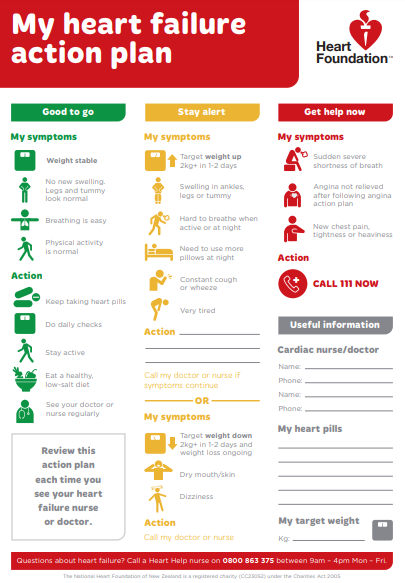
Heart Foundation, NZ

Heart Foundation, NZ, 2019

Heart Foundation, NZ, 2019
Free helplines


Credits: Sandra Ponen, Pharmacist, Healthify He Puna Waiora. Healthify is brought to you by Health Navigator Charitable Trust.
Reviewed by: Healthify clinical advisors
Last reviewed: