

 Wishing everyone a safe and happy Christmas and New Year – Meri Kirihimete from the Healthify team.
Dihydrocodeine
Sounds like ‘dye-hye-dro-koe-deen’
Key points about dihydrocodeine
- Dihydrocodeine is used for moderate to severe pain, such as after an injury or operation, or for pain caused by a terminal illness like cancer.
- It’s also called DHC Continus®.
- Find out how to take it safely and possible side effects.

Dihydrocodeine is used for the relief of moderate to severe pain, such as after an injury or operation. It's usually used when milder pain relief such as paracetamol or non-steroidal anti-inflammatories (NSAIDs) don’t work well enough.
- Dihydrocodeine belongs to a group of medicines called opioids. They act on your brain and nervous system to reduce pain.
- Other pain relievers such as paracetamol and NSAIDs (ibuprofen, diclofenac, naproxen) may also be used with dihydrocodeine.
- Read more about pain, pain-relief medication and opioid painkillers.
- It can cause side effects and dependence, so it must be used carefully and only as prescribed.
In Aotearoa New Zealand, dihydrocodeine is available as controlled-release tablets (60 mg). It’s only available with a prescription written by a prescriber.
- Always take dihydrocodeine exactly as your healthcare provider has told you. The pharmacy label on your medicine will tell you how much dihydrocodeine to take, how often to take it and any special instructions.
- The usual dose of dihydrocodeine in adults is 1 to 2 tablets every 12 hours. The maximum dose is 240 mg per day.
- If you’re drowsy or sleepy, don’t take your next dose until you’re wide awake. Ask your healthcare provider for advice.
- Follow the instructions on the label of your medicine, for how much to take and how often. Don't take any more than your healthcare provider has prescribed.
- Swallow the tablet whole with water. Don’t crush or chew the tablets.
- Food: You can take dihydrocodeine with or without food.
- Missed dose: If you're taking it regularly and forget to take your dose, take it as soon as you remember that day. But if it's nearly time for your next dose, just take the next dose at the usual time. Don't take double the amount.
Here are some things to know when you're taking dihydrocodeine. Other things may be important as well, so ask your healthcare provider what you should know about.
Eat plenty of fibre and drink more water while you are taking dihydrocodeine
- Dihydrocodeine can affect your bowel movements – it might be hard or painful to poo (constipation).
- If this happens, ask your healthcare provider for a laxative, to soften your poo.
- Eating foods with fibre, drinking plenty of water and keeping active can help.
Dihydrocodeine can make you sleepy, drowsy, dizzy or affect your concentration
- If you’re drowsy or sleepy, don’t take your next dose until you’re wide awake. Ask your healthcare provider for advice.
- Limit or avoid alcohol as it can make these effects worse.
- Don’t drive a vehicle, ride a bike or operate machinery (including power tools) and don’t make important personal or business decisions or sign legal papers if you're feeling sleepy, drowsy or have trouble concentrating.
Taking other medicines
- Your doctor may recommend taking other pain relievers such as paracetamol and NSAIDs (ibuprofen, diclofenac, naproxen) as well. If taken regularly, they can reduce how much dihydrocodeine you need to take.
- If you're taking any other medicines, or starting a new medicine, check with your healthcare provider or pharmacist to make sure they're safe to take with dihydrocodeine. This includes any medicines you buy without a prescription (over the counter), such as herbal and complementary medicines or recreational drugs.
Dihydrocodeine reduces pain but won’t take all of your pain away
If your pain isn’t improving don’t take extra doses. Try other ways to manage your pain such as relaxation techniques, gentle exercises and stretches.
Dihydrocodeine is addictive
- If you're addicted to dihydrocodeine, you may find it difficult to stop taking it or feel you need to take it more often than necessary.
- It's unusual for people who are prescribed dihydrocodeine for a short time or for a terminal illness to become addicted to it.
- Dihydrocodeine shouldn't be used for chronic (long term) pain, unless it is for a terminal illness or cancer-related pain.
- Some people are more likely to develop addiction than others and seem to be very sensitive to the cravings. You may be at risk for addiction if you have mental health problems, such as depression, or a history of substance abuse, including alcohol and recreational drugs.
- To reduce your risk of addiction when using dihydrocodeine for short-term pain relief, use it for the shortest possible time, at the lowest effective dose.
- Have a plan in place for how and when to reduce and stop taking it.
- Talk to your healthcare provider if you're worried about addiction or if you want to know more about how to prevent withdrawal symptoms.
Pregnancy or breastfeeding
Talk to your healthcare provider if you're pregnant, planning a pregnancy or want to breastfeed.
Like all medicines, dihydrocodeine can cause side effects, although not everyone gets them. If you're concerned about any symptoms you think might be related to your medicine, talk to your healthcare provider. The following information offers some guidance but doesn't include all possible side effects.
Common side effects
Tell your healthcare provider if these bother you.
- Feeling sleepy, dizzy or tired, problems with concentration: If you’re drowsy or sleepy, don’t take your next dose until you’re wide awake, and ask your healthcare provider for advice. Be careful when driving or using tools until you know how this medicine affects you. Don't drink alcohol.
- Nausea (feeling sick) or vomiting (being sick): Try taking your tablet with food or straight after a meal.
- Constipation: Ask your healthcare provider to prescribe a laxative, which you will need to take regularly. You also need to eat more fibre (such as fresh fruit, vegetables, brown bread, bran-based breakfast cereals) and drink plenty of water. Read more about how to ease and prevent constipation.
- Dry mouth, headache, altered vision, skin rash or itching.
- Flushing and sweating.
- Mood changes, sleep problems, hallucinations, confusion, nightmares.
Tell your healthcare provider immediately or phone Healthline free on 0800 611 116 if these occur
- Breathing problems.
- Changes to your heartbeat.
- Confusion or feeling very sleepy.
Read more about medicines and side effects and reporting a reaction you think might be a side effect.
The following links provide further information on dihydrocodeine:
DHC Continus(external link) Consumer Medicine Information, Medsafe, NZ
Dihydrocodeine(external link) New Zealand Formulary Patient Information
Brochures
Managing pain and opioid medicines(external link) NPS MedicineWise & Choosing Wisely Australia
Risks of opioid medicines(external link) Medsafe and Ministry of Health, NZ, 2022
5 questions to ask about your medications(external link) Health Quality and Safety Commission, NZ, 2019 English(external link), te reo Māori(external link)
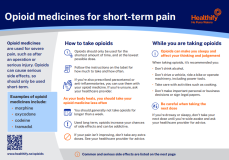
Opioid medicines for short-term pain [PDF, 105 KB] Healthify He Puna Waiora, NZ, 2023 English [PDF, 105 KB], te reo Māori [PDF, 126 KB]
Apps
References
-
- Dihydrocodeine(external link) New Zealand Formulary
- Opioid analgesics(external link) New Zealand Formulary
- Dihydrocodeine: review of risks and benefits(external link) Medsafe, NZ, 2022
- DHC Continus(external link) Datasheet Medsafe, NZ
Brochures
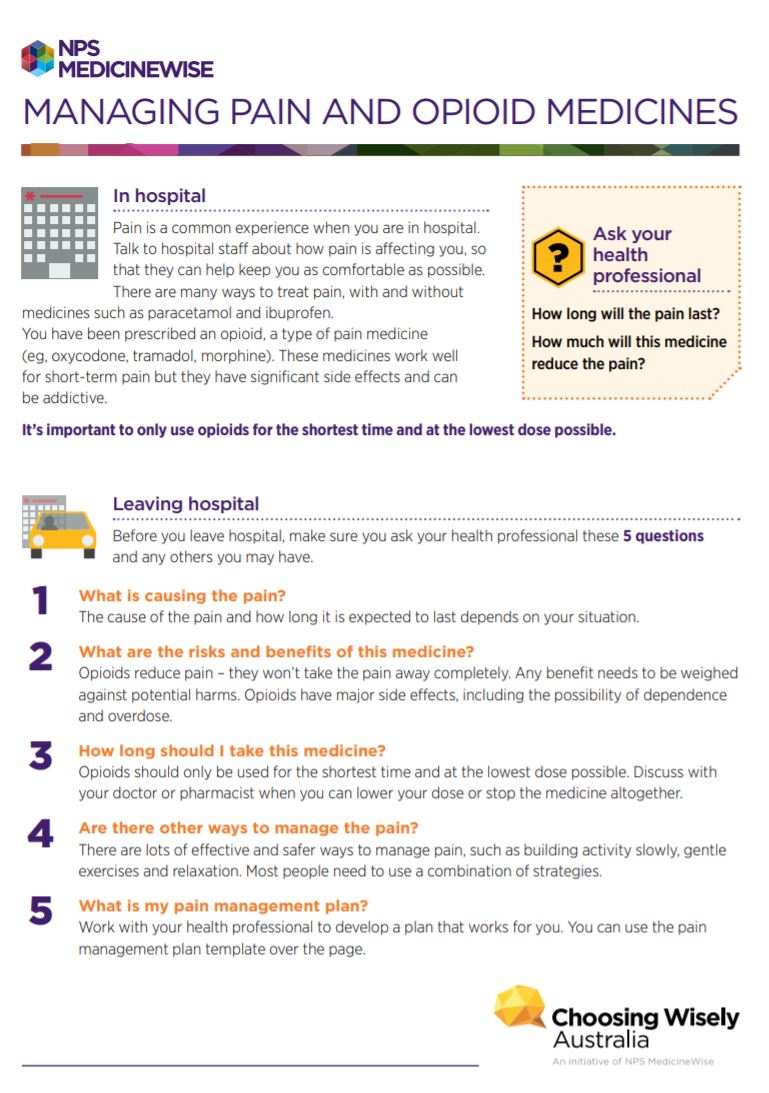
NPS MedicineWise & Choosing Wisely Australia
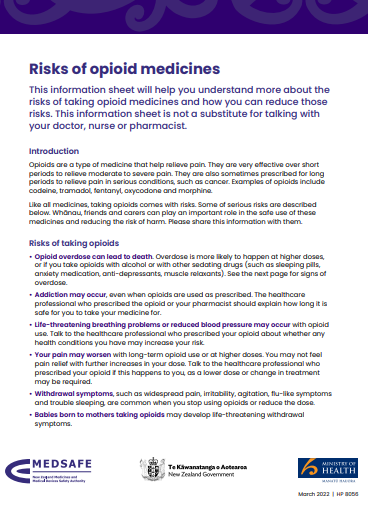
Medsafe and Ministry of Health, NZ, 2022
Free helplines



Credits: Healthify editorial team. Healthify is brought to you by Health Navigator Charitable Trust.
Reviewed by: Angela Lambie, Pharmacist, Auckland.
Last reviewed: