

If you're a frequent visitor to Healthify, why not share our site with a friend? Don't forget you can also browse Healthify without using your phone data.
Immunisation for adults
Immunisation is also known as vaccination
Key points about immunisation for adults
- Vaccinations aren't just for children. Adults need vaccinations because the protection provided by some childhood vaccines can wear off, and as you get older, your immune system is weaker.
- Find out about the vaccines that are recommended for adults in Aotearoa New Zealand.
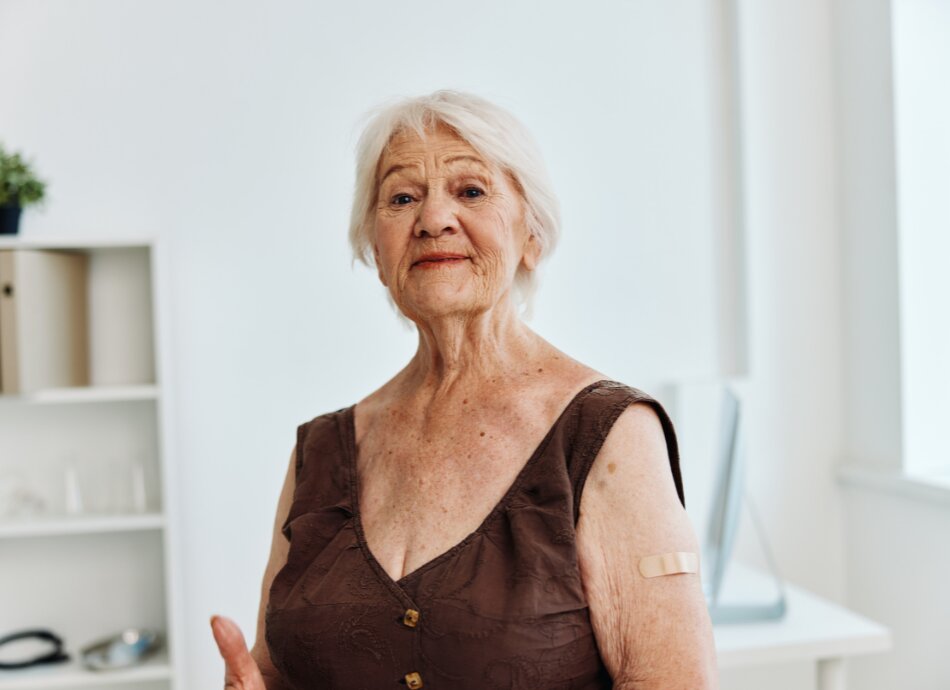
Immunisation involves receiving a vaccine to help your body's immune system protect you against a disease. Read more about how your immune system works.
Some vaccines you had as a child wear off and may not protect you unless you have a booster dose. Over time, your body is less able to fight off infections.
You're at higher risk of infection if you:
- have health problems that weaken your immune system such as diabetes, high blood pressure, arthritis, COPD and asthma
- are taking medicines that weaken your immune system such as cancer treatment
- are frail
- are living in a communal care facility or rest home, because when people live close together and share spaces it makes it easier for infections (eg, flu or COVID-19) to spread.
Getting vaccinated helps adults stay healthy by protecting them from serious illnesses. You should check your vaccination history to make sure you're up to date as this protects you and those around you. Read more about herd immunity.
Talk to your healthcare provider or pharmacist about what they recommend based on your vaccination history and situation.
Some vaccines are free (funded), others are recommended but you have to pay for them. Even with funded vaccines, there may be a small charge for the injection to be given.
Many vaccines are funded for adults at high risk of some diseases because they have other medical conditions. For more details see funded vaccines for special groups(external link) and vaccinations in pregnancy.
The following vaccines are recommended for adults in Aotearoa New Zealand
- COVID-19 vaccine booster: Adults over 16 years of age are eligible for 2 doses of COVID-19 vaccine and a booster. If you're over 30 years of age, it's recommended you get a free booster every 6 months after your last COVID-19 vaccine or COVID-19 infection.
- Flu vaccine: Recommended every year (from April) for all adults. It's free if you’re 65 years of age or over or if you have certain medical conditions. There’s also a flu vaccine especially for older adults that helps your body make a stronger defence against the flu. However, it’s not free, you’ll have to pay for it.
- Measles vaccine (MMR): Free and recommended for anyone born on/after 1 January 1969 who hasn't already had 2 doses. If you’re not sure you've had 2 doses, ask your healthcare provider whether you should be vaccinated.
- Pneumococcal vaccine: Free and recommended for adults with certain medical conditions. It’s something to talk about with your healthcare provider, especially if you have other health conditions.
- Respiratory syncytial virus (RSV) vaccine: Recommended for adults 60 years of age and over, but it’s not free, so you’ll have to pay for it.
- Shingles vaccine: It’s recommended from 50 years of age. It’s not free until you turn 65 (and is only free while you are 65) or have certain health conditions.
- Tetanus/diphtheria/pertussis vaccine: Recommended every 10 years. It’s free from 45 years (if you haven’t already had 4 doses) or from 65 years or if you have a dirty wound.
Read more about these vaccines in the sections below.
Adults over 16 years of age are eligible for 2 doses of COVID-19 vaccine and a booster.
If you're over 30 years of age, you’re eligible for a booster every 6 months after your last COVID-19 vaccine or COVID-19 infection.
Read more about COVID-19 and the COVID-19 vaccine booster.
Yearly vaccination against the flu is the best way to protect our communities from infection and serious illness. Some people are at a higher risk of developing complications like sinus infection, ear infection, bronchitis, pneumonia, heart failure, worsening asthma and miscarriage. These can lead to serious illness and hospitalisation.
In Aotearoa New Zealand the flu vaccine is free for:
- pregnant people
- everyone 65 years of age and older
- other groups at a higher risk of getting the flu and complications.
There is an adjuvanted flu vaccine available for adults 65 years of age and older. An adjuvanted flu vaccine has a special extra ingredient called an adjuvant. This extra ingredient helps the body make a stronger defence against the flu, so the vaccine works better, especially for older people or those who need more protection. It’s not funded so you’ll have to pay for it.
Read more about the flu vaccine.
Adults born before 1969 are considered to be immune to measles as measles was very infectious before 1969, and as there was no vaccine available in Aotearoa New Zealand until then most adults were highly likely to be exposed.
Anyone born on/after 1 January 1969 who hasn't had 2 doses of the MMR vaccine should have the MMR vaccine.
If you don't have any record of having 2 doses of MMR and you're born on or after 1 January 1969, it's recommended that you get vaccinated. There are no safety concerns with having extra doses. You'll need 2 doses, at least 4 weeks apart.
There won't be a cost for the MMR vaccine, but there may be an administration fee.
Women planning a pregnancy
All women of childbearing age need to know if they are protected from rubella. If you're pregnant, rubella can cause serious complications for the unborn baby –especially during the first 20 weeks of pregnancy. Immunity from the mother can stop the baby becoming infected.
If you're planning a pregnancy, ask your midwife or healthcare provider whether you need to be vaccinated against rubella. When you get vaccinated, avoid getting pregnant for at least 1 month afterwards.
Pneumococcal disease is caused by a bug (bacteria) called S. pneumoniae. This causes serious illnesses including pneumonia (lung infection), meningitis and septicaemia (infection of the blood). Pneumonia can cause hospitalisation and even death, especially in people 65 years of age or older.
Getting the pneumococcal vaccine is one of the ways to protect against pneumococcal disease. The vaccine may not always prevent pneumonia but it can make the illness less severe and make it less likely you'll need to go to hospital.
The pneumococcal vaccine is free for adults with certain medical conditions. For healthy people it’s not funded. Ask your healthcare provider if they recommend it for you.
Read more about pneumococcal disease and the pneumococcal vaccine.
Respiratory syncytial virus (RSV) is a very common virus in the winter and spring months in Aotearoa New Zealand.
It's one of many viruses that cause infections of the respiratory tract, such as bronchiolitis and pneumonia. The respiratory tract involves the parts of the body related to breathing (eg, your nose, windpipe and lungs).
Older adults who get very sick from RSV may need to be hospitalised.
Read more about RSV and the Arexvy® vaccine.
In Aotearoa New Zealand there's a vaccine to protect against RSV infection but it's only available for people 60 years of age and over, or 50 years and over if you have certain chronic conditions.
It's not funded, so you’ll have to pay for it. The vaccine is expected to be effective for 2 winter seasons. Ask your healthcare provider if they recommend the RSV vaccine for you.
Shingles is a painful, itchy skin rash. It usually appears as blisters around one side of your chest, but it can also affect your trunk, back, legs or face. It's most common in people over 70 years of age, but can happen in younger people. It's caused by the same virus (varicella zoster) that causes chickenpox.
Long term nerve pain can last for months or years after the rash goes away. The pain can be very severe and interfere with daily life.
2 doses are needed for protection against shingles, 6 months apart. It’s recommended for all adults over 50 years of age, but it’s not free until you’re 65 (for 12 months).
In Aotearoa New Zealand the Shingrix® vaccine is free:
- For 12 months once you turn 65 years of age – as long as you receive your first dose when you're 65, your second dose will still be free, even if you get it after you turn 66
- For certain people 18 years of age and over who are at increased risk of shingles because of a health condition or treatment. Read more about the eligibility criteria for immunocompromised people(external link).
Read more about shingles and the shingles vaccine.
For adults, booster doses of tetanus are given as a combination vaccine called Boostrix® which also protects against diphtheria and whooping cough (pertussis).
Note: Although diphtheria is now very rare in many places, the vaccine is important to protect you against tetanus and whooping cough.
Tetanus
Tetanus is a serious disease caused by bacteria usually found in soil and manure. It affects your nervous system and causes severe muscle spasms, mainly in your jaw and neck. Tetanus can affect your breathing and can be life threatening.
The effect of the vaccine wears off over time so having tetanus vaccines as a child won't give you life-long cover. You need booster doses as an adult. Your healthcare provider can advise you about when your booster dose is due.
Booster doses may also be needed after dirty cuts, grazes and wounds if it's been more than 5 years since your last booster.
Free booster doses are available for adults:
- 65 years of age and over unless they've already received a tetanus booster within the past 10 years
- 45 years of age and over who haven't previously received 4 doses of tetanus-containing vaccine.
- Although the vaccine is free for these groups, there may be a small charge for the injection to be given.
Read more about tetanus and the tetanus vaccine.
Whooping cough
Although adults can catch whooping cough (pertussis), the symptoms are usually milder and less serious. However, whooping cough is a serious infection for new born babies because their immune systems are still very weak.
Adults can catch and spread whooping cough even if their symptoms are mild or seem like a common cough.
Protection against whooping cough is expected to decrease after 4 to 6 years of having the vaccine. So, if you live with a new born baby it's recommended you have a whooping cough booster if you haven't had one in the last 10 years.
If you’re not eligible for a free whooping cough booster, you can pay to have one. Your vaccinator can give you advice on how often it’s recommended you have a booster.
Vaccination Helpline(external link)
Freephone 0800 28 29 26, weekdays 8.30am – 5pm. Vaccination advice and support to book appointments via Book my Vaccine(external link), including group bookings. Interpreters are available and you can choose to speak with a Māori or Pacific advisor, a disability advisor, or use NZ Relay.
Influenza vaccine(external link) Immunisation Advisory Centre, NZ
Pneumococcal disease(external link) Immunisation Advisory Centre, NZ
Brochures
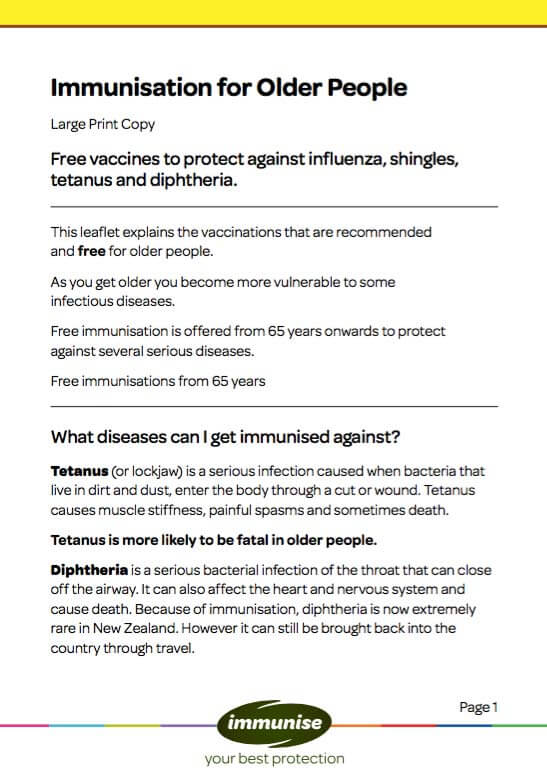
Immunisation for older people (large print) [PDF, 97 KB] Ministry of Health, NZ, 2020
Immunisation for older people(external link) HealthEd, NZ, 2022 Available in the following languages: Chinese (simplified)(external link), Chinese (traditional)(external link), Cook Islands Māori(external link), English(external link), Hindi(external link), te reo Māori(external link), Samoan(external link), Tongan(external link)
References
- Coronavirus disease (COVID-19)(external link) Immunisation Handbook, NZ (external link)
- Influenza(external link) Immunisation Handbook, NZ
- Measles(external link) Immunisation Handbook, NZ
- Pneumococcal disease(external link) Immunisation Handbook, NZ
- Tetanus(external link) Immunisation Handbook, NZ
- Respiratory syncytial virus (RSV)(external link) Immunisation Handbook, NZ
- Zoster (herpes zoster/shingles)(external link) Immunisation Handbook, NZ
2025 immunisation schedule for health professionals(external link) Immunisation Advisory Centre, NZ, 2025
Immunisation Handbook(external link) Health New Zealand | Te Whatu Ora, 2024
Immunisation in older adults(external link) Research Review, NZ, 2025
Immunisation Advisory Centre (IMAC)(external link)
Freephone 0800 IMMUNE (0800 466 863), weekdays 8.30am – 4.30pm. A local source of independent, factual information based on international and New Zealand based scientific research. Clinical information and training for health professionals.
What vaccines are needed for young adults?
Young adults can receive an influenza vaccine every year and depending on their age and situation, COVID-19 boosters and meningococcal vaccines if they are living in communal spaces such as student hostels.
If you’ve missed a vaccination during your childhood, it’s easy to catch up and it’s free if you’re under 18 years of age. For more information read about immunisation for older children and teenagers.
What vaccines do adults need?
All adults can receive an influenza vaccine every year.
- Adults over 30 years of age can receive COVID-19 boosters every 6 months after their last COVID-19 vaccine or COVID-19 infection.
- Adults over 50 are recommended to have a shingles vaccine.
- If you're 60 years of age it's recommended you have an RSV vaccine.
- Tetanus boosters are recommended every 10 years.
Talk to your healthcare provider or pharmacist about which vaccines they recommend based on your vaccination history, travel and medical situation.
What vaccinations do pregnant people need?
During pregnancy, it's important you are protected against infections and illnesses that can be harmful to you and your baby. The best way to be sure of this protection is to get the recommended vaccinations at the appropriate time.
COVID-19, influenza and pertussis vaccinations are recommended. Read more about the vaccinations that are recommended if you're pregnant.
Brochures
Ministry of Health, NZ, 2020
Ministry of Health, NZ, 2020
Chinese (simplified), Chinese (traditional), Cook Islands Māori, English, Hindi, te reo Māori, Samoan, Tongan
Need help now?
Credits: Healthify editorial team. Healthify is brought to you by Health Navigator Charitable Trust.
Reviewed by: Angela Lambie, Pharmacist, Auckland
Last reviewed: