

You can now add Healthify as a preferred source on Google. Click here to see us when you search Google.
Giardia
Giardia infection (giardiasis)
Key points about giardia
- Giardia infection (giardiasis) is a form of gastroenteritis (gastro) caused by a gut parasite.
- It's caught when you swallow the parasites passed on in faeces (poo) of infected people and animals, generally in contaminated water.
- Symptoms, including diarrhoea (runny poo) and stomach cramps, usually appear between 7 and 10 days after infection.
- Good hygiene can help stop it spreading.

Giardia is a parasite found in the gut of infected humans and animals such as cattle, sheep, cats, dogs, rats and possums. It's passed on in the faeces (poo, tūtae) of infected humans and animals. People become infected when they swallow the parasites, usually in contaminated water. Some people can get very sick from giardia.
Giardia can live in the environment for long periods, especially in lakes, rivers, streams and roof water. There is no way of telling by taste, sight or smell if soil, food, water or a surface has giardia parasites.

Image credit: Canva
You get infected when you swallow the parasites. This is commonly by drinking contaminated water or touching your mouth with contaminated hands. Once a person or animal has giardia, they pass on the parasites in their faeces (poo).
The parasites can make soil, food or water, or surfaces such as toys, bathroom taps or doors, and nappy change tables contaminated (unsafe).
Not everyone with giardia gets unwell – it’s possible to be a carrier and spread the disease without being sick with symptoms.
Anyone can become infected with giardia. However, you may increase your risk of picking up the infection if you:
- are in childcare settings
- are in close contact with someone who has the disease
- travel in areas with poor sanitation
- have contact with faeces (poo) during sexual activity
- drink untreated water from springs, lakes, or rivers.
Note: The chance of people getting a giardia infection from dogs or cats is small. The type of giardia that infects humans is usually not the same type that infects dogs and cats.
Giardia infection is a form of gastroenteritis (gastro). The symptoms of giardia infection include:
- diarrhoea (runny poo) – this is the most common
- stomach cramps or tummy pain
- feeling sick or being sick (nausea or vomiting)
- gas and bloating.
Giardia symptoms appear between 3 and 25 days (usually 7 to 10 days) after becoming infected. You can be sick for 3 to 4 days, then feel better, then the symptoms may come back. If you don’t get treatment, this can continue and you can be infectious for months.
Testing for giardia or other causes of acute gastroenteritis isn't usually needed unless you:
- have diarrhoea (runny poo) that lasts longer then 7 days
- are seriously unwell or have a fever or blood in your poo
- are a food handler, healthcare worker, work with children or go to childcare
- have a low immune system (immunocompromised)
- have recently travelled to areas with poor water quality or sanitation.
In these situations you may be asked to provide a stool (poo) sample. This can be tested in the laboratory for giardia and other germs.
Giardia is a notifiable disease. This means that if you are found to have giardia, your healthcare provider will let the Public Health Service know. Someone from your local public health team may contact you to find out how you picked up the parasite. This helps them trace the source of infection to reduce the risk of a large outbreak.
Many people with giardia will get better without treatment. If your healthcare provider decides you need treatment, you may be prescribed antibiotics such as ornidazole or metronidazole, which kill the parasite in your poo and prevent the spread of the infection.
It's also important to drink plenty of fluids to prevent dehydration, especially if you have diarrhoea or have been sick. Older adults and children are most at risk of dehydration. Read more about dehydration.
Medicines for diarrhoea, such as loperamide, are not routinely recommended. They can make things worse by prolonging the diarrhoea and there is a risk that you could develop a serious complication called toxic megacolon. Medicines for diarrhoea are also not recommended for children under 12 years. Before taking them, talk to your healthcare provider about whether they are safe for you.
Many people develop a temporary milk intolerance after having giardia, so you may find it best not to consume milk and lactose-containing foods for about a month after treatment.
Stay away from school, early childhood centres or work until 48 hours (2 days) after the symptoms have gone. However, as giardia infection is a notifiable disease (see diagnosis above) you will need to check with your healthcare provider first.
Don't swim in pools (private or public) for at least 2 weeks after your symptoms have gone.
The best way to prevent giardia infection is to have good hygiene by doing the following:
- Wash your hands often and properly after going to the toilet, handling animals, changing nappies, and before preparing food and drinks.
- Clean, sanitize, or disinfect toys and surfaces.
- At the pool, lake, and other swimming areas, don't swallow the water. When tramping or walking in parks, farms and national reserves, check if the streams or rivers are known to have any giardia.
- Avoid drinking unboiled tap water and eating uncooked foods when travelling in countries where the water supply may be unsafe.

Image credit: Freepik
Diarrhoea and vomiting (gastroenteritis)(external link) Health New Zealand | Te Whatu Ora, 2025
Brochures
Cryptosporidium and giardia(external link) HealthEd, NZ, 2023
Water collection tanks & safe water(external link) HealthEd, NZ, 2022
Giardia – early childhood education fact sheet(external link) Health New Zealand | Te Whatu Ora, NZ, 2017
References
- Giardia(external link) Health New Zealand | Te Whatu Ora
- Parasites – giardia(external link) Centers for Disease Control and Prevention, US, 2024
Antibiotics guide – giardiasis(external link) BPAC, NZ, 2023
Laboratory investigation of infectious diarrhoea(external link) BPAC, NZ, 2012
Assessment and management of infectious diarrhoea(external link) BPAC, NZ, 2009
Schedule of notifiable diseases(external link), Ministry of Health, NZ
Communicable disease control manual – acute gastroenteritis(external link) Health New Zealand | Te Whatu Ora, NZ, 2025
Dunn N, Jurgens A. Giardiasis(external link) StatPearls, NIH, US, 2024
Brochures
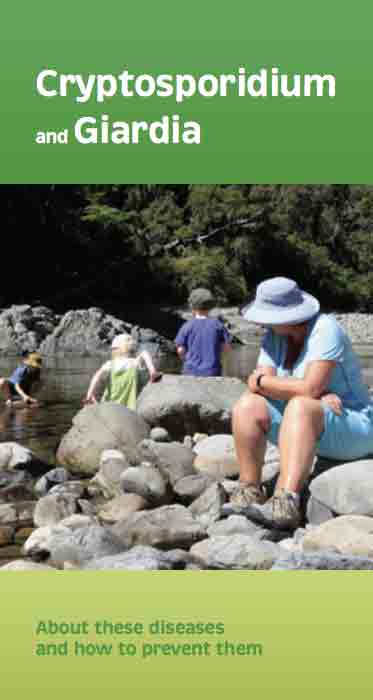
HealthEd, NZ, 2023
HealthEd, NZ, 2022
Need help now?



Credits: Healthify editorial team. Healthify is brought to you by Health Navigator Charitable Trust.
Reviewed by: Dr Grace Lee, FRNZCGP and Clinical Educator
Last reviewed: