

You can now add Healthify as a preferred source on Google. Click here to see us when you search Google.
Food safety
Key points about food safety
- Food safety is about making sure that food is safe for you and your whānau to eat.
- Food can carry harmful bacteria and viruses that can make you sick. This is known as foodborne illness (or food poisoning).
- You can prevent foodborne illness by buying, preparing, cooking and storing food in ways that keep it safe to eat.
- By washing your hands and safely handling food you can avoid getting sick from food at home.
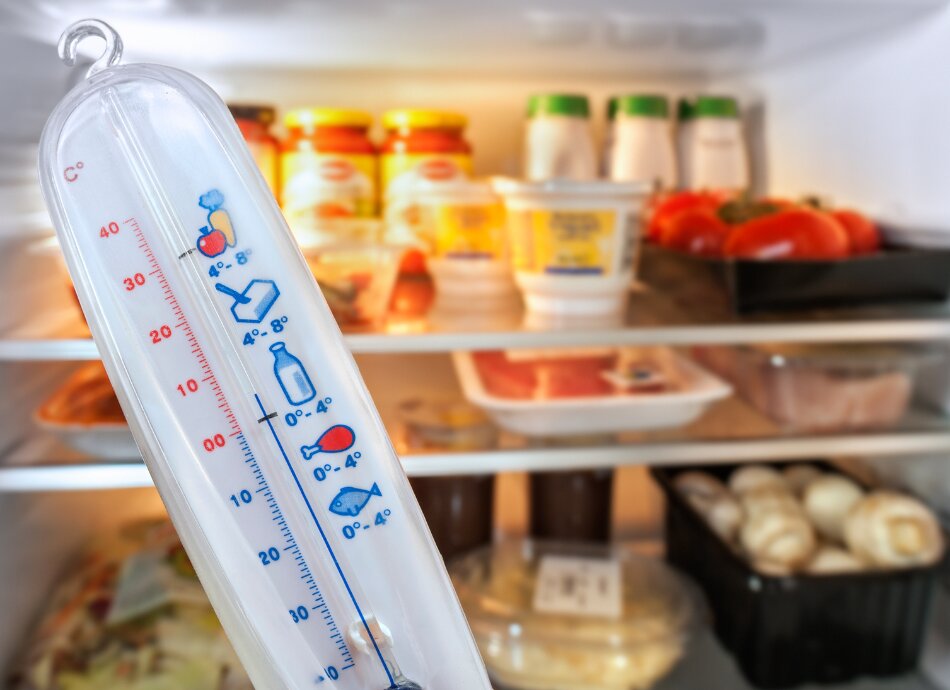
Food safety is about making sure that food is safe to eat and doesn't make people sick. It generally describes ways of handling, preparing and storing foods to prevent foodborne illness (food poisoning).
Food can carry harmful bacteria and viruses that can make you sick. This is known as foodborne illness (or food poisoning).
Some of the most common bacteria and viruses are norovirus, campylobacter, giardia, Clostridium difficile, shigella, salmonella and listeria, and some E. coli.
You can also get sick from eating food when it carries fungi, parasites, toxins and natural contaminants but this is less common.
You can help keep your family from getting sick by following the advice on preparing, cooking and storing food below.
If you have low immunity and think you're sick from something you ate, contact your healthcare provider immediately. Foodborne illness can be mild, but sometimes it can be life-threatening, especially for people with low immunity.
Foodborne illnesses can also be serious for:
- pregnant women and unborn babies
- newborn babies
- older people.
Common causes of foodborne illness are:
- lack of hand washing when preparing food
- storing food for too long and at the wrong temperature
- undercooking food or not reheating food until it's piping hot
- cross-contaminating ready-to-eat foods with raw foods
- using dirty surfaces to prepare food.
The most common symptoms of foodborne illness include stomach cramps, vomiting (being sick), diarrhoea (runny poo), fever, muscle or joint aches.
Symptoms may show up in as little as 20 minutes or they could take several weeks.
You can prevent foodborne illness (food poisoning) by buying, gathering, preparing, cooking and storing food in ways that keep it safe to eat.
When buying food
- Check the use-by dates on food packaging – foods with use-by dates can become unsafe to eat before they are visibly spoiled or off.
- If the food has a best-before date you can eat the food after the date has passed but smell it and look for signs it has 'gone off'. If in doubt, throw it out.
- Avoid foods with damaged packaging – eg, dented or swollen tins, ripped packaging, broken seals.
When gathering food
- Always wash food such as pūhā and watercress thoroughly after gathering or buying from others who have gathered it.
- Before gathering shellfish or other seafood, check with the local regional council, public health unit and the ‘marine biotoxin alerts’ on the Ministry for Primary Industries website(external link) for information about any areas contaminated with algal blooms or other hazards.
When storing food
- Keep your fridge temperature between 2°C and 5°C
- Keep raw and cooked foods separate.
- Store raw meat and seafood on the bottom shelf of the fridge so the raw meat juices don't drip onto other food.
- Don’t overfill your fridge as this can stop cold air from circulating and keeping your food cold.
- Follow storage advice on food labels.
When preparing food:
- Wash your hands with soap and clean water.
- Wipe eggs with a paper tower to remove dirt. Wash your hands and anything else used to prepare eggs with hot soapy water.
- Wash and dry fresh fruit and vegetables and remove any damaged parts before eating them.
- Defrost frozen foods thoroughly so they will cook properly in the middle. Defrost food in your fridge or use the defrost setting on your microwave.
- Don’t wash raw meat, especially chicken, before cooking. This spreads germs and bacteria to your sink and kitchen surfaces, where they can contaminate other food. Pat meat dry with a paper towel instead.
- Use different chopping boards for raw meat, seafood, and ready-to-eat foods such as salads and cheese. If you only have 1 chopping board wash it in hot, soapy water, and dry it well before using it for other food.
When cooking food
- Cook your food at the right temperature for the right amount of time to help kill harmful germs.
- Follow the cooking instructions on food labels.
- Cook chicken and pork until cooked right through. Chicken juices should run clear, and the meat shouldn't be pink in the middle.
- Cook minced meat products such as beef, pork, chicken, lamb, burgers, sausages and dumplings all the way through, until juices run clear.
- If you have a meat thermometer, check the thickest part of the meat. It should be cooked to a temperature of 75°C for 30 seconds, 70°C for 3 minutes, or 65°C for 15 minutes.
- To prevent cross-contamination, use one set of utensils, plates, or bowls for raw meat and chicken, and another set for cooked food.
- Cook eggs until the white is completely firm and the yolk begins to thicken.
- Defrost frozen foods in the fridge or microwave so they cook properly in the middle. Or follow cooking instructions on labels or packaging that say you can cook the food directly from frozen.
Storing and using leftover food
- Cover leftovers and store them in the fridge within 2 hours of cooking.
- When in doubt, throw it out.
- Eat cold leftovers (eg, pasta salad) within 2 days and reheat cooked food within 4 days (must be reheated until over 75°C and piping hot). Rice-based dishes carry extra risks and need to be reheated and eaten within 2 days.
- Avoid reheating your leftovers more than once.
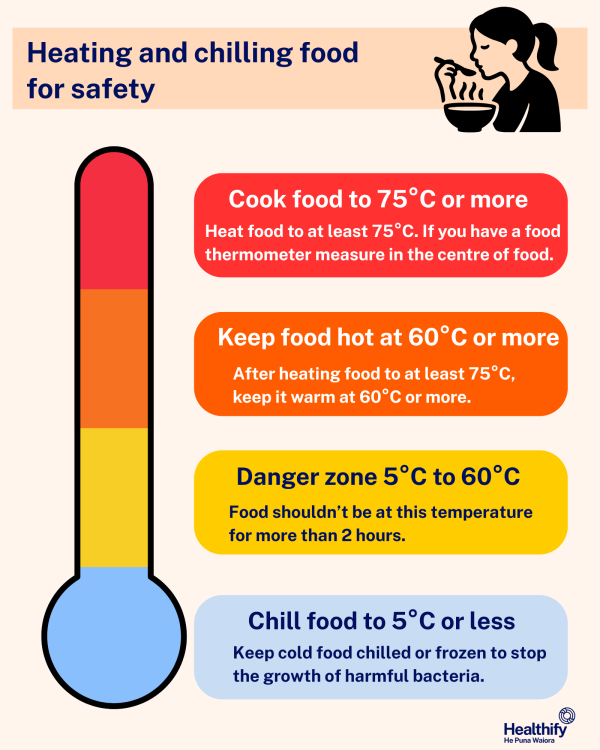
Image credit: Healthify He Puna Waiora
Clean water for drinking and cooking is just as important as having clean and safe food.
If you're not on city or town water supplies and collect your water in tanks or source it from bores or waterways, there are some important steps to make sure the water is clean and safe to use.
Tank water may be collected from:
- rain off the roof
- natural water, such as from streams or lakes
- a bore (a deep hole in the ground)
- a spring.
Water supplies from all these sources can very easily become unsafe:
- Roof water may be corrosive or may become contaminated with ash, dust, agricultural spraying or bird or possum droppings.
- River or stream water and shallow bore water and springs can become contaminated from many sources such as animals, algae, chemicals, or be discoloured and unpleasant to taste.
- Bore water can be hard and corrosive.
If you use any of these sources for your water, make sure you do regular checks of your water quality.
Video: Food safety tips when cooking eggs at home
Food safety at home(external link) Ministry for Primary Industries, NZ
Preparing and storing food safely at home(external link) Ministry for Primary Industries, NZ
Is it safe to eat?(external link) Ministry for Primary Industries, NZ
Summer food safety(external link) Ministry for Primary Industries, NZ
Food safety when fishing and gathering shellfish(external link) Ministry for Primary Industries, NZ
Brochures
UMU Pasifika – food safety for Pacific peoples(external link) Ministry for Primary Industries, NZ, 2018
He whakatairanga i ngā ahuatanga mahi mō te tunu hāngi | food safety practices in preparing and cooking a hāngi(external link) Ministry for Primary Industries, NZ, 2013
Food safety in the home(external link) Ministry for Primary Industries, NZ, 2021
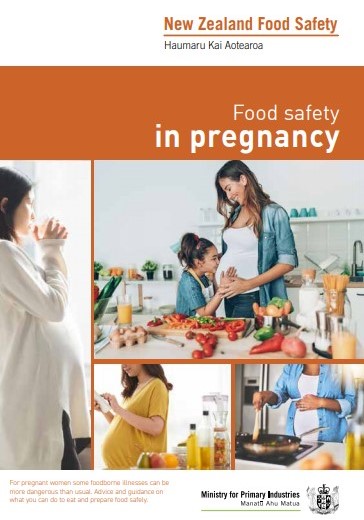
Food safety in pregnancy(external link) New Zealand Food Safety, 2020
Food safety for seafood gatherers(external link) New Zealand Food Safety, NZ, 2023
Food safety tips for event organisers(external link) New Zealand Food Safety, NZ, 2025
What causes food poisoning(external link) New Zealand Food Safety, NZ, 2020
References
- Eating and activity guidelines for NZ adults(external link) Health New Zealand | Te Whatu Ora, 2020
- What causes food poisoning(external link) New Zealand Food Safety, NZ, 2020
Brochures
Ministry for Primary Industries, NZ, 2013
Ministry for Primary Industries, NZ, 2021
New Zealand Food Safety, 2020
Need help now?

Credits: Healthify editorial team. Healthify is brought to you by Health Navigator Charitable Trust.
Reviewed by: Lily Henderson, Registered Dietitian
Last reviewed: