

You can now add Healthify as a preferred source on Google. Click here to see us when you search Google.
Metoclopramide
Sounds like 'met-oh-kloe-pra-mide'
Key points about metoclopramide
- Metoclopramide is used to treat and prevent nausea and vomiting.
- It's only used for a short time (up to 5 days).
- Find out how to take it safely and possible side effects.

Metoclopramide is used to treat and prevent nausea (feeling sick) and vomiting (being sick) due to several causes. It can be used:
- during cancer treatment, such as after radiotherapy or with chemotherapy
- for nausea and vomiting with migraine headaches
- for severe vomiting in pregnancy
- as a single dose before scans, X-rays and procedures of the stomach and gut
- after surgery
- for end-of-life (palliative) care
- for people who have poor emptying of their stomachs (gastroparesis).
Metoclopramide works by blocking a chemical in the brain, called dopamine, known to trigger nausea and vomiting. It also speeds up the movement of food through your stomach and gut, helping to stop you feeling sick.
In Aotearoa New Zealand, metoclopramide is available as tablets (10 mg) and can be given as an injection in the hospital. It’s only available on a prescription written by a prescriber.
Always take your metoclopramide exactly as your healthcare provider has told you. The pharmacy label on your medicine will tell you how much metoclopramide to take, how often to take it, and any special instructions.
- The dose of metoclopramide will be different for different people, depending on what you're taking it for.
- The usual dose for adults, 20 years and over, is 1 tablet (10 mg) three times a day.
- If you're under 20 or over 65 years of age, your healthcare provider may recommend other medicines first because you're at increased risk of side effects.
- If you're under 60kg, you may be prescribed a lower dose of metoclopramide.
- Metoclopramide should only be used for a short time (up to 5 days).
- Take metoclopramide with a glass of water.
- If you're taking metoclopramide three times a day, spread your doses evenly throughout the day – every 8 hours is recommended.
- Missed dose: If you forget your dose, take it as soon as you remember that day. But, if it's nearly time for your next dose, just take the next dose at the usual time. Don't take double the dose.
Here are some things to know when you're taking metoclopramide. Other things may be important as well, so ask your healthcare provider what you should know about.
- Driving: Metoclopramide can make you feel tired or dizzy. Be careful when driving or using tools until you know how this medicine affects you.
- Alcohol: Limit drinking alcohol while you're taking metoclopramide. Alcohol can increase the risk of side effects such as drowsiness, dizziness and or lightheadedness.
- Other medicines: Metoclopramide interacts with some medicines, herbal supplements and rongoā Māori, so check with your healthcare provider before starting metoclopramide and before starting any new products.
- Pregnancy or breastfeeding: Talk to your healthcare provider if you're pregnant, planning a pregnancy or want to breastfeed.
Like all medicines, metoclopramide can cause side effects, although not everyone gets them. If you're concerned about any symptoms you think might be related to your medicine, talk to your healthcare provider. The following information offers some guidance but doesn't include all possible side effects.
Tell your healthcare provider if these side effects bother you.
- Feeling drowsy, tired or dizzy: Be careful when driving or using tools until you know how this medicine affects you. Don’t drink alcohol. Be careful when getting up from either lying down or sitting to avoid falls. These effects put you at risk of falls and injuries, especially if you're an older adult.
- Trouble sleeping.
- Headache.
- Diarrhoea (runny poo).
Tell your healthcare provider immediately or phone Healthline free on 0800 611 116 if these occur
- Anxiety, agitation.
- Breast changes such as pain or enlargement.
- Signs of movement changes such as shaking (tremors), slow or difficult movements, muscle stiffness.
- Uncontrolled movements of the tongue, face, mouth or jaw.
Read more about medicines and side effects and reporting a reaction you think might be a side effect.
The following links have more information on metoclopramide.
Metoclopramide(external link) New Zealand Formulary Patient Information
Brochures
Medicines and side effects(external link) Healthify He Puna Waiora, NZ, 2024
5 questions to ask about your medications(external link) Health Quality and Safety Commission, NZ, 2019 English(external link), te reo Māori(external link)
References
- Metoclopramide(external link) New Zealand Formulary
- Motility stimulants(external link) New Zealand Formulary
- Metoclopramide Actavis(external link) Medsafe Datasheet, NZ
- Managing nausea and vomiting in the last days of life(external link) BPAC, NZ, 2023
- Cancer care: the role of primary care in identifying and managing cachexia(external link) BPAC, NZ, 2021
- The Palliative Care Handbook(external link) NZ, 2024
Can I use metoclopramide in pregnancy?
Talk to your healthcare provider if you have severe and persistent vomiting during your pregnancy. Metoclopramide is an option but other medicines are usually tried first.
Metoclopramide is usually only used in people aged 20 years or over and for a maximum of 5 days. Read more about severe vomiting in pregnancy.
What is metoclopramide used for?
Metoclopramide is used to treat and prevent nausea (feeling sick) and vomiting (being sick) due to several causes.
Read more about what these might be in the ‘What is metoclopramide’ section above.
What are the side effects of metoclopramide?
Feeling drowsy, tired, dizzy or agitated and restless are common side effects of metoclopramide. Less common are having trouble sleeping (insomnia), headaches and diarrhoea (runny poo). Read more about possible side effects of metoclopramide.
Like all medicines, metoclopramide can cause side effects, although not everyone gets them. If you're concerned about any symptoms you think might be related to your medicine, talk to your healthcare provider.
Brochures
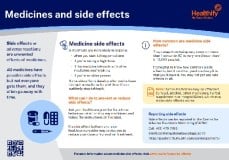
Medicines and side effects
Healthify He Puna Waiora, NZ, 2024
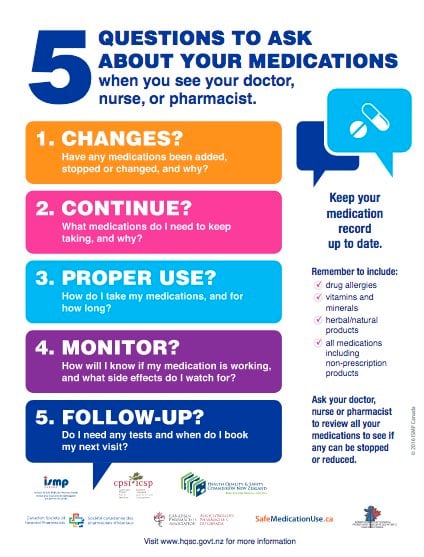
Health Quality and Safety Commission, NZ, 2019 English, te reo Māori
Free helplines



Credits: Healthify editorial team. Healthify is brought to you by Health Navigator Charitable Trust.
Reviewed by: Stephanie Yee, Pharmacist, Auckland
Last reviewed: