

You can now add Healthify as a preferred source on Google. Click here to see us when you search Google.
Medicines list
Key points about a medicines list
- A medicines list can be a useful way to keep all the information about your current medicines together.
- In Aotearoa New Zealand, a medicines list that the patient keeps is also called a 'yellow card'.
- It's important to keep it up to date.
- Find out how to start making a medicines list.

A medicines list is used to record all the medicines you use. This list includes:
- all medicines that your healthcare provider has prescribed, including creams, ointments, eye medication, inhalers or puffers, sprays and patches
- medicines you bought at a supermarket, pharmacy, health shop, gym or online over the internet
- vitamins and mineral supplements, herbal and natural remedies, alternative, complementary and rongoā therapies
- medicines you take only when you need them, such as pain relief, indigestion remedies, or angina medicines.
Your medicines list will also have other details such as:
- what each medicine is for
- how much of each you use
- when and how to use each medicine
- any drug allergies, side effects, or sensitivities you have.
Healthcare providers need to know what medicines you're on to help them make decisions about your care and to prevent errors occurring. A medicines list is the best way to keep all the information about your medicines together. It will:
- remind you or your carer how and when to take your medicine
- help you to know more about your medicines and what they're for
- help your healthcare provider and pharmacist check and review your medicines
- provide important information about your medicines in an emergency.
Take your medicines list with you to each healthcare provider's appointment, trip to the pharmacy or hospital.
While your healthcare provider or pharmacist may have a list of your medicines on their records, it may not be the most accurate list of the medicines you're taking because:
- you might be seeing more than one healthcare provider
- you might be using medicines bought from the supermarket, health shop or over the counter from your pharmacy
- you may have had changes to your medicines during a recent hospital visit.
Video: Understanding your medicines
In this video Merle talks about the importance of understanding and managing your medicines.
In Aotearoa New Zealand, your pharmacist can help you create a medicines list. This is commonly called a 'yellow card'. The yellow card is used throughout New Zealand to help people keep a record of their medicines.
- The yellow card has information such as medicine name, strength, form, dosing, what it's for and other special instructions about how to take it or possible side effects to watch out for.
- If you don't have a yellow card, talk to your pharmacist about creating one.
- Before you leave the hospital, the pharmacist can help you create or update your yellow card.
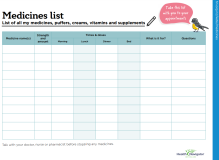
If you don't have access to a yellow card, you can use My medicines list [PDF, 605 KB].
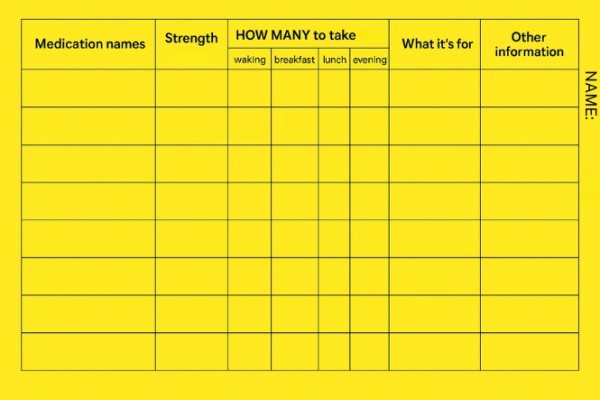
Keep your medicines list or 'yellow card' updated to make sure it's a correct record of the medicines you're taking. Update your list when:
- you start a new medicine
- there are changes to the dose of your medicines
- leaving hospital (because changes to medicines are quite common during a stay in hospital)
- seeing many healthcare providers such as doctors, nurse practitioners, specialists and hospital clinics.
Brochures
Te Kete Haerenga medicines list [PDF, 54 KB] Health Navigator Charitable Trust, NZ
Making sure you are taking the right medicines(external link) HQSC NZ
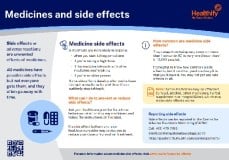
Medicines and side effects(external link) Healthify He Puna Waiora, NZ, 2024
5 questions to ask about your medications(external link) Health Quality and Safety Commission, NZ, 2019 English(external link), te reo Māori(external link)
Brochures

Free helplines

Credits: Healthify editorial team. Healthify is brought to you by Health Navigator Charitable Trust.
Reviewed by: Stephanie Yee, Pharmacist, Auckland.
Last reviewed: