

You can now add Healthify as a preferred source on Google. Click here to see us when you search Google.
How do I know my medicines are working?
Key points about how to know if medicines are working
- When you start a new medicine, find out as much as you can about your medicine before you start taking it.
- If your medicine brand changes, check with your healthcare provider to understand any differences and what to expect.
- Knowing what to expect, when your medicine should work, and if blood tests are needed can help you tell how well your medicine is working.
- Here are some tips to help you know whether your medicine is working.

Find out as much as you can about your medicine from your healthcare provider before you start taking it
Some things to ask your healthcare provider include:
- what the medicine is for
- how to take it correctly so that it has the right effect
- how long it takes before the medicine makes a difference
- how to know if it's working or whether you need a test for this.
For some medicines, such as allergy medicines, it's easy to see your medicine is working, because your allergy symptoms improve. But some medicines are used for conditions where you don't notice the symptoms, such as high cholesterol, so you can only tell they're working with a blood test. Understanding what your medicine does, how soon it should start working, and what reactions might happen can help you stay calm and confident, even if improvement is gradual.
Be prepared and know what to expect
Before you begin taking a new medicine, talk with your healthcare provider about what it’s supposed to do and how long it may take to notice results. Some medicines act fast, such as pain relievers, while others need more time to have an effect. Knowing when your medicine should work helps you see how well it’s helping you.
Generic medicines are designed to work the same way as the original brand-name medicines. They contain the same active ingredients, have the same dosage, strength, and are given in the same way and must meet the same standards for quality and efficacy set by Medsafe NZ. Read more about generic medicines.
However, there are a few things that can make them feel or work slightly different for some people:
- Inactive ingredients (also called excipients): Generics may have different inactive ingredients such as fillers, binders, or colouring agents. While these don’t affect the medicine's main action, some people might be sensitive or allergic to these ingredients. Read more about excipients in medicines.
- How the body absorbs the medicine: Although generics must prove they deliver the active ingredient into the bloodstream in a similar way, minor variations are allowed within a certain range. In rare cases, this can cause slight differences in how quickly or strongly the medicine works.
- Perception and placebo effect: Sometimes people feel that generics don’t work as well just because they expect brand-name drugs to be 'better'.
If you have any concerns about switching to a generic medicine or another brand, it’s a good idea to talk with your healthcare provider.
Different medicines take different amounts of time to work. For example:
- Pain relief medicines may work within minutes to a few hours.
- Antibiotics may take a couple of days before your infection starts to clear.
- Antidepressants may take a few weeks before you notice an improvement in mood.
- Blood pressure or cholesterol medicines, may not make you feel any different, but blood tests or check-ups after a few weeks can show whether they’re working.
If your medicine brand changes, you may not notice any difference. If you do, give your body time to adjust, as the active ingredients are the same and the medicine should work just as well. If you have any concerns, talk to your healthcare provider.
You may be able to monitor your own symptoms to see if a medicine makes you feel better. Keeping a diary or a journal can help you to track when you've taken a medicine and any changes in symptoms you experience.
After you start taking the medicine, pay attention to how you feel compared to before you started the medicine or if your medicine brand has changed. Signs that your medicine is working may include:
- Fewer or milder symptoms.
- Feeling better in daily life and able to do more activities. This could mean having more energy, sleeping well, or being in a better mood.
Here is an example of a symptom diary(external link).
If you're taking your medicine ‘as needed’, be sure to keep track of the time you take it and the amount of each dose every time you take it.
If you start a new medicine or your medicine brand changes and you get new symptoms or your symptoms get worse, contact your healthcare provider right away.
Some medicines, such as warfarin and medicines for high cholesterol or diabetes need careful monitoring with blood tests. This is to check that you're getting the right dose, and that it's working as expected. You may need to go to a laboratory for the test, or your healthcare provider may be able to take a blood sample. The test results will tell you and your healthcare provider whether any changes are needed to make sure you're getting the treatment you need.
If you're concerned that a new medicine or a different brand of your usual medicine is not working as expected, talk with your healthcare provider.
Don't stop taking the medicine without speaking to your healthcare provider first. Some medicines need to be stopped slowly, over time, to prevent side effects or your symptoms getting worse. For example, suddenly stopping an antidepressant may make your symptoms worse.
If your symptoms haven’t improved as expected or have got worse, check with your healthcare provider. For example:
- Pain relief: If you’re still in pain after several doses, contact your healthcare provider.
- Antibiotics: If your symptoms haven’t improved after 3 days, see your healthcare provider.
- Side effects: If you notice severe side effects, contact your healthcare provider.
Understanding when to get advice helps you have realistic expectations and makes sure you don’t wait too long or stop your medicine too soon.
Brochures
5 questions to ask about your medications(external link) Health Quality and Safety Commission, NZ, 2019 English(external link), te reo Māori(external link)
Medicines and side effects [PDF, 91 KB] Healthify He Puna Waiora, NZ, 2024
Brochures
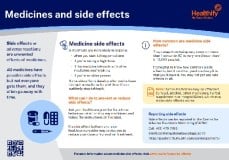
Medicines and side effects
Healthify He Puna Waiora, NZ, 2024
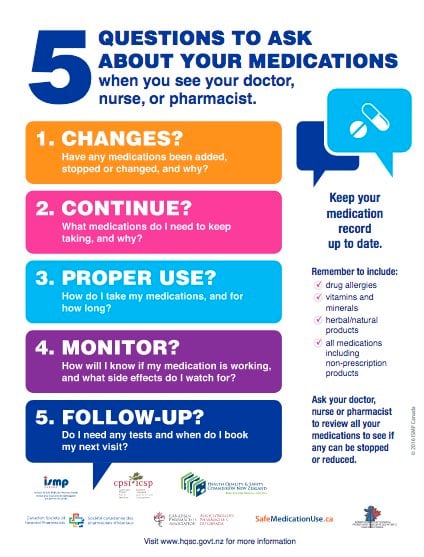
Health Quality and Safety Commission, NZ, 2019 English, te reo Māori
Free helplines


Credits: Sandra Ponen, Pharmacist, Healthify He Puna Waiora. Healthify is brought to you by Health Navigator Charitable Trust.
Reviewed by: Angela Lambie, Pharmacist, Auckland
Last reviewed: