

If you're a frequent visitor to Healthify, why not share our site with a friend? Don't forget you can also browse Healthify without using your phone data.
Hyoscine patch
Also called scopolamine hydrobromide
Key points about hyoscine patches
- Hyoscine patches are used to prevent nausea and vomiting caused by motion sickness.
- They're also called hyoscine hydrobromide or scopolamine hydrobromide.
- Find out how to apply the patches safely and possible side effects.

Hyoscine (also called scopolamine) is used to prevent nausea (feeling sick) and vomiting (being sick) caused by motion sickness.
It works by blocking certain signals to the brain that can cause nausea and vomiting.
In Aotearoa New Zealand, hyoscine patches can be bought over the counter from your pharmacy without a prescription. Read more about motion sickness.
Note: Hyoscine is also available as tablets which are used to relieve tummy (stomach) cramps or pain. Read more about hyoscine tablets.
- In adults and children 10 years and older, one hyoscine patch is applied to the skin behind the ear.
- When used for motion sickness, it should be applied at least 5 hours before the journey.
- You can remove the patch after the journey, or if you're taking a long journey, you can keep it on for up to 72 hours (3 days). The patch will still be effective. If treatment is to be continued for more than 3 days, remove the first patch and apply a new one behind the opposite ear.
Note: Hyoscine patches can make you sleepy which may continue into the following day after you've removed the patch. It's important not to drive until you know how this medicine affects you.
- Are you under the age of 10 or an older adult who is frail?
- Are you pregnant or breastfeeding?
- Do you have a fever?
- Have you ever had problems with your bowel (such as reflux, diarrhoea, ulcerative colitis, bowel obstruction)?
- Do you have epilepsy?
- Do you have high blood pressure, a fast heart rate or any other problems with your heart?
- Do you have prostate problems or problems passing urine (peeing)?
- Do you have glaucoma (increased pressure in your eye) or problems with your eyes?
- Do you have problems with your liver or kidneys?
- Have you ever had problems with psychosis?
- Do you have myasthenia gravis?
- Are you taking or using any other medicines? This includes any medicines being taken which are available to buy without a prescription, as well as herbal and complementary medicines.
If so, it’s important that you tell your healthcare provider or pharmacist before using a hyoscine patch. Sometimes a medicine isn’t suitable for a person with certain conditions, or it can only be used with extra care.
- Peel off the clear backing from the patch and apply it to a clean, dry area of the skin behind the ear.
- Choose an area with little or no hair and free of scars, cuts, or irritation.
- Press the patch firmly for at least 30 seconds to make sure it sticks well, especially around the edges.
- Apply the patch straight after removing it from its wrapping. Don't cut it into smaller pieces and don't touch the sticky surface of the patch.
- Use only one patch at a time.
- Wash your hands thoroughly with soap and water after handling the patch to prevent the medicine from accidentally getting into your eyes. Also, wash the area behind the ear after the patch is removed.
- If you forget to wear or change a patch, apply or replace with a new one when you remember. Don't apply more than one patch at a time to make up for it.
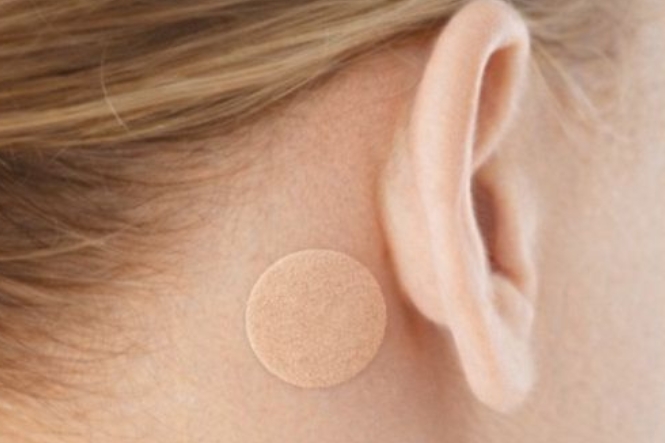
Image credit: Healthify He Puna Waiora
Here are some things to know when you're using a hyoscine patch. Other things may be important as well, so ask your healthcare provider what you should know about.
- Driving: Hyoscine patches can make you feel tired or dizzy. Be careful when driving or using tools until you know how this medicine affects you.
- Alcohol: Limit or avoid alcohol while you're wearing the patch. It can increase your chance of side effects such as feeling sleepy.
- Bathing and showering: The patch should stay in place even during showering, bathing, or swimming.
- Replacing the patch: If the patch does come off or needs to be replaced, remove the old patch and place a new one behind the other ear, on a clean, dry, hairless area.
- Disposing of the patch: When throwing away the old patch, fold it in half with the sticky side together and throw away in the rubbish. Keep it out of the reach of children and pets.
- MRI scans: Remove the patch before having an MRI scan, as it may heat up and cause skin burns. Tell your healthcare team if you're wearing a hyoscine patch.
-
Other medicines: Hyoscine patches can interact with some medicines, herbal supplements and rongoā Māori, so check with your healthcare provider before using a hyoscine patch and before starting any new products.
Like all medicines, hyoscine patches can cause side effects although not everyone gets them. If you're concerned about any symptoms you think might be related to your medicine, talk to your healthcare provider. The following information offers some guidance but doesn't include all possible side effects.
Some people who use the patch for more than 3 days may feel unwell when it's removed. You can feel sick (nausea), be sick (vomit), get a headache, feel dizzy, get blurred vision or have problems with balance. These usually settle within a few days. Tell your healthcare provider if symptoms are severe or do not improve.
Tell your healthcare provider if these side effects bother you
- Redness, burning, itch or irritation on the skin where the patch is applied.
- Dry mouth: To relieve dry mouth, suck ice chips, drink water, or use a saliva substitute.
- Constipation.
- Problems with your eyesight and vision such as blurred vision.
- Feeling sleepy and dizzy: Be careful when driving or using tools until you know how this medicine affects you. This may last for 24 hours or longer after the patch is removed. Don’t drink alcohol.
- Feeling restless.
Tell your healthcare provider immediately or phone Healthline free on 0800 611 116 if these occur
- Feeling confused.
- Skin feels flushed, dry and hot and you’re not sweating: Try to keep cool, sponge your skin with cool water and drink plenty of water.
- Changes in your heart rate such as fast or irregular.
Read more about medicines and side effects and reporting a reaction you think might be a side effect.
The following links have more information on hyoscine patches:
Hyoscine hydrobromide (patch)(external link) New Zealand Formulary Patient Information
Scopolamine transdermal system(external link) Medsafe Consumer Medicine Information, NZ
Brochures
Medicines and side effects(external link) Healthify He Puna Waiora, NZ, 2024
5 questions to ask about your medications (external link)Health Quality and Safety Commission, NZ, 2019 English(external link), te reo Māori(external link)
References
- Hyoscine hydrobromide(external link) New Zealand Formulary
- Safe use of transdermal patches(external link) New Zealand Formulary
- Scopolamine transdermal system(external link) Medsafe datasheet, NZ
- Gathering knowledge from adverse reaction reports: September 2025(external link) Medsafe, NZ, 2025
- Anticholinergic burden in older people(external link) BPAC, NZ, 2024
What is a hyoscine patch used for?
Hyoscine patches (also called scopolamine) are used to prevent nausea (feeling sick) and vomiting (being sick) caused by motion sickness.
It works by blocking certain signals to the brain that can cause nausea and vomiting.
Where do I apply a hyoscine patch?
One hyoscine patch should be applied to a clean, dry area of the skin behind the ear. Choose an area with little or no hair and free of scars, cuts, or irritation.
Read more about how to use a hyoscine patch.
Brochures
Medicines and side effects
Healthify He Puna Waiora, NZ, 2024
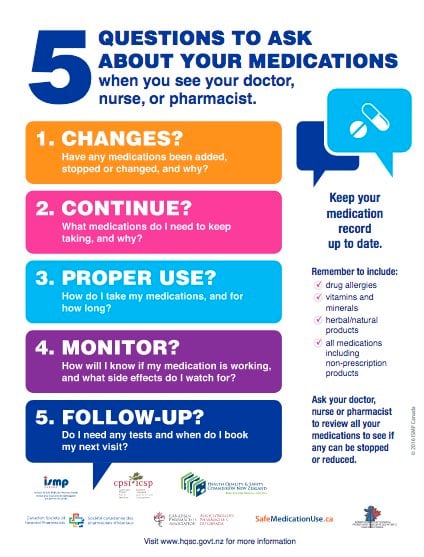
Health Quality and Safety Commission, NZ, 2019 English, te reo Māori
Free helplines



Credits: Healthify editorial team. Healthify is brought to you by Health Navigator Charitable Trust.
Reviewed by: Stephanie Yee, Pharmacist, Auckland
Last reviewed: