

You can now add Healthify as a preferred source on Google. Click here to see us when you search Google.
Decongestant tablets and capsules
Key points about decongestant tablets and capsules
- Decongestants are used for the temporary relief of a stuffy or blocked nose or sinus congestion.
- Find out how to take them safely and possible side effects.

Decongestant tablets and capsules help relieve a blocked or stuffy nose and congested sinuses. They are commonly found in cold and flu medicines. These medicines work by narrowing the blood vessels in your nose, throat, and sinuses, which helps reduce swelling and ease congestion.
The main decongestants found in tablets and capsules are phenylephrine and pseudoephedrine. Phenylephrine is often combined with other ingredients in cold, flu, cough, or sinus relief medicines.
- Phenylephrine: Cold and flu medicines containing phenylephrine can be bought over the counter from a pharmacy. There is conflicting evidence about whether these products are any more effective than just using pain relief medicines such as paracetamol).
- Pseudoephedrine: In Aotearoa New Zealand pseudoephedrine is only available from pharmacies after a discussion with a pharmacist. They will check if the medicine is suitable for you, and will record the sale, your name and address. Read more about pseudoephedrine..
Examples of decongestant tablets and capsules
Common examples include:
- Codral Cold and Flu®
- Codral Day and Night®
- Maxiclear Sinus Relief®, Sudafed PE®
- Noumed Decongestant®
- Sudafed Sinus and Nasal Decongestant®
- Maxiclear Cold and Nasal Relief®
- Lemsip Max Cold and Flu®.
Note: Decongestants are also available as nasal sprays or drops. These generally have fewer side effects and are often more effective in relieving nasal congestion. Read more about decongestant nasal sprays or drops.
Decongestants aren't suitable for everyone. It’s important to know when and how to use these medicines because they can be bought without a prescription. Ask your pharmacist for advice to make sure they are suitable for you
They should NOT be used if you have the following conditions
- You are taking tranylcypromine (Parnate) or moclobemide (Aurorix) for depression.
- You have high blood pressure that isn’t being properly managed or treated.
- You have serious heart problems caused by blocked or narrowed blood vessels that supply blood to the heart (coronary artery disease).
Note: Athletes should take care when using pseudoephedrine. Pseudoephedrine is prohibited in competition by the World Anti-Doping Agency (WADA) in-competition prohibited list.
They should be used with caution if you have the following conditions
Ask your doctor or pharmacist for advice if you have:
- problems with your heart or kidneys
- high blood pressure (hypertension)
- diabetes
- glaucoma
- problems with your thyroid gland
- prostate problems.
Like all medicines, decongestant tablets and capsules can cause side effects, although not everyone gets them. If you're concerned about any symptoms, talk to your healthcare provider. The following information offers some guidance but doesn't include all possible side effects.
Common side effects
Tell your healthcare provider if they bother you.
- Dizziness
- Dry mouth
- Headache
- Feeling restless, shaky or nervous
- Trouble sleeping: Avoid taking a dose near bedtime.
Tell your healthcare provider immediately or phone Healthline free on 0800 611 116 if these occur
- Severe headache, nausea, vomiting and any changes in your vision, including loss of vision or blurred vision.
- Small blisters on the skin.
- Signs of problems with your colon such as sudden stomach pain and bleeding from the bottom (rectum).
Read more about medicines and side effects and reporting a reaction you think might be a side effect.
References
- Systemic nasal decongestants(external link) New Zealand Formulary
- Cold season – managing without antibiotics(external link) BPAC, NZ, 2018
- Spotlight on cold and flu medicines containing pseudoephedrine(external link) Medsafe NZ, 2024
Brochures
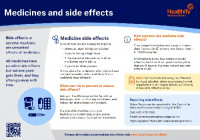
Medicines and side effects
Healthify He Puna Waiora, NZ, 2024
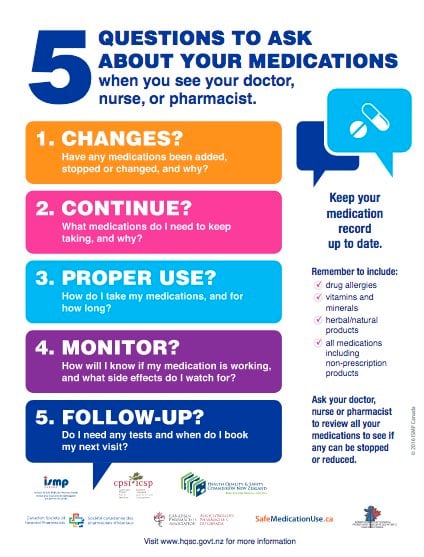
Health Quality and Safety Commission, NZ, 2019 English, te reo Māori
Free helplines

Credits: Sandra Ponen, Pharmacist, Healthify He Puna Waiora. Healthify is brought to you by Health Navigator Charitable Trust.
Reviewed by: Angela Lambie, Pharmacist, Auckland
Last reviewed: