

You can now add Healthify as a preferred source on Google. Click here to see us when you search Google.
Pain and bleeding in early pregnancy | Totonga hapūtanga
Key points about pain and bleeding in early pregnancy
- It's common to have pain and/or bleeding in early pregnancy (totonga hapūtanga).
- Most people who experience it go on to have a healthy pregnancy and baby.
- However, it can be a warning sign of a miscarriage or an ectopic pregnancy, so you should talk to your lead maternity carer (LMC) or healthcare provider if it happens to you.

Pain and bleeding in early pregnancy is any pain (kōharihari) in the lower part of your tummy and/or bleeding (toto) from your vagina (tenetene) in the first 3 months of pregnancy. Any pain or bleeding in early pregnancy should be checked by your lead maternity carer (LMC) or healthcare provider.
About 1 in 4 pregnant people get pain and bleeding early in their pregnancy. Most go on to have a healthy pregnancy and baby. However, the pain or bleeding can be a warning sign of a miscarriage or ectopic pregnancy so you should talk to your maternity healthcare provider if you have these symptoms in early pregnancy.
You may need to have blood tests and an ultrasound scan to find out the cause. Sometimes a cause can’t be found – this is okay as long as concerning causes have been ruled out.
If you feel upset or distressed about this happening, there’s support available.
- heavy bleeding enough to soak a sanitary pad within an hour
- passing large blood clots
- high fever or chills
- feeling dizzy or faint
- appearing pale
- unpleasant smelling vaginal discharge
- crampy pain or severe pain on the lower part of your abdomen (tummy)
- pain in your shoulder (this could be a sign of ectopic pregnancy).
Possible causes of pain and/or bleeding in early pregnancy
- An implantation bleed – this can happen after fertilisation of an egg when the developing embryo attaches itself to the wall of your womb. It often happens around the time your period would have been due. The bleeding is usually light and there’s no pain.
- A cervical bleed – your cervix may bleed in pregnancy due to hormonal changes and increased blood flow. Bleeding can happen after sex. This bleeding is usually harmless, but if you’ve had an abnormal cervical screening result in the past or you’re overdue for cervical screening, your cervix must be checked by a healthcare provider to make sure there’s no problem with your cervix.
- A miscarriage – this is the loss of the pregnancy before 20 weeks’ gestation. Read more about miscarriage.
- An ectopic pregnancy – this is a pregnancy that occurs outside of your womb (uterus). Read more about ectopic pregnancy.
Possible causes of pain and/or bleeding not related to pregnancy
- Vaginal/cervical injury.
- Polyps or an abnormality of your cervix.
- An infection of your womb (uterus) or cervix.
- Abdominal pain from causes such as a urinary tract infection (UTI), appendicitis or constipation.
You should see a healthcare provider or your lead maternity carer (LMC) if you have bleeding in early pregnancy. How urgently you need to be seen depends on how much bleeding you have.
Spotting or light bleeding
A few spots of blood on your underwear or on the toilet paper after you wipe yourself is known as spotting. With spotting or light bleeding, wearing a panty-liner is enough and you don’t usually need a sanitary pad. If you have spotting in early pregnancy, contact or make an appointment with your LMC or GP. It’s okay to wait 24 to 48 hours for this appointment. Usually your pregnancy will be fine, and the bleeding will stop on its own, but you should still get checked.
Moderate vaginal bleeding
If you soak your pad within 2 to 4 hours, or you have pain that doesn’t improve with pain relief, you need to:
- contact or see your LMC or healthcare provider more urgently, or
- go to an after-hours clinic – on the same day if you can.
Heavy vaginal bleeding
Contact your LMC or healthcare provider immediately or go to an after-hours clinic or your nearest emergency department.
Your midwife or healthcare provider will ask you some questions about your symptoms, including when they started, the date of your last period and about any past pregnancies. They may also examine your tummy and vagina to work out what is causing your bleeding and/or pain. A vaginal examination won't harm the pregnancy or cause you to miscarry.
You may need some blood tests and an ultrasound scan, depending on what your healthcare provider thinks is causing your symptoms. A urine test or vaginal swabs to check for infection may be recommended. The ultrasound scan can be done either abdominally (when the ultrasound probe is on the lower part of your tummy), or vaginally (when the ultrasound probe is put into your vagina). In early pregnancy, a vaginal scan often needs to be done to get a clear view of your womb. You may also need a urine pregnancy test to confirm your pregnancy if this hasn't already been done.
Sometimes, it may not be possible to find out the cause of the bleeding and pain.
Your blood group may be checked. If your blood group is rhesus D negative (RhD-) and you have heavy bleeding you'll need an injection of Anti-D immunoglobulin to prevent complications that may occur because of your blood type.
Understanding your test results
Your ultrasound scan and blood tests will help your healthcare provider or LMC work out what is happening.
Possible outcomes
- No cause for the bleeding is found and your pregnancy is developing and progressing normally.
- You're in the process of having a miscarriage or have had a miscarriage.
- Your blood test showed a high level of pregnancy hormone, but no pregnancy could be seen on the ultrasound scan. This can happen when the pregnancy is still too small to be seen, when you've already had a miscarriage or when you have an ectopic pregnancy (a pregnancy outside your womb). This is also called a pregnancy of unknown location (PUL). It requires further follow up with blood tests and/or ultrasound scans to find out where the pregnancy is.
- There's a pregnancy sac in your uterus (womb), but the embryo or heartbeat couldn't be seen. This can happen in very early pregnancy or if the pregnancy isn't developing properly. You will usually need a follow up ultrasound scan in this situation.
Treatment depends on your test results and the cause of your symptoms. You’ll be told about what’s been found, and advised on what will happen next, based on the results of your tests. If you’re having a miscarriage or ectopic pregnancy, treatment will focus on this. Read more about treatment of miscarriage and ectopic pregnancy.
If you're having heavy bleeding and are unwell, you'll need to be admitted to the hospital for emergency care. If your symptoms aren't severe, you may be kept in the hospital for observation for a short period of time. If your test results don't clearly show what's going on, you'll be asked to go back to the hospital for a follow-up in the next few days for repeat scans and blood tests.
Pain relief
It is safe to take paracetamol in pregnancy. If you've been told that your pregnancy is continuing normally, you should avoid non-steroidal anti-inflammatories (NSAIDs) such as diclofenac (voltaren), ibuprofen (brufen), and aspirin. If you need stronger pain relief, talk to your healthcare provider or LMC about what it's safe for you to take.
While you’re waiting for test results, or if your tests show that your pregnancy is continuing normally, try and rest if you can. You can continue your daily activities, including going to work, if you feel okay and things aren’t too strenuous or tiring. Take paracetamol for pain relief.
Talk to your partner, friends, whānau or your healthcare provider about how you’re feeling and any worries or concerns you may have.
Constipation and wind are common causes of tummy pain in early pregnancy so it’s important to drink lots of fluids and eat plenty of fresh fruit and veges every day.
You can also get help to quit smoking if you smoke. Smoking, and second-hand smoke from other smokers, can increase the risk of miscarriage.
If you’ve been told that your pregnancy is progressing normally, there’s usually nothing to worry about if you have more symptoms.
- If you have light or moderate bleeding, wear a pad and keep an eye on how much bleeding you have over 2 days. The bleeding usually settles over this time.
- If your bleeding increases so that you soak a pad within an hour or you pass large clots, contact your healthcare provider or LMC, or go to an after-hours clinic or emergency department straight away.
- If you get mild or moderate tummy pain, take paracetamol. Having a bath may also help relieve the pain. If the pain doesn’t settle, contact your healthcare provider or LMC.
Read about what you can do to take care of yourself if you’ve had a miscarriage.
Having pain and bleeding in the early stages of pregnancy can be frightening. It's normal to feel upset and distressed. You can talk through your feelings with your partner, family/whānau and friends to get the support you need. You can also talk to your healthcare team.
If you're feeling anxious and overwhelmed, or just need someone to talk to, free call or text 1737 anytime(external link), 24 hours a day to speak to or text with a trained counsellor. You can also find a counsellor(external link) yourself to talk about how you are feeling.
Whetūrangitia(external link) has links to resources that support people who have experienced miscarriage and their partners, whānau, friends and colleagues.
We also have a miscarriage support page.
The following links provide further information about pain and bleeding in early pregnancy. Be aware that websites from other countries may have information that differs from New Zealand recommendations.
Bleeding and/or pain in early pregnancy(external link) NHS Hull Teaching Hospitals, UK
Vaginal bleeding in pregnancy(external link) NHS, UK
Brochures
Pain and bleeding in early pregnancy(external link) The Royal Women's Hospital, Australia, 2024 English(external link), Arabic(external link), Chinese(external link), Somalian(external link), Turkish(external link), Urdu(external link), Vietnamese(external link)
Bleeding or pain in early pregnancy(external link) The Royal College of Obstetricians & Gynaecologists, UK, 2016
Apps
References
- Pain and bleeding in early pregnancy(external link) Auckland Regional HealthPathways, NZ, 2026
- Bleeding in early pregnancy(external link) Health New Zealand | Te Whatu Ora, NZ, 2025
- Vaginal bleeding and pelvic pain in early pregnancy(external link) The Leeds Teaching Hospitals, NHS Trust, UK, 2025
Miscarriage – expectant, medical and surgical management(external link) National Women's Health, Auckland DHB, NZ
Also see our page ultrasound for healthcare providers
Is spotting in early pregnancy normal?
Spotting or light vaginal bleeding is common in the first 3 months of pregnancy. It doesn’t usually mean you’re having a miscarriage. If you do have spotting or light bleeding (where you need to use a panty liner but not a sanitary pad), you should see your healthcare provider or midwife but it’s okay to wait a day or 2 before you do so. Usually your pregnancy will be fine, and the bleeding will stop on its own.
What pain relief can I take when pregnant?
It’s safe to take paracetamol in pregnancy. You should avoid non-steroidal anti-inflammatories (NSAIDs) such as diclofenac (Voltaren), ibuprofen (Brufen) and aspirin during pregnancy. Stronger medicines such as codeine and tramadol can be used in pregnancy but should only be taken with medical advice.
How much is light bleeding in early pregnancy?
- Light bleeding is when you notice a few drops of blood in your underwear or you wipe yourself and see a bit of blood on the toilet paper. If you have light bleeding, a panty liner is enough – you don’t need to wear a pad.
- Moderate bleeding is when you soak a sanitary pad within 2 to 4 hours.
- Severe bleeding is when you soak a super pad within 1 hour – this needs urgent medical attention.
What does abdomen pain in early pregnancy mean?
Abdominal (tummy) pain is common in early pregnancy. It can be due to the growth of your womb (uterus) or the effects of pregnancy hormones on the muscles and joints in your pelvis. It can also be due to constipation (hard poo that’s difficult to pass) which is common in early pregnancy.
More serious pregnancy-related causes of tummy pain include miscarriage or ectopic pregnancy. Non-pregnancy-related causes of tummy pain include urinary tract infection or appendicitis.
Brochures
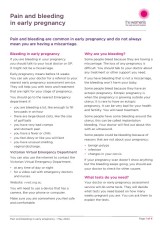
The Royal Women's Hospital, Victoria, Australia
English, Arabic, Chinese, Somalian, Turkish, Urdu, Vietnamese
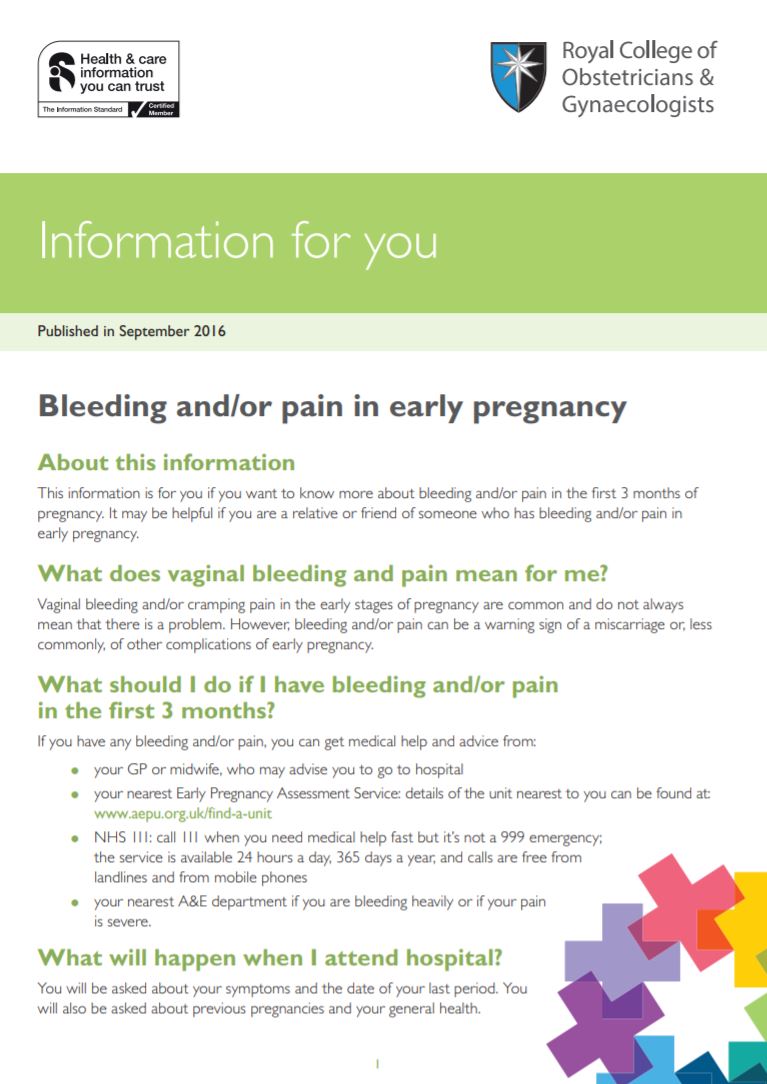
The Royal College of Obstetricians & Gynaecologists, UK, 2016
Need help now?

Credits: Healthify editorial team. Healthify is brought to you by Health Navigator Charitable Trust.
Reviewed by: Dr Sara Jayne Pietersen, FRNZCGP, Auckland
Last reviewed: