

You can now add Healthify as a preferred source on Google. Click here to see us when you search Google.
Palliative care – planning ahead
Making plans when you have a life-limiting condition
Key points about planning ahead with a terminal illness
- Living with a terminal illness means that at some stage you’ll need to start planning for a future when you might need someone to take over the decision making for you.
- It’s a good idea to spend time organising legal documents such as an Enduring Power of Attorney (EPA) and a will to make sure you and your family will be taken care of after your death.
- Planning ahead also means thinking about what’s important to you regarding your quality of life in your last few days and how and where you’d like to be cared for.

Planning ahead when you have a life-limiting condition means thinking about what you would like to happen as you get closer to the end of your life. It also includes who you would like to make decisions for you if you can’t make them for yourself. There are certain official or legal processes that can help you in documenting your wishes.
These include:
- an Enduring Power of Attorney (EPA)
- a will
- an advance care plan
- an advance directive
- a Do Not Resuscitate order (DNR).
An Enduring Power of Attorney (EPA) is a legal document enabling a person you’ve nominated to make decisions on your behalf if you’re no longer able to.
You should choose someone you trust who’ll make decisions in your best interest and make sure your wishes about how you’re cared for are followed.
You can nominate one EPA who’ll look after your property and financial interests and one EPA to oversee your personal care and welfare, or you can nominate one person to look after everything on your behalf.
An Enduring Power of Attorney document needs to be signed while you’re mentally capable. The EPA for your personal care and welfare only comes into effect when you become unable to make decisions, but your property EPA can come into effect whenever you decide – either as soon as the document is signed or only if you become mentally incapable.
You can set up an EPA through a lawyer or a trustee corporation such as the Public Trust(external link).
Deciding who will be your EPA is an important decision and there are rules about who must witness the document being signed. For more information, visit the New Zealand Law Society website(external link).
A will is a legal document that includes your instructions about what you’d like to happen to your property and possessions when you die. It also contains information about how you’d like any dependents you have, such as your spouse and children, looked after.
If you die without having a will, your property will be divided up between your spouse/partner, children and/or immediate family members in set amounts. You won’t have any control over who gets what and it could cause issues for family members.
Your will can also contain the wishes you have for your children and if you’re a solo parent with young children, who you’d like to care for them when you die.
A will can be drawn up with a lawyer or there are DIY kits available online for you to do it yourself. However, it's important to make sure it's done correctly to make sure it's valid. If your will is at all complicated or you're not sure how to do it, seek advice from a lawyer or the Public Trust(external link).
For more information on making a will, visit the New Zealand Law Society website(external link).
Using a lawyer to help you organise your legal documents will cost you money, but it can save your family time and money after your death.
If you don’t have a lawyer:
- ask friends and family for a recommendation
- contact the Citizens Advice Bureau(external link)
- contact the Law Society of New Zealand(external link).
Advance care planning is a way to communicate to others how you’d like to be cared for if you become unwell or if you become unable to make decisions for yourself.
If you’re receiving palliative care, it’s a great idea to have your wishes written down so family, friends and healthcare providers know what’s important to you. You don’t need a lawyer for an advance care plan but it’s a good idea to let your family know what’s contained in it or where to find it. Your palliative care team can help you to write your advance care plan. Read more about advance care planning.

Image credit: Canva
An advance directive (also known as a living will) is a written document that states what medical decisions you’d like made if you’re unable to communicate your wishes. Often it lists when you’d like medical treatment withheld. It’s best to plan your advance directive with the help of your healthcare provider.
Do Not Resuscitate (DNR) order
This is a legal document allowing you to choose to pass naturally rather than being resuscitated (having cardiopulmonary resuscitation or CPR) when your heart stops beating. This decision needs to be made by you, not your whānau, and you can state what you want to happen in your advance care plan.
It’s a good idea to have all your personal documents in one place to help your family after your death. Your EPA or a trusted family member should know where they’re kept or who to contact to access them.
Important documents include:
- copy of your will
- your birth certificate
- insurance, investment, mortgage and property documents
- online accounts – including passwords to access them and social media accounts to close
- funeral/tangi instructions.
Death – general information(external link) Citizens Advice Bureau, NZ
Advance care planning(external link) tō tātou reo, NZ
Go With Grace(external link) NZ A resource to guide and support New Zealanders through their experiences with death and dying.
Te Ipo Aranui(external link) is a website for Māori whānau caring for adults and kaumātua (older people) at end of life, and for their whānau. It provides support as you journey with someone who is dying.
Brochures
A hospice guide for carers(external link) Hospice New Zealand, 2024
A Māori approach to caring for somebody at the end of life(external link) Hospice New Zealand, 2024
Last days of life Palliative Outcome Initiative, NZ, 2020 English & Arabic(external link), English & simplified Chinese(external link), English & Hindi(external link), English & Korean(external link), English & Samoan(external link), English & Tongan(external link)
Hospice care Palliative Outcome Initiative, NZ, 2020 Arabic & English(external link), simplified Chinese & English(external link), Cook Islands Māori & English(external link), Hindi & English(external link), Korean & English(external link), te reo Māori & English(external link), Samoan & English(external link), Tongan & English(external link)
References
- Powers of attorney(external link) NZ Law Society
- Making a will and estate administration(external link) NZ Law Society
- Death – general information(external link) Citizens Advice Bureau
- A hospice guide for carers(external link) Hospice New Zealand, 2024
See our page palliative care for healthcare providers.
Brochures
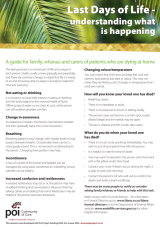
Palliative Outcome Initiative, NZ, 2020
English & Arabic, English & Simplified Chinese, English & Hindi, English & Korean, English & Samoan, English & Tongan
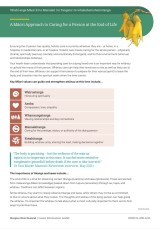
A Māori approach to caring for somebody at the end of life
Hospice New Zealand, 2024
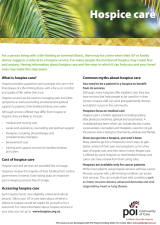
Hospice care. Palliative Outcome Initiative, NZ, 2020
Arabic & English, Simplified Chinese & English, Cook Island Māori & English, Hindi & English, Korean & English, te reo Māori & English, Samoan & English, Tongan & English
Need help now?

Credits: Healthify editorial team. Healthify is brought to you by Health Navigator Charitable Trust.
Reviewed by: Dr Andrew Muir, FRNZCGP, Clinical Diploma in Palliative Medicine
Last reviewed: