

You can now add Healthify as a preferred source on Google. Click here to see us when you search Google.
Bloating and gassiness
Key points about bloating and gassiness
- Bloating is an uncomfortable and full feeling in your puku, which can cause you to be gassy (pass wind or fart).
- Bloating and gassiness are common and usually aren’t serious.
- The most common cause for bloating is having a lot of gas in your gut.
- You can make changes to your diet and the way you eat and drink to help prevent bloating and gassiness.
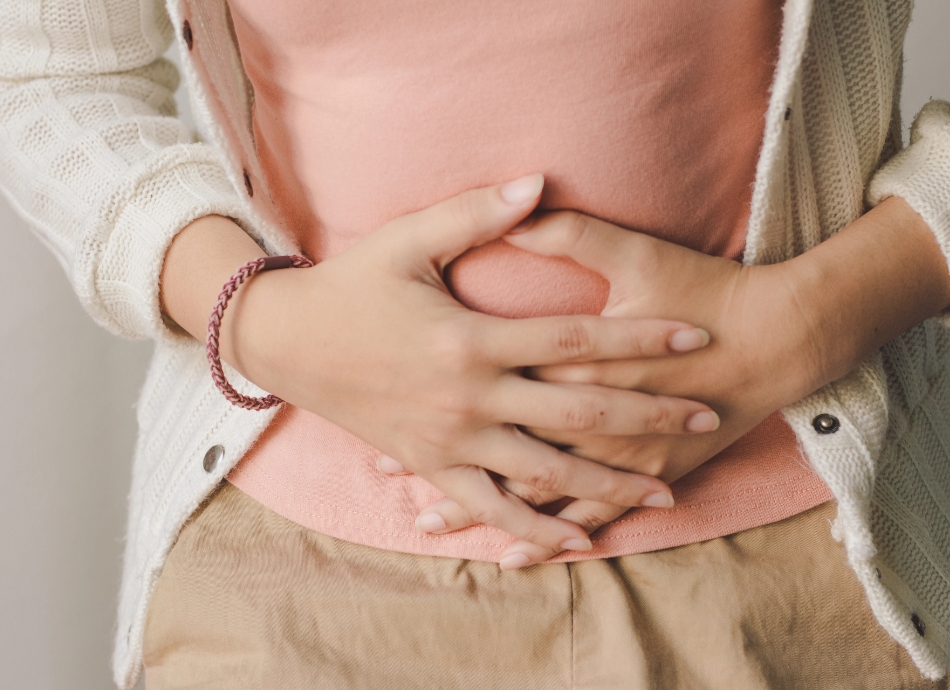
Bloating is when your puku (tummy) feels full, swollen or tight and uncomfortable. Sometimes your puku may also feel gassy and you may need to burp, pass wind or fart.
Bloating and gassiness happen when gas (wind) gets trapped in your stomach or intestines (tummy or gut).
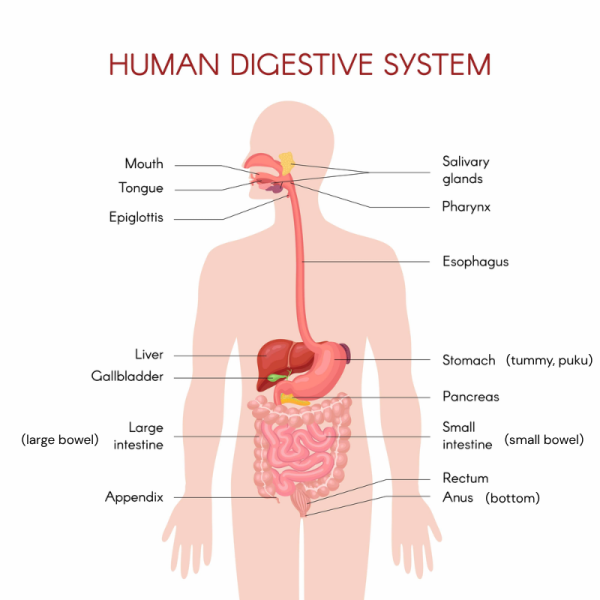
Image credit: Depositphotos (labels added)
Gas is normal, but sometimes people can have more than normal or feel it more than others. This is very common and usually isn’t serious.
If things like changing your diet don’t help, it’s very painful or you haven’t been able to poo for a long time (constipation), you should see your healthcare provider.
The most common cause for bloating and gassiness is having a lot of gas in your gut. Gas is normal – it comes from foods you’ve eaten, fizzy drinks or from swallowing air when you eat, drink, chew gum or smoke.
The bacteria in your gut also produce gas, and some foods cause increased amounts such as broccoli, brussel sprouts, beans, peas, fruit, potatoes and noodles. Many of these contain fermentable carbohydrates, which are sugars that are easily broken down by the bacteria in your digestive system causing excess gas.
You may also have problems with your digestion, such as:
- constipation
- an intolerance to certain foods, eg, foods containing gluten or sugars such as lactose (milk sugar) or fructose (fruit sugar)
- coeliac disease
- irritable bowel syndrome (IBS) – this may be associated with having too much bacteria in your small intestine which can cause bloating.
Find out more about lactose intolerance, gluten intolerance and indigestion.
Bloating can also happen around the time of menstruation. You may feel bloated, or like you’ve gained weight, in the days leading up to your period. It usually settles down when you’ve been bleeding for a few days. Hormone changes associated with perimenopause can also cause bloating.
Some medicines can cause bloating such as metformin, or constipation treatments such as lactulose.
Rarely, bloating that doesn’t go away can be a sign of something more serious, such as ovarian cancer or cirrhosis of the liver (in which case the bloating is due to build up of fluid rather than air).
Here are some common symptoms of being bloated or gassy.
- Your puku feels bigger than usual or looks swollen.
- Your puku is a bit sore, crampy or uncomfortable.
- Your puku rumbles or makes funny noises.
- You fart (pass wind) or burp more than usual.
Contact your healthcare provider for advice if you:
- have been feeling bloated for 3 weeks or more
- feel bloated very often (more than 12 times a month)
- have tried to manage your bloating and gassiness with the self-care tips below, but it hasn’t got better
- have a lump or swelling in your puku
- also have other symptoms such as:
- diarrhoea (runny poo)
- vomiting (being sick)
- constipation (have problems passing poo)
- unintended weight loss
- blood in your poo
- fevers or excessive fatigue (tiredness)
- find it difficult to move or do your normal daily activities because you feel too bloated.
You don’t usually need any tests unless you also have other more worrying symptoms, such as ongoing diarrhoea, vomiting, unexplained weight loss, blood in your poo or a fever.
If needed, you may be referred to a specialist for tests to see what could be causing your symptoms. These tests may include:
- blood tests
- a sample of poo being collected and tested
- an X-ray of your tummy
- an endoscopy, which is when a flexible tube with a small camera is used to look inside your tummy and gut.
Bloating and gassiness don’t generally require treatment. Self-care measures, such as dietary changes and exercise, usually help.
Any underlying cause of your symptoms will be treated if a cause is found.
Because of the strong link between your digestive system and your brain, cognitive behavioural therapy (CBT) may be useful for relieving symptoms of irritable bowel syndrome (IBS) including bloating. Read more about CBT and IBS(external link).
There are several things you can do to reduce and relieve bloating and gassiness.
- Eat smaller, more frequent meals and take your time when you eat.
- Avoid fatty and buttery kai. Fatty foods can slow down digestion and cause bloating.
- Avoid ‘gulping’ your food and drinks to make it less likely you’ll swallow air at the same time.
- Drink most fluids between meals rather than with meals.
- Avoid fizzy drinks and drink plenty of water.
- Exercise regularly to improve your digestion and help prevent bloating.
- Massage your stomach in a circular motion starting at the lower right side of your puku and moving across to the left and then down. This can release trapped wind.
- Keep a record of what you eat and drink to see if there’s anything that could be causing your symptoms. Examples include:
- milk and milk products, which contain lactose
- gluten-containing foods, eg, breads and pastas
- certain fruits, veges and legumes, such as brussel sprouts, broccoli, peas, beans, chickpeas, lentils, baked beans, apples, pears
- starchy foods, such as potatoes, noodles, corn
- foods with lots of fructose, such as dried fruit, honey, onions, and processed foods that use fructose as a sweetener
- fizzy drinks.
- Talk to your healthcare provider or a dietitian before cutting foods from your diet on a long-term basis as it’s important to make sure you’re still getting a balanced diet.
- Probiotics may be helpful. These are living bacteria and yeasts, such as Lactobacillus and Bifidobacterium which, when taken in the right amounts, can improve your health.
- Try and avoid constipation. Read about things you can do to ease or prevent constipation.
- Ask a pharmacist about treatments for constipation (eg, laxatives), or medicines such as hyoscine (Buscopan) that can help with bloating.
You can also read about things you can do if you have irritable bowel syndrome, coeliac disease, gluten intolerance or lactose intolerance.
Fibre and fluid for healthy bowels(external link) Health New Zealand | Te Whatu Ora, NZ
Brochures
Abdominal bloating and ‘wind’, gas or flatulence(external link) The Endoscopy Clinic, NZ
References
- Bloating(external link) NHS, UK
- Trapped wind, gas and bloating(external link) Patient, UK, 2023
- Lacy BE, Cangemi D, Vazquez-Roque M. Management of chronic abdominal distension and bloating(external link) Clin Gastroenterol Hepatol 2021 Feb;19(2):219-231
- Can CBT help treat IBS?(external link) Healthline, UK, 2023
Will bloating case weight gain?
Because bloating is due to wind (air) being trapped in your digestive system, it can’t cause weight gain. However, weight gain and bloating may go together if they have the same cause, such as a side effect of a medicine, alcohol or a thyroid problem.
Are bloating and gas the same thing?
Most of the time bloating and gas are the same thing because the bloating, or distention of your abdomen or tummy/puku, is caused by a build-up of wind that’s taking a while to pass. Once you pass it the bloating goes away. Hormonal bloating in the time leading up to a menstrual period is more likely to be due to retention of fluid which settles down later in the menstrual cycle.
How much bloating is normal during a period?
It's very common to feel bloated in the days before and at the start of your period. It may be obvious in that you feel uncomfortable and can see your tummy sticking out. If it doesn’t go away after your period, if it’s affecting your daily life or seems very severe, talk to a health care provider in case there’s another reason for it. Read about some things you can do to try to manage it(external link).
Need help now?


Credits: Healthify editorial team. Healthify is brought to you by Health Navigator Charitable Trust.
Reviewed by: Dr Sara Jayne Pietersen, FRNZCGP, Auckland
Last reviewed: