

You can now add Healthify as a preferred source on Google. Click here to see us when you search Google.
Changes to ADHD prescribing rules
From February 2026
Key points about changes to ADHD prescribing rules
- From 1 February 2026, changes to prescribing rules mean more healthcare providers can diagnose ADHD and prescribe medicines for it.
- The change will be gradual and voluntary, and not all GPs or nurse practitioners will offer ADHD services straight away.
- Learn more about changes to ADHD prescribing rules.

This means more healthcare providers will be able to diagnose ADHD and prescribe these medicines. The change will be gradual, and only some GPs or nurse practitioners (NPs) will be offering ADHD services at first.
Currently, GPs and nurse practitioners can't start stimulant treatment without a specialist’s recommendation. This requirement will be removed under the new rules.
For adults (18 years of age and over)
GPs and NPs with a special interest in ADHD will be able to assess, diagnose and start prescribing stimulant medicines. Read more about ADHD in adults.
For children and adolescents (under 18 years of age)
NPs working within paediatric services and child and adolescent mental health services will be able to start prescribing stimulant medicines for this age group. Read more about ADHD in children.
What is not changing:
- GPs and NPs can continue to prescribe non-stimulant ADHD medicines such as atomoxetine.
- Psychiatrists and paediatricians will continue to prescribe as they did before.
- GPs or NPs can prescribe ADHD stimulant medicines if they have received a written recommendation from one of the authorised prescribers who can initiate these treatments.
Who can start ADHD medicines under the new rules
- For children and adolescents (17 years and under): Paediatricians, psychiatrists, and nurse practitioners working in paediatric or child and adolescent mental health services can start prescribing stimulant treatment.
- For adults (18 years and over): Paediatricians, psychiatrists, GPs, and nurse practitioners working within their area of practice can start prescribing stimulant treatment.
- For all ages: Other medical practitioners or nurse practitioners can only prescribe stimulant medicines if they have a written recommendation from one of the authorised prescribers above.
Not every GP or NP will offer ADHD services
Although more healthcare providers can now provide ADHD care, not every GP or nurse practitioner (NP) will. Those who do usually have a special interest and experience in managing ADHD. It's best to check the practice website or ask the receptionist whether your practice has a GP or NP who does ADHD assessments and what the arrangements are.
Psychiatrists and paediatricians will continue to diagnose and prescribe as before. Some other practitioners may prescribe if they have a written recommendation from an authorised prescriber.
In complex cases, your GP or NP may still prefer you are fully assessed by a psychiatrist or paediatrician first. This helps ensure your diagnosis and treatment are safe and thorough.
Initial ADHD consultations will take longer than a standard GP visit
First ADHD consults usually take longer than a standard GP visit because they involve a detailed clinical interview, reviewing symptoms over time, using rating scales and questionnaires, and screening for other conditions. Even though more GPs and NPs can now prescribe ADHD medicines, these longer appointments are important to make sure your assessment is safe and thorough. Because of the extra time involved, these consultations may also cost more than a standard GP visit.
Services will roll out gradually
Not all general practices will offer these services immediately, and the changes are likely to happen gradually as healthcare providers will need time to train and prepare.
Services offered may vary across providers
'ADHD services' refers to all aspects of ADHD care, including assessment, diagnosis, treatment, ongoing medication management, and follow-up. Exactly what is offered can vary from one provider to another.
Costs may vary
The government doesn't directly fund these ADHD services, so fees could differ depending on who you see. It’s a good idea to check with your healthcare provider or clinic about any costs before using these services.
Additional checks at the pharmacy
When you collect your ADHD stimulant medicines from the pharmacy, the pharmacist may need to check who originally started your treatment. This can sometimes mean extra checks or a short delay, particularly for first prescriptions or shared-care arrangements. Bringing any relevant documentation (eg, clinic letters) can help things go smoothly.
The following links provide more information.
Update on ADHD prescribing and diagnosing changes(external link) ADHD New Zealand
Brochures
About adult ADHD(external link) ADDults with ADHD (NSW) Inc., Australia
Changes to the rules for prescribing medicines for ADHD – information sheet(external link) Medsafe NZ, Pharmac, Manatū Hauora | Ministry of Health, NZ
References
- GP ADHD prescribing(external link) RNZCGP, NZ
See the ADHD in adults for healthcare providers page.
Brochures
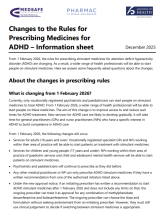
Changes to the rules for prescribing medicines for ADHD – Information sheet
Medsafe NZ, PHARMAC, Manatū Hauora

About adult ADHD
ADDults with ADHD (NSW) Inc
Need help now?


Credits: Healthify editorial team. Healthify is brought to you by Health Navigator Charitable Trust.
Reviewed by: Healthify clinical advisors
Last reviewed: