

If you're a frequent visitor to Healthify, why not share our site with a friend? Don't forget you can also browse Healthify without using your phone data.
Acupuncture
Key points about acupuncture
- Acupuncture is a core part of Chinese medicine which is now regulated in Aotearoa New Zealand.
- There are 2 main types here – traditional Chinese acupuncture (which takes a holistic approach to restore balance and treat the person as a whole) and Western medical acupuncture.
- There's strong evidence for acupuncture's effectiveness in treating several pain conditions and nausea and vomiting from chemotherapy.
- There's moderate evidence for treatment of other conditions including anxiety, fibromyalgia and some digestive and neurological issues.
- Acupuncture is considered safe when performed by a registered and trained provider using sterile, single-use needles.
- If you are considering acupuncture, talk to your healthcare provider to ensure it complements your overall treatment plan.
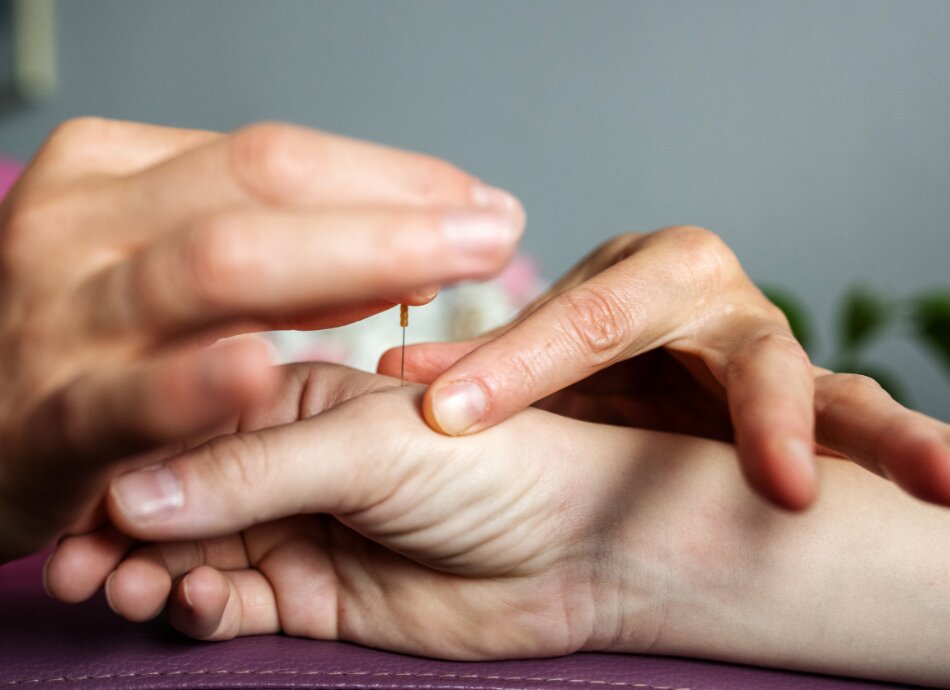
Acupuncture is a therapy that involves stimulating specific points on the body, most commonly with very fine needles. It's a core part of Chinese medicine – a comprehensive, regulated healthcare system in Aotearoa New Zealand – and is also used in some Western medical practices.
The stimulation of these points is thought to activate your body’s natural healing processes, relieve pain, reduce stress, and improve function. Modern research shows that acupuncture can influence the nervous system, release natural pain-relieving chemicals (eg, endorphins and adenosine), and affect brain activity.
There are 2 main types of acupuncture practised in Aotearoa New Zealand.
Traditional Chinese acupuncture
Traditional Chinese acupuncture is based on a holistic approach to health, aiming to restore balance and treat the person as a whole. It draws on concepts such as Qi (pronounced “chee”, meaning vital energy), yin and yang, and the 5 elements (wood, water, fire, earth, metal). Practitioners use a range of techniques – including acupuncture, herbal medicine, moxibustion (burning of the herb artemisia over specific acupuncture points), cupping, and tuina (Chinese massage) – to address imbalances and support wellbeing.
While these traditional concepts are not scientific in the Western sense, they form the foundation of Chinese medicine’s diagnostic and treatment framework. Practitioners in Aotearoa New Zealand are highly trained, registered with the Chinese Medicine Council of New Zealand (CMCNZ)(external link), and required to meet strict standards of competence and safety.
Western medical acupuncture
Western medical acupuncture is practised by some doctors, physiotherapists, and other healthcare professionals. It's based on modern anatomy and physiology, and is often used to treat musculoskeletal pain and dysfunction. The technique involves inserting needles into specific points – sometimes called trigger points – to relieve pain, reduce muscle tension, and improve function. While some of these points overlap with those used in traditional acupuncture, the underlying theory is different.
Dry needling is a related technique, usually performed by physiotherapists, which specifically targets muscle trigger points. Although similar in practice, dry needling and Western medical acupuncture may use different theoretical frameworks.
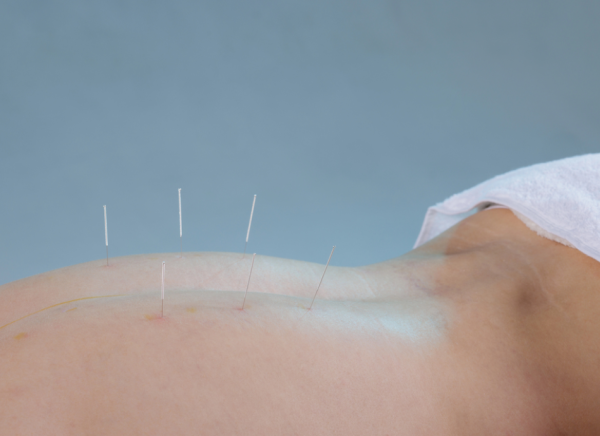
Image credit: Depositphotos
Acupuncture is understood in 2 main ways – through the traditional Chinese medicine framework and through modern biomedical science.
Traditional Chinese medicine perspective
In traditional Chinese medicine (TCM), acupuncture is based on the concept of Qi (pronounced “chee”), the vital energy that flows through pathways (meridians) in the body. Health is seen as a state of balance between opposing forces (yin and yang) and among the 5 elements (wood, fire, earth, metal, water). Illness or pain is thought to arise when Qi is blocked or out of balance. Acupuncture aims to restore harmony and the smooth flow of Qi, supporting the body’s natural ability to heal.
Modern biomedical perspective
Modern research has shown that acupuncture has measurable effects on the body’s nervous system and biochemistry. When fine needles are inserted into specific points, they stimulate sensory nerves, which can:
- trigger the release of natural pain-relieving chemicals (such as endorphins and adenosine)
- influence neurotransmitter levels (including serotonin and dopamine)
- modulate immune and inflammatory responses
- affect brain activity, as seen in functional MRI (fMRI) studies.
These effects help explain why acupuncture can relieve pain, reduce stress, and support recovery from a range of conditions. Acupuncture is now recognised as more than just a placebo – its effects are observable and reproducible in scientific studies.
Recent large-scale reviews confirm that acupuncture is effective for many pain and women’s health conditions, as well as for nausea and some chronic illnesses. The quality and quantity of research continues to increase, with over 1,000 systematic reviews now available.
The key findings from the latest research include:
- Acupuncture is safe when performed by a trained practitioner, with a very low risk of serious adverse effects.
- It is cost-effective for several conditions.
- It's no longer accurate to say that acupuncture’s benefits are only due to placebo (the possible positive effect of just having treatment rather than the effect of the treatment itself).
The strongest evidence is for:
- chronic pain (including low back pain, neck pain, shoulder pain, and osteoarthritis)
- migraine and tension-type headache
- postoperative pain
- chemotherapy-induced and postoperative nausea and vomiting
- allergic rhinitis (hay fever)
- chronic prostatitis and pelvic pain
- female infertility and menopause symptoms
- cancer-related fatigue.
There is moderate and emerging evidence for:
- breech presentation in pregnancy
- chronic pelvic pain and dysmenorrhea (painful periods)
- endometriosis
- in-vitro fertilisation (IVF) support
- labour pain
- polycystic ovarian syndrome (PCOS)
- premenstrual syndrome (PMS)
- anxiety
- some digestive and neurological conditions.
- Acupuncture involves the insertion of very fine, sterile, single-use needles into specific points on your body.
- This stimulates sensory nerves, which can trigger the release of natural pain-relieving chemicals (eg, endorphins and adenosine) and influence brain activity.
- At your first session, your practitioner will discuss your health history, symptoms, and goals, and develop a treatment plan tailored to you.
- A first appointment may take up to an hour, with follow-up sessions typically lasting 30 to 45 minutes.
- Depending on your condition, 5 to 20 needles may be used. You might feel a mild ache, tingling, or warmth, but it shouldn't be painful.
- Needles are usually left in place for 10 to 20 minutes while you relax. They may be gently moved or twirled.
- After treatment, you may feel relaxed, and sometimes a little sore where the needles were inserted. Very occasionally the needles may cause a small bruise.
- Acupuncture is generally very safe when performed by a registered and trained practitioner using sterile, single-use needles.
- Common, mild side effects: Mild pain or discomfort at the needle site, minor bleeding or bruising, sleepiness or relaxation, nausea, feeling light-headed or faint.
- Serious side effects: Extremely rare, but can include infection, injury to organs, or nerve damage.
- Always check that your practitioner is registered with the Chinese Medicine Council of New Zealand (CMCNZ)(external link).
- Precautions: Talk to your healthcare provider before having acupuncture if you have a bleeding disorder, are taking blood thinners, have a pacemaker, or are pregnant.
All practitioners of traditional Chinese acupuncture must be registered with the Chinese Medicine Council of New Zealand (CMCNZ)(external link). This makes sure they have completed recognised qualifications and meet high standards of clinical and cultural competence. They are required to do ongoing professional development.
You can check if your practitioner is registered by searching the public register on the CMCNZ website. It is illegal for someone to call themselves a Chinese medicine practitioner or acupuncturist in Aotearoa New Zealand if they're not registered.
ACC (Accident Compensation Corporation)
Currently, to receive ACC funding for acupuncture by a traditional Chinese medicine (TCM) provider, you must first see a registered healthcare provider (eg, a doctor, nurse, osteopath, physiotherapist, podiatrist, or chiropractor) who can diagnose your injury and lodge an initial ACC claim (ACC45 form).
Once your claim is accepted, you can visit a registered acupuncturist for treatment – no referral is needed after the claim is in place. ACC subsidises, but does not fully cover, the cost of acupuncture for some injury-related conditions.
Health insurance
Some private health insurance plans include cover for acupuncture, but this varies by provider and policy. Check with your insurer for details.
Private treatment
You can also see a registered acupuncturist privately, without any subsidy.
Acupuncture evidence-based review(external link) ACC, NZ
About the council(external link) Chinese Medical Council of New Zealand
Brochures
Consumer fact sheet – understanding Chinese medicines in New Zealand(external link) Chinese Medical Council of New Zealand, NZ
References
- Consumer fact sheet – understanding Chinese medicines in New Zealand(external link) Chinese Medical Council of New Zealand, NZ
- Acupuncture(external link) NHS, UK, 2023
- Effectiveness and safety of acupuncture interventions for the treatment of musculoskeletal conditions – technical report(external link) The International Centre for Allied Health Evidence, prepared for ACC, NZ, 2018
- McDonald J, Janz S. The acupuncture evidence project – a comparative literature review(external link) Australian Acupuncture and Chinese Medicine Association Australia, 2017
- What can acupuncture help with?(external link) Acupuncture NZ, 2020
- Treatment we can help pay for(external link) ACC, NZ, 2020
- Insurance and ACC information(external link) Acupuncture NZ
- Chinese Medicine Council – scopes of practice and prescribed qualifications notice 2023(external link) New Zealand Gazette, NZ
- Hempen M, Hummelsberger J. The state of evidence in acupuncture – a review of meta analysis and systematic reviews of acupuncture evidence (update 2017–2022)(external link) Complement Ther Med. 2025;89:103149
Getting started as a Chinese medicine practitioner (acupuncturist)(external link) ACC, NZ
Podcast
Acupuncture(external link) Kate Roberts, Goodfellow Unit, NZ, 2018 (20:31 mins)
Need help now?


Credits: Healthify editorial team. Healthify is brought to you by Health Navigator Charitable Trust.
Reviewed by: Kate Roberts, PhD, Senior Acupuncturist and Professional Advisor, Chinese Medicine Council of New Zealand
Last reviewed: