

You can now add Healthify as a preferred source on Google. Click here to see us when you search Google.
Methylphenidate
This information is intended for use ONLY after you have been prescribed methylphenidate.
Key points about methylphenidate
- Methylphenidate is used to treat attention deficit hyperactivity disorder (ADHD).
- It belongs to a group of medicines known as stimulants.
- Methylphenidate comes in different forms and strengths, so it’s important to know which one you're taking.
- Find out more about methylphenidate.

Methylphenidate is used to treat attention deficit hyperactivity disorder (ADHD) in adults and children. It can help you to concentrate better, be less impulsive, and feel calmer.
It's not known exactly how methylphenidate works. It's thought to boost the levels of chemicals called dopamine and noradrenaline in the brain. This can increase activity in the parts of the brain that control attention and behaviour, to reduce hyperactivity or impulsivity and improve concentration.
Medication is just one part of treatment for ADHD. It's used to support other changes to your lifestyle and behaviour. Read more about ADHD in adults and ADHD in children.
Methylphenidate is also used to treat narcolepsy, a type of sleep disorder.
Methylphenidate comes in different strengths and forms
The different forms work differently in how they release the medicine into the body, and this can affect how they work to manage ADHD symptoms. Different brands of methylphenidate tablets and capsules may have different instructions.
- Immediate-release tablets: Rubifen (5 mg, 10 mg, 20 mg) or Ritalin 10 mg.
- Slow-release tablets: Rubifen SR 20 mg.
- Long-acting capsules: Ritalin LA (10 mg, 20 mg, 30 mg, 40 mg).
- Extended-release tablets: Concerta, Methylphenidate ER – Teva and Methylphenidate Sandoz XR (18 mg, 27 mg, 36 mg and 54 mg).
Always follow the advice of your healthcare provider and the instructions that come with the medicine. For guidance, see How to take methylphenidate below.
Methylphenidate supply issues
Methylphenidate is in short supply worldwide, so your usual brand may change. Staying in touch with your healthcare provider can help avoid treatment gaps. Learn more about managing ADHD medicine changes.
Methylphenidate is available in several forms. Check with your pharmacist which form you're taking.
- Always follow the advice of your healthcare provider and the instructions that come with the medicine. Different brands of methylphenidate tablets and capsules may have different instructions.
- The dose of methylphenidate will be different for different people, depending on the brand you're taking and your response to the medicine.
Rubifen® (5 mg, 10 mg, 20 mg) or Ritalin® (10 mg) tablets
- These are usually given 2 or 3 times each day.
- Can be taken with or without food.
- This should be in the morning, then around midday and, if necessary, late afternoon. Ideally, these times are about 4 hours apart.
- If you have problems sleeping, take the last dose at least 6 hours before bedtime.
- They take 20 minutes to 1 hour to start working and their effect lasts about 3 to 5 hours.
- Swallow the tablets with a glass of water, milk or juice.
- Some tablets can be crushed and mixed with a small amount of soft food such as yogurt, honey or jam. Ask your pharmacist if this is possible with your tablets before doing this.
Rubifen SR (20 mg) tablets®
- These are given once each day, usually in the morning.
- Take with food.
- Swallow the tablets whole with a glass of water, milk or juice.
- They take about 1 to 2 hours to start working and their effect lasts up to 8 hours.
Ritalin LA capsules®
- These are given once each day, usually in the morning.
- Can be taken with or without food.
- If you have trouble swallowing the capsule, it can be opened and the contents mixed with a small amount of soft food such as yogurt, honey, jam, or cold apple sauce. Swallow the mixture straight away, without chewing.
- They take about 1 to 2 hours to start working and their effect lasts up to 6 to 8 hours.
Concerta®, Methylphenidate ER Teva® or Methylphenidate Sandoz XR tablets®
- These are given once each day, usually in the morning.
- Swallow the tablets whole with a glass of water. Don't crush or chew them, as they won't work properly.
- Can be taken with or without food.
- They take 1 to 2 hours to start working and their effect lasts up to 12 hours.
Stimulant medicines for ADHD, such as methylphenidate, can be more complex than other medicines because of special prescribing, dispensing and funding rules that apply to them.
Methylphenidate is a controlled drug
In Aotearoa New Zealand methylphenidate is a controlled drug, which means it's carefully monitored and regulated to make sure it’s used safely. This is because it affects the brain and can be addictive or misused if not taken properly. Because of this, prescribers need to follow special rules when prescribing it, and pharmacies must keep records when they dispense it.
- You can get a prescription with repeats that cover up to 3 months, depending on your prescriber’s decision, but pharmacies can only dispense methylphenidate in 30-day supplies at a time.
- You usually need to pick up the medicine within 7 days of the prescription being written, or the prescription may expire or require reauthorisation.
- Once your first supply of a methylphenidate-containing medicine is dispensed at a particular pharmacy, all repeat supplies of the medicine must be dispensed and collected from the same pharmacy.
Methylphenidate is funded under a Special Authority
In Aotearoa New Zealand methylphenidate is funded under a Special Authority for people who meet the criteria.
- The term 'Special Authority' refers to a specific kind of approval needed for funding certain subsidised medicines by Pharmac.
- Pharmac is the government agency in New Zealand that decides which medicines and medical devices are publicly funded. Pharmac uses this process to ensure medicines are funded for people who will benefit most from the treatment. Read more about Special Authority.
There are two Special Authorities, depending on the brand:
- One approval is for brands that are usually tried first and are lower cost such as Ritalin (immediate release), Rubifen (immediate release), Rubifen SR, Methylphenidate Sandoz XR and Methylphenidate ER – Teva.
- A separate approval is needed for other brands that cost more or are generally used if the first options haven’t worked well or aren't suitable. Examples are Concerta and Ritalin LA.
Who can apply? Applications for Special Authority for stimulant medicines used to treat ADHD can be made by any relevant prescriber.
Does the Special Authority expire? For stimulant medicines used to treat ADHD, the Special Authority does not expire, as the renewal criteria were removed in 2024, making the approval valid for the patient’s lifetime.
Here are some things to know when you're taking methylphenidate. Other things may be important as well, so ask your healthcare provider what you should know about.
Seeing the tablet shell in your poo (Concerta only)
If you're taking the Concerta brand of methylphenidate, you may notice the tablet shell in your poo. This is normal. The shell of the tablet doesn't fully dissolve in your gut, but the medicine is still absorbed by your body.
Alcohol and methylphenidate
Limit or avoid drinking alcohol while you're taking methylphenidate. Alcohol can make the effects of methylphenidate greater and it can make the side effects worse.
Driving and using tools
Be careful when driving or using tools until you know how this medicine affects you. Methylphenidate can cause blurred vision, dizziness or affect your focus especially when you start taking it and if you increase your dose.
Roadside drug testing
The purpose of roadside drug testing is to pick up unsafe drivers. Stimulant medicines used to treat ADHD or narcolepsy help improve driving safety. Methylphenidate isn't detected in roadside drug testing.
Video: Roadside drug testing and ADHD medication
Taking other medicines or supplements
Methylphenidate can interact with some medicines, herbal supplements and rongoā Māori, so check with your healthcare provider or pharmacist before starting methylphenidate and before starting any new products.
You may need to take methylphenidate for several months or years, depending on your individual response and needs.
Regular check-ups: You'll have regular check-ups, usually every 6 months or so, to see how well the medicine is working and if any changes are needed.
Medicine holiday: Your doctor may recommend stopping methylphenidate for a while or reducing the dose. For children, this will normally be during the school holidays and can be called “a medicine break”. This is to check whether it’s still helping.
Teenage reassessment: As your child gets to puberty, or just after, they will be assessed to see if the medicine is still needed. The doctor may stop their methylphenidate. But if the medicine is still helping, they may recommend that your child keeps taking it, even as an adult.
Don't stop methylphenidate suddenly: Talk to your doctor first, it might be best to reduce the dose gradually. This reduces the risk of having extra side effects when you stop taking this medicine.
Like all medicines, methylphenidate can cause side effects, although not everyone gets them. If you're concerned about any symptoms, talk to your healthcare provider. The following information offers some guidance but doesn't include all possible side effects.
Common side effects
Tell your healthcare provider if these side effects bother you.
- Indigestion, tummy pain, nausea (feeling sick).
- Trouble sleeping: Take your methylphenidate dose in the morning. If you're taking more than 1 dose per day, the second or third dose needs to be taken by early afternoon.
- Headache, muscle or joint pains.
- Reduced appetite, weight loss.
- Sweating.
- Dry mouth.
- Blocked nose.
Tell your healthcare provider immediately or phone Healthline free on 0800 611 116 if these occur
- Anxiety, nervousness, irritability, changes in mood.
- Chest pain, seizures or feelings of increased heart rate.
- Suicidal feelings or behaviour such as agitation, aggression, self-harm, worsening of low mood.
Read more about medicines and side effects and reporting a reaction you think might be a side effect.
The following links provide further information on methylphenidate:
Medsafe Consumer Information Sheets:
Concerta(external link)
Ritalin(external link)
Rubifen(external link)
Brochures
Methylphenidate for ADHD(external link) New Zealand Formulary for Children
Supply issue(external link) Pharmac, NZ, 2025
Medicines and side effects(external link) Healthify He Puna Waiora, NZ, 2024
5 questions to ask about your medications(external link) Health Quality and Safety Commission, NZ English(external link), te reo Māori(external link)
References
Learn more
Methylphenidate extended release (12-hour) tablet formulation shortage update and advice(external link) Pharmac, September 2024
Attention: Safety of medicines used to treat ADHD in adults(external link) Medsafe, NZ, 2025
Brochures
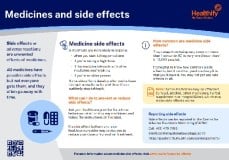
Medicines and side effects
Healthify He Puna Waiora, NZ, 2024
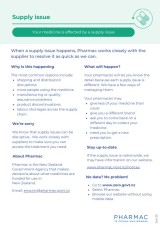
Supply issue
Pharmac, NZ, 2025
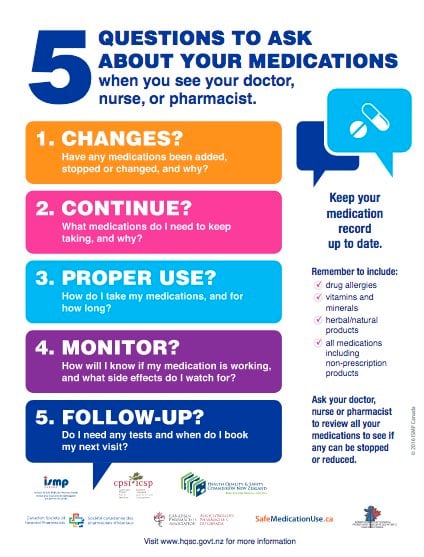
Health Quality and Safety Commission, NZ, 2019 English, te reo Māori
Free helplines

Credits: Sandra Ponen, Pharmacist, Healthify He Puna Waiora. Healthify is brought to you by Health Navigator Charitable Trust.
Reviewed by: Angela Lambie, Pharmacist, Auckland
Last reviewed: