

If you're a frequent visitor to Healthify, why not share our site with a friend? Don't forget you can also browse Healthify without using your phone data.
Polio vaccine
Also called poliovirus vaccine or poliomyelitis vaccine
Key points about the polio vaccine
- The polio vaccine protects against polio infection.
- It's also called Infanrix-hexa®, Infanrix-IPV® or IPOL®.
- In Aotearoa New Zealand, two of the polio vaccines are mixed with other vaccines into one injection.
- Find out about the vaccines and possible side effects.

The polio vaccine offers protection against polio infection. Polio is a virus found in an infected person's saliva and poo.
You can catch it from contact with an infected person's poo or saliva – from coughing, sneezing or sharing drink bottles. It can also spread through food or water that has the virus in it.
Polio infects the bowel and can attack the nervous system. In severe cases it may cause paralysis and even death.
Polio is now rare in Aotearoa New Zealand thanks to vaccination. However, there's still a risk that polio could enter New Zealand from overseas. Read more about polio.
The polio vaccine works by making your immune system make antibodies that recognise and fight the polio virus. Because your body has already learned to recognise the virus from the vaccine, these antibodies can quickly protect you if you’re exposed to the real infection.
In Aotearoa New Zealand, there are 3 polio-containing vaccines: Infanrix-hexa®, Infanrix-IPV® and IPOL®. The polio vaccine’s Infanrix-hexa® and Infranrix-IPV® are mixed with other vaccines into one injection.
As part of the New Zealand childhood immunisation schedule, the polio vaccine is offered free to:
- babies at 6 weeks, 3 months and 5 months as Infanrix-hexa®
- children at 4 years as Infanrix-IPV®.
Read more about childhood immunisation.
People who haven't been immunised against polio, or have missed some doses, or have a weakened immune system and are at risk of getting polio, can be given a course of 3 doses of inactivated polio vaccine (IPOL®), 4 to 8 weeks apart.
Pregnancy
Immunisation against polio isn't recommended in the first or second trimester of pregnancy unless you're travelling to a polio-affected area. If an unvaccinated pregnant person is travelling to a country where there is polio, 2 doses should be given 4 weeks apart before travelling. If they must travel urgently and can't have a 4-week gap, then 2 doses should be given at the maximum possible interval, although protection can't be guaranteed. If the gap between doses is going to be less than 2 weeks, a single dose is recommended, with further doses given on arrival if possible.
Travel
If you're planning to travel to countries with a risk of polio infection, ensure that you're fully immunised against polio. If more than 10 years have passed since the last dose, a booster dose is recommended.
Infanrix–hexa® and Infanrix–IPV® are given intramuscularly (injected into the muscle) in the upper arm or thigh.
IPOL® is given by subcutaneous injection (under the skin).
Like all medicines, vaccines can cause side effects, although not everyone gets them. If you're concerned about any symptoms you think might be related to your vaccine, talk to your healthcare provider. The following information offers some guidance but doesn't include all possible side effects.
Read about what to expect after your child is immunised(external link) (babies and children) or after your immunisation(external link) (teenagers and adults).
Common side effects
Tell your healthcare provider if these side effects bother you.
-
Pain, swelling and redness at the injection site: This is quite common after having the vaccination. It usually starts a few hours after getting the injection and settles within a few days. Place a cold, wet cloth, or ice pack where the injection was given. Leave it on for a short time. Don't rub the injection site.
-
Mild fever: If your child is hot after having the vaccination, it can help to undress them down to a single layer, for example, a singlet and nappies or pants. Make sure the room isn’t too hot or too cold. The routine use of paracetamol isn’t recommended following vaccinations, but may be used if your child is miserable or distressed. For teenagers and adults, rest and drink plenty of fluids.
- Joint pain.
Phone 111 for an ambulance or go to your nearest accident and emergency (A&E) clinic if these occur
- Signs of an allergic reaction such as itchy skin, and rash, swollen lips or tongue, problems breathing, like a tight chest or shortness of breath.
Read more about medicines and side effects and reporting a reaction that you think might be a side effect.
There are many different places where you can get a vaccination. These include medical or health centres, pharmacies, community-based clinics including marae-based clinics, mobile health clinics and mobile vaccination services.
Read more about who can give vaccinations and where to get vaccinated.
Vaccines on the National Immunisation Schedule(external link) are free. Other vaccines are funded only for people at particular risk of disease. You can choose to pay for vaccines that you aren't eligible to receive for free.
The following links provide further information on polio vaccines and vaccinations:
Poliomyelitis(external link) The New Zealand National Immunisation Schedule
Preparing for a vaccination appointment(external link) Health New Zealand | Te Whatu Ora
Infanrix-hexa(external link) Medsafe Consumer Information, NZ
Infanrix-IPV(external link) Medsafe Consumer Information, NZ
IPOL(external link) Medsafe Consumer Information, NZ
Brochures
Medicines and side effects(external link) Healthify He Puna Waiora, NZ, 2024
5 questions to ask about your medications (external link)Health Quality and Safety Commission, NZ, 2019 English(external link), te reo Māori(external link)
References
- Polio(external link) The Immunisation Advisory Centre, NZ
- Infanrix-hexa(external link) The Immunisation Advisory Centre, NZ
- Infanrix-IPV(external link) The Immunisation Advisory Centre, NZ
- IPOL(external link) The Immunisation Advisory Centre IPOL, NZ
- Poliomyelitis(external link) Immunisation Handbook, NZ
- Poliomyelitis vaccine(external link) New Zealand Formulary
- Poliomyelitis vaccine(external link) New Zealand Formulary for Children
Is the polio vaccine an oral medicine?
The oral polio vaccine (OPV) was used in Aotearoa New Zealand from 1961 to 2002. It’s no longer used in New Zealand now that we have inactivated polio vaccines.
The oral vaccine may still be available in some countries but is slowly being phased out.
What is the name of the polio vaccine?
There are several names for the polio vaccine. In Aotearoa New Zealand we use 3 different brands called Infanrix-hexa®, Infanrix-IPV® and IPOL®.
Different brands are used for different ages and situations. If you have questions about this, talk to your healthcare provider about which vaccine you’ll be given and why.
Brochures
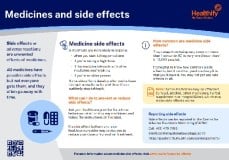
Medicines and side effects
Healthify He Puna Waiora, NZ, 2024
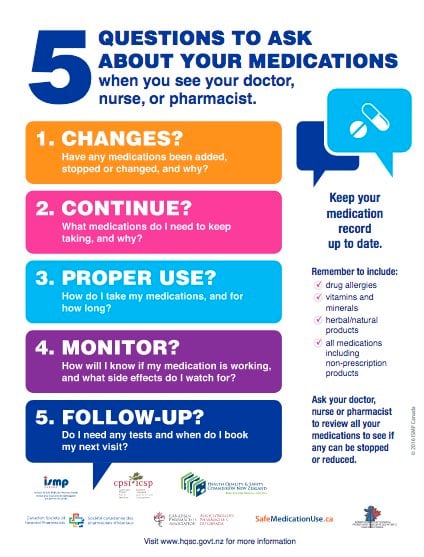
Health Quality and Safety Commission, NZ, 2019 English, te reo Māori
Free helplines


Credits: Healthify editorial team. Healthify is brought to you by Health Navigator Charitable Trust.
Reviewed by: Angela Lambie, Pharmacist, Auckland
Last reviewed: