

You can now add Healthify as a preferred source on Google. Click here to see us when you search Google.
'Pill-in-the-pocket' for abnormal heart rhythms
Key points about the 'pill-in-the-pocket' method for abnormal heart rhythms
- If you have abnormal heart rhythms, where your episodes may happen occasionally, your healthcare provider may suggest a pill-in-the-pocket method to take your heart rhythm medicine.
- This means you only take a dose of your medicine when an episode starts, to get your heart rhythm back to normal.
- Learn more about the pill-in-the-pocket method for abnormal heart rhythms.

If you have abnormal heart rhythms, where your episodes may happen occasionally and you can clearly recognise when an episode starts, your healthcare provider may suggest a pill-in-the-pocket method to take your medicine to correct this.
This means you take a dose of your medicine as soon as you have symptoms, to help your heart rhythm return to normal, rather than taking the medicine every day to prevent the occasional attack.
An example of a condition that can be managed in this way is paroxysmal atrial fibrillation (pAF).
Examples of medicines used this way include:
- metoprolol – used to slow the heart and prevents fast rhythms
- flecainide – used to restore and maintain normal rhythm.
Dose
Your healthcare provider will choose the dose that’s right for you. You will usually have tried the medicine first under specialist supervision, so your healthcare provider knows it works to correct your heart rhythm before giving you the pill-in-the-pocket medicine to use at home.
- This medicine is taken as a single dose only.
- Do not take more than one dose in 24 hours.
- Always keep at least one dose of your medicine with you so you don’t run out.
When to take it
- Take your dose as soon as you notice symptoms of an abnormal heart rhythm.
- These symptoms may include palpitations or a thumping, racing, or fluttering sensation in your chest that lasts for 20 minutes or more.
After taking your dose
- After taking the medicine, take a rest by sitting or lying flat on your back for the next 4 hours or until your symptoms go away.
- Your symptoms should improve within 4 hours after taking the medicine.
- If your symptoms continue after 4 hours, or if they return within 24 hours of taking the dose:
- do not take another dose
- contact your healthcare provider, call an ambulance, or go to your nearest accident and emergency (A&E) department
- do not drive yourself.
Talk to your healthcare provider if you find yourself using the pill-in-the-pocket more than once every three months, or if it isn’t helping you. This may mean your condition needs review.
- You get any of the following symptoms:
- fainting
- chest pain or tightness
- severe or significant change of breathing.
- Your symptoms continue after 4 hours or return within 24 hours after taking the medicine.
The pill-in-the-pocket method for taking medicine to correct an abnormal heart rhythm isn't suitable for everyone. Your healthcare provider will assess whether it’s appropriate for you. Here is some guidance.
This approach may be considered if:
- you can clearly recognize when an abnormal heart rhythm episode starts, for example you feel your heart beating irregularly, get palpitations or feel a thumping, racing or fluttering sensation in your chest which lasts for 20 minutes or more
- you seldom have attacks – they only occur now and again
- your symptoms last less than 24 hours
- you don't have any other heart problems
- you don't have severe symptoms during an attack such as fainting, severe chest pain, or breathlessness.
Brochures
Medicines and side effects [PDF, 91 KB] Healthify He Puna Waiora, NZ, 2024
5 questions to ask about your medications(external link) Health Quality and Safety Commission, NZ, 2019 English(external link), te reo Māori(external link)
References
- Flecainide Pill in the Pocket (PITP) Guidance(external link) NHS Greater Glasgow and Clyde, UK, 2024
- Pill-in-the-pocket cardioversion(external link) Arrhythmia Alliance, UK, 2025
Brochures
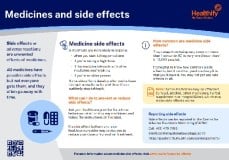
Medicines and side effects
Healthify He Puna Waiora, NZ, 2024
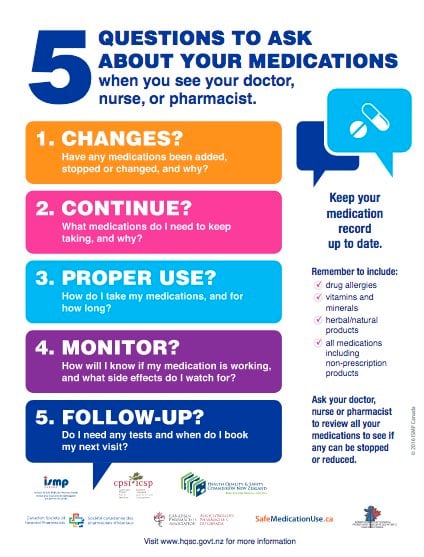
Health Quality and Safety Commission, NZ, 2019 English, te reo Māori
Free helplines

Credits: Sandra Ponen, Pharmacist, Healthify He Puna Waiora. Healthify is brought to you by Health Navigator Charitable Trust.
Reviewed by: Healthify clinical advisors
Last reviewed: