

If you're a frequent visitor to Healthify, why not share our site with a friend? Don't forget you can also browse Healthify without using your phone data.
Omalizumab
Sounds like 'OH-ma-LIZ-ue-mab'
Key points about omalizumab
- Omalizumab is used to treat a type of severe asthma called eosinophilic asthma, and chronic spontaneous urticaria.
- Omalizumab is also called Xolair.
- Find out how to take it safely and possible side effects.

Omalizumab is used to treat a type of severe asthma called eosinophilic asthma and a skin condition called chronic spontaneous urticaria, which causes long-lasting hives. People with these conditions have too much of a protein called IgE antibody. This causes various allergy symptoms. Omalizumab works by attaching to the IgE antibody and blocks its action.
Omalizumab is available as an injection which is given under your skin. See below for more information on omalizumab for eosinophilic asthma and omalizumab for chronic spontaneous urticaria.
Funding in Aotearoa New Zealand
In Aotearoa New Zealand omalizumab is funded under a Special Authority, for people who meet the criteria. A special authority means your specialist will need to make an application to Pharmac (the government medicine funding agency) for approval before the medicine can be funded for you. Read more about special authority.
Omalizumab is used to treat a severe form of asthma called eosinophilic asthma. In this type of asthma, airway inflammation and breathing problems are triggered by high levels of white blood cells called eosinophils. In some people, too many eosinophils can cause asthma flare-ups. Eosinophilic asthma is rare.
Omalizumab can help reduce how often and how bad your asthma attacks are, improve your asthma symptoms and how you feel overall, and may reduce your need for steroid tablets such as prednisone.
Omalizumab does not give immediate relief from an asthma attack
- Don't use omalizumab to treat sudden breathing problems.
- If you have an asthma action plan that you have agreed with your healthcare provider, follow it closely at all times.
- For severe asthma symptoms, you should use your reliever inhaler immediately and call an ambulance on 111 or go to your nearest Accident & Emergency clinic.
Keep taking your regular asthma medicines while you're using omalizumab
- Take omalizumab with your usual asthma medicines. Don't stop your usual medicines suddenly, as this can make your asthma worse.
- If your asthma gets better, your healthcare provider might slowly reduce some of your other medicines.
Omalizumab is used for people with severe chronic urticaria or hives that hasn't got better with high doses of antihistamine medicines. Chronic urticaria is an itchy rash which happens most days for more than 6 weeks. Omalizumab helps to decrease the number of hives and itching.
Omalizumab starts to work straight away, reducing levels of immunoglobulin E in the blood. However, it may take a few weeks before you see any improvement in your symptoms.
Keep using your regular antihistamines while taking omalizumab.
Having the injection
- Omalizumab comes as an injection pen which is pre-filled with the medicine.
- The injection is given under your skin (subcutaneous) into your thigh or abdomen (tummy) every 2 to 4 weeks. If you have a caregiver giving you the injection it can also be given in your upper arm.
- When you start omalizumab, the first few injections will be given to you by your healthcare provider. There is a rare risk of having an allergic reaction to omalizumab. You’ll be monitored during the injection and asked to wait afterwards to make sure you don't get a reaction.
- After a few months of treatment, if your response is good, you may be able to give yourself the injection at home. Otherwise it can be given by another person, such as a whānau member or friend after proper training, or by your healthcare provider.
How to store omalizumab
- Store omalizumab in the fridge, in the original package. Don't freeze it. If your pen has been frozen, don't use it.
- Before injecting, take your omalizumab pen out of the fridge and leave it at room temperature for 30 minutes. This helps reduce the discomfort that can happen if you inject it when it's cold. Don't warm it in the microwave or in hot water.
Injection sites
- Choose an injection site, such as on the front of a thigh or on your abdomen (belly) at least 5 cm from your belly button. The injection site should be different from your last injection site, at least 5 cm away. Don't inject into skin that's sore, bruised, red, hard, scarred, has stretch marks, or psoriasis plaques.
Get rid of your used pen safely
- It's important to get rid of your used pen safely. Keep it out of reach of children and pets.
- It's best to put the used pen into a sharps container you can buy from your pharmacy. A sharps container is made of hard plastic that has a tight-fitting lid so used needles and pens can be stored safely. Don't put them in rubbish or recycle bins.
- Once your sharps container is full, take it to your pharmacy for safe disposal. Read more about safe disposal of pre-filled pens and other sharps.
Here are some things to know when you're taking omalizumab. Other things may be important as well, so ask your healthcare provider what you should know about.
- Monitoring and review: Omalizumab doesn't work immediately, it may take a few weeks before you notice any difference. Your healthcare provider will regularly check how well omalizumab is working for you. If your symptoms don’t improve over time, the treatment may be stopped.
- Don’t stop your regular medicines: Take omalizumab with your usual medicines. Don't stop your usual medicines suddenly, as this can make your symptoms worse.
- Taking other medicines: Omalizumab may interact with some medicines, herbal supplements and rongoā Māori, so check with your healthcare provider or pharmacist before starting omalizumab and before starting any new products.
Like all medicines, omalizumab can cause side effects, although not everyone gets them. If you're concerned about any symptoms, talk to your healthcare provider. The following information offers some guidance but doesn't include all possible side effects.
Common side effects
Tell your healthcare provider if any of these side effects bother you.
- Pain and discomfort at the injection site including redness, swelling, itching and a burning sensation of the skin near where the injection was given.
- Headache.
- Tummy pain, joint pain.
- Fever.
- Flu-like symptoms.
- Nausea (feeling sick).
Phone 111 for an ambulance or go to your nearest accident and emergency (A&E) clinic if these occur
- Signs of an allergic reaction such as difficulty breathing, rash, hives or itching.
For more information on side effects, see the Medsafe consumer information leaflet Xolair.(external link)
Read more about medicines and side effects and reporting a reaction you think might be a side effect.
The following links provide further information.
Xolair(external link) Medsafe Consumer Information, NZ
Brochures
5 questions to ask about your medications(external link) Health Quality and Safety Commission, NZ, 2019 English(external link), te reo Māori(external link)
Medicines and side effects [PDF, 91 KB] Healthify He Puna Waiora, NZ, 2024
References
- Omalizumab(external link) New Zealand Formulary
Brochures

Medicines and side effects
Healthify He Puna Waiora, NZ, 2024
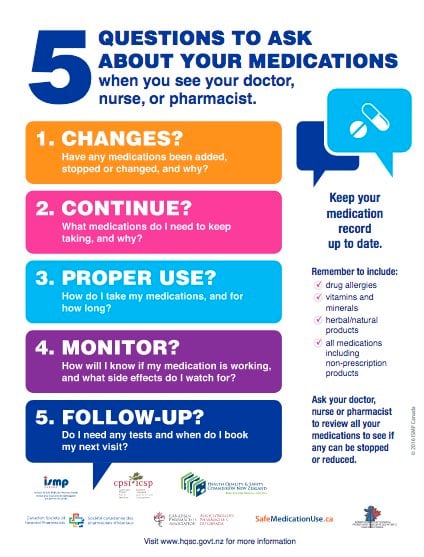
Health Quality and Safety Commission, NZ, 2019 English, te reo Māori
Free helplines



Credits: Sandra Ponen, Pharmacist, Healthify He Puna Waiora. Healthify is brought to you by Health Navigator Charitable Trust.
Reviewed by: Angela Lambie, Pharmacist, Auckland
Last reviewed: