

If you're a frequent visitor to Healthify, why not share our site with a friend? Don't forget you can also browse Healthify without using your phone data.
Medroxyprogesterone tablets
Sounds like 'med-ROX-ee-pro-JES-ter-one'
Key points about medroxyprogesterone tablets
- Medroxyprogesterone tablets are used to treat or prevent irregular, painful or heavy periods and endometriosis.
- They may also be used as hormone therapy during menopause.
- Medroxyprogesterone tablets are also called Provera®.
- Find out how to take them safely and possible side effects.

In Aotearoa New Zealand, medroxyprogesterone tablets are commonly called Provera®. Medroxyprogesterone is also available as a long-acting injection called Depo-Provera which is used as a contraception.
Medroxyprogesterone tablets are sometimes used to treat or prevent irregular, painful or heavy periods and endometriosis although increasingly the intrauterine device (IUD), Mirena, is preferred because it has fewer side effects and is more effective. Read more about Mirena for heavy periods.
Medroxyprogesterone tablets can be used together with oestrogen as part of menopausal hormone therapy (MHT) for people who still have a uterus (womb). However, this medicine is used less often now, as studies suggest it may increase the risk of blood clots and cause more side effects than some other progesterone options. Read more about medroxyprogesterone for MHT.
Medroxyprogesterone is used together with oestrogen
- If you still have your uterus, your MHT will include both oestrogen and progestogen because oestrogen alone can overstimulate the cells lining your uterus, causing an increased risk of cancer of the uterus lining.
- The progestogen in medroxyprogesterone tablets helps prevent the thickening of the lining and therefore reduces the risk of cancer. Read more about menopausal hormone therapy.
As you approach menopause, changes or fluctuations in oestrogen levels can cause symptoms such as sweats or flushes, vaginal dryness, irritability and other mood changes, heart palpitations, 'brain fog' (poor memory or losing your words), skin changes and poor sleep. Read more about menopause.
How long should you take medroxyprogesterone tablets for MHT?
Every person is different and the length of time you'll have menopausal symptoms for is unknown. When you first start MHT, it’s important to have regular check-ups with your healthcare provider to assess whether ongoing MHT is right for you. However, once you're settled on a suitable dose for you, you'll need less frequent check-ups (once every year). You'll need to have progestogen for as long as you're using oestrogen.
Medroxyprogesterone tablets are not a contraceptive
Medroxyprogesterone tablets don’t prevent you from getting pregnant.
- Although fertility falls during perimenopause, you're not fully protected from pregnancy until you've reached menopause, which means 12 straight (consecutive) months without a period if you're over 50 years of age, and 24 straight months if you're under 50.
- Even if you have a few months without a period, you can still get pregnant.
- You'll need to use an appropriate method of birth control until menopause is confirmed.
In Aotearoa New Zealand, medroxyprogesterone tablets are available in different strengths (2.5 mg, 5 mg and 10 mg).
- Swallow the tablets whole with a glass of water.
- Try to take medroxyprogesterone at the same times each day – this will help you remember to take them.
- You can take medroxyprogesterone with or without food.
- If you forget to take your dose, take it as soon as you remember. But if it's nearly time for your next dose, just take the next dose at the right time. Don't take double the dose.
- There are many different strengths of medroxyprogesterone tablets. Check the strength of the tablets you're taking and ask your pharmacist if they look different to what you're expecting.
Like all medicines, medroxyprogesterone tablets can cause side effects, although not everyone gets them. If you're concerned about any symptoms, talk to your healthcare provider. The following information offers some guidance but doesn't include all possible side effects.
Common side effects
Tell your healthcare provider if they bother you.
- Feeling sick (nausea).
- Headache.
- Mood changes.
- Dizziness or drowsiness.
- Changes in weight (weight gain).
- Difficulty sleeping.
- Bloating.
- Swollen feet and ankles (fluid retention).
- Breast tenderness.
- Changes in sexual desire.
Tell your healthcare provider immediately or phone Healthline free on 0800 611 116 if these occur
- Signs of problems with your liver such as yellowing of your skin or eyes, dark urine or pain in your abdomen.
- Signs of a blood clot such as chest pain, shortness of breath, calf pain or swelling in one leg or arm.
Read more about medicines and side effects and reporting a reaction you think might be a side effect.
The following links have more information on medroxyprogesterone:
Medroxyprogesterone (tablet)(external link) New Zealand Formulary
Provera(external link) Medsafe Consumer Information Sheet, NZ
Brochures
Medicines and side effects [PDF, 91 KB] Healthify He Puna Waiora, NZ, 2024
5 questions to ask about your medications(external link) Health Quality and Safety Commission, NZ, 2019 English(external link), te reo Māori(external link)
References
- Medroxyprogesterone acetate (endocrine)(external link) New Zealand Formulary
Brochures
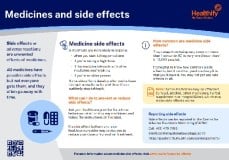
Medicines and side effects
Healthify He Puna Waiora, NZ, 2024
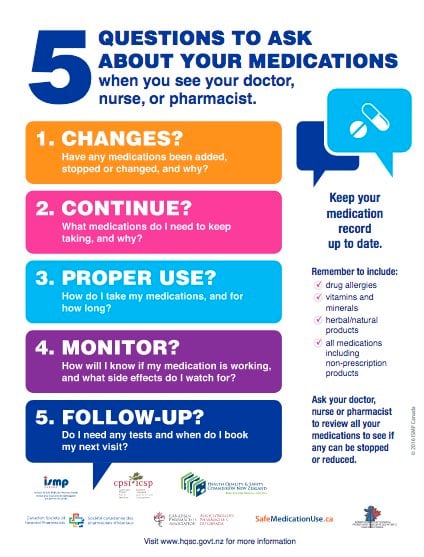
Health Quality and Safety Commission, NZ, 2019 English, te reo Māori
Free helplines

Credits: Sandra Ponen, Pharmacist, Healthify He Puna Waiora. Healthify is brought to you by Health Navigator Charitable Trust.
Reviewed by: Dr Alison Payne, Specialist General Practitioner, Martinborough; Angela Lambie, Pharmacist, Auckland
Last reviewed: