

You can now add Healthify as a preferred source on Google. Click here to see us when you search Google.
Medicines and the environment
Key points about medicines and the environment
- Medicines can help treat conditions but if not managed properly they can harm the environment, from production to disposal.
- Only order or buy what you need, and dispose of medicines and packaging correctly to prevent pollution of waterways, wetlands, and land.
- Here are some ways you can help protect the environment.

Medicines help manage health conditions and ease symptoms, but they can impact the environment if not used and disposed of carefully. From how they’re made to how we get rid of them, medicines can affect our planet, so it’s best to only buy or order what you actually need. Throwing medicines away incorrectly can contaminate rivers, lakes, and wetlands. Packaging like plastic, glass, and cardboard can also harm the environment if it isn’t recycled. Here are some practical steps you can take to reduce this impact.
- Check your stock of medicines before ordering more. If you don’t need the medicine, don’t order it. If you need the medicine in the future, you can still order it.
- Ordering medicines you don’t need can be costly to you, your health and the government. In addition, keeping excess or unused medicines at home can be a safety risk to others and the environment.
- If you need to go into hospital, remember to take all your medicines with you in a clearly marked bag. In many hospitals, if your medicines are clearly labelled with your name, and within their expiry date, they can be used during your stay, preventing the unnecessary dispensing of additional medicine.
- Use your medicines as prescribed. Let your healthcare provider or pharmacist know if you’ve stopped taking any of your medicines. Keeping them informed ensures you're only prescribed the medicines you need. This helps prevent unnecessary repeat prescriptions, reduces unused medicines at home, and minimises medicine wastage. They can also answer any questions or concerns you have.
Reducing your carbon footprint means producing less greenhouse gas from your activities, which helps protect the environment.
- If you need to reorder your medicine, check if your healthcare provider or pharmacy has a patient portal service, or video or telephone consultation option.
- Check if your pharmacy offers a delivery service. Getting your medicines as part of a scheduled delivery route may reduce individual car journeys, helping to lower transport emissions and your overall carbon footprint.
- If you need to go in person, try walking, cycling, running, or using public transport. This reduces your carbon footprint and gives you some exercise.
- If there’s no safe and secure bike parking, let your health service know or contact your local council.
If you have medicines you no longer need (including medicines for pets), the safest way to dispose of them is to return them to your pharmacy. Pharmacies can take unwanted medicines and get rid of them for you in a way that least affects the environment. This is a free service.
Our wastewater systems are not designed to cope with medicine waste. If medicines get into waterways or the soil, they can harm plants and animals. Some medicines can change the reproduction of aquatic creatures, change their physiology or change their behaviour. They can also affect the food chain.
Note: Any medicine that's returned to a community pharmacy can't be reused for anyone else. This is because the quality, safety and efficacy of the medicine can't be checked. Don't give medicines to other people.
Safe ways to dispose of your medicines
- Return unwanted or expired medicines to your pharmacy for safe disposal.
- Don't flush medicines down the toilet or put them down the sink.
- Don't put medicines in your general waste, recycling or compost bin.
- Don't put empty glass containers in the glass recycling unless they have been rinsed thoroughly.
- Don't give them to other people.
Some empty containers can be recycled. Remember to remove or scratch out the label which has your patient details on it before disposing.
If your unused medicine containers still have medicines in them, don’t remove the contents from their containers or rinse down the sink. Return unused medicines to your pharmacy for disposal in the container they were provided in so that pharmacy staff can identify the contents and handle it appropriately.
Cardboard containers
- Cardboard containers can be added to your regular paper recycling.
- Don't add to composting or worm bins. Cardboard that is highly processed, bleached white, coated, shiny, or saturated with coloured ink doesn't make good compost and the chemicals can be toxic to the worms.
Plastic or glass bottles
- Empty, clean, and unbroken glass bottles can be recycled.
- Some types of plastic containers can be added to your regular recycling. These include type 1 (PET), 2 (HDPE), and 5 (PP) across most of the country.
Medicine strips or sachet packets
- Empty plastic and foil medicine strips or sachets aren't suitable for kerbside recycling.
- TerraCycle (a recycle company in Aotearoa New Zealand) offers a Zero Waste Box that takes empty medicine strips, but there's a cost for this box.
- Ask your local pharmacy if they offer this specialist service for recycling empty medicine strips.
Blister packs
- Most disposable weekly/monthly blister packs provided by your pharmacy are not currently recyclable because of the adhesive labels used to make them.
- Reusable weekly/monthly medicine organisers that you refill yourself are an alternative option.
- Ask your pharmacist about whether reusable medicine organisers might work for you.
Disposing of needles and other sharps
- Needles and other sharps should not go in household rubbish or recycling as doing so could cause harm.
- Sharps disposal bins are available at your pharmacy for needles and other sharps. Read more about safe disposal of syringes, needles and other sharps.
- Note: A plastic syringe (without needle) can be put into the rubbish bin.
COVID rapid antigen tests
- Tests are not categorised as medicines in Aotearoa New Zealand but we have included information on disposal due to their wide use.
- The contents of the test including the swab should be placed in a bag for disposal with household rubbish. Tie the bag tightly.
- The cardboard box that's supplied with the test can be recycled.
Antibiotics
- Unused or expired antibiotic tablets, capsules, liquids, eye drops or ear drops should never be poured down the sink or toilet because they can contaminate waterways, harm aquatic life, and contribute to antibiotic resistance.
- The safest way to dispose of them is to return them to your pharmacy in their original bottle.
Inhalers are used for a variety of breathing conditions including asthma and chronic obstructive pulmonary disease (COPD).
- Some inhalers use propellants to create a spray of medicine droplets, which the person inhales. These are called pressurised metered dose inhalers (pMDIs) and they have a higher carbon footprint than other inhalers. This is because the propellants are potent greenhouse gases which trap carbon dioxide in the earth’s atmosphere, contributing to global warning.
- Dry powder inhalers (DPIs) and soft mist inhalers (SMIs) can be an alternative option to pMDIs. They don’t use propellants and so have a lower carbon footprint. DPIs are breath-activated, while SMIs deliver medicine in a fine mist without using propellants.
- Some of the DPIs and SMIs are partly reusable, such as Handihaler and Respimat devices.
- Inhalers aren’t currently recycled in Aotearoa New Zealand, but a study is underway (2026) to see if it’s possible.
Be green by controlling your symptoms
- Good control of your respiratory condition is important for your health and for the planet.
- Controlling your symptoms well lowers your carbon footprint by avoiding extra visits to your healthcare provider or hospital, and helps to prevent the overuse of reliever inhalers.
- You can reduce the need for reliever inhalers by following your action plan and using preventive medications as prescribed.
- If you're concerned about the impact of your inhaler on the environment, talk with your healthcare provider. Depending on your condition, there may be lower-carbon alternatives for controlling your symptoms.
- Antibiotics are important medicines for treating infections caused by bacteria. When prescribed by your healthcare provider, they should be taken exactly as directed.
- Using antibiotics incorrectly or when they're not needed can cause antibiotic resistance. This happens when bacteria change so that antibiotics no longer work to treat infections. Read more about antibiotic resistance.
How to reduce the need for antibiotics
Preventing infections and their spread helps stop antibiotic resistance by reducing the need for antibiotics. You can help by:
- washing your hands regularly
- staying up to date with vaccinations
- only take antibiotics prescribed for you. Don't share or use leftover antibiotics as antibiotics treat specific infections and taking the wrong medicine can make things worse.
The following links have more information about medicines and the environment:
Worm farming compost collective(external link), NZ
How to get rid of medicine, pill and vitamin bottles(external link) Auckland Council, NZ
Medical Aid Abroad(external link) NZ
Carbon footprint calculators FutureFit(external link) NZ
The New Zealand Needle Exchange Programme(external link) NZ
The environmental impact of inhalers(external link) Asthma + Respiratory Foundation, NZ
Brochures
Medicines and side effects(external link) Healthify He Puna Waiora, NZ, 2024
5 questions to ask about your medications(external link) Health Quality and Safety Commission, NZ, 2019 English(external link), te reo Māori(external link)
References
- Pharmaceuticals in the environment – a growing problem.(external link) Pharmaceutical Journal, UK, 2015
- Only order what you need(external link) MedicinesWaste, UK
- Waste not, want not medication wastage(external link) BPAC, NZ, 2009
Brochures
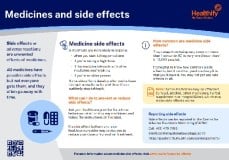
Medicines and side effects
Healthify He Puna Waiora, NZ, 2024
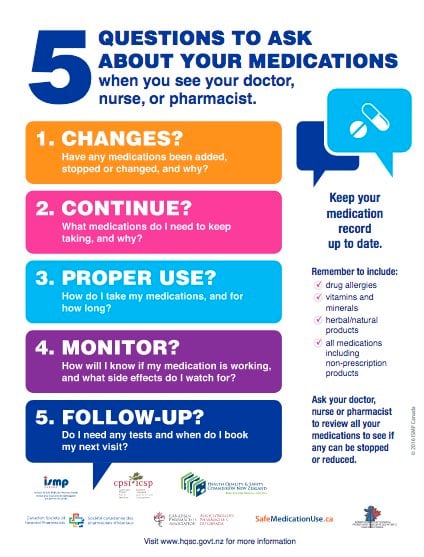
Health Quality and Safety Commission, NZ, 2019 English, te reo Māori
Free helplines
Credits: Healthify He Puna Waiora Pharmacists. Healthify is brought to you by Health Navigator Charitable Trust.
Reviewed by: Sandra Ponen, BPharm, MPH, Auckland
Last reviewed:
Page last updated: