

You can now add Healthify as a preferred source on Google. Click here to see us when you search Google.
Loperamide
Sounds like 'loh-peer-ah-mide'
Key points about loperamide
- Loperamide is used to treat diarrhoea (runny poo).
- Loperamide is also called Diamide Relief®, Diamide®, Gastro-Lieve®, Gastro-stop®, Imodium®, Imodium Zapid®, Loper-Stop® or Nodia®.
- Find out how to take it safely and possible side effects.

Loperamide is used to treat diarrhoea (runny poo). It works by slowing down food as it moves through your gut. This lowers the number of bowel motions and firms up runny poo.
It helps to ease diarrhoea but doesn't treat the cause of diarrhoea, such as an infection or a tummy bug. Read more about diarrhoea.
Loperamide is also used in people who have undergone an ileostomy (an operation that removes part of the bowel), to thicken your stool and lower the amount that comes out from your ileostomy.
Loperamide is also called Diamide Relief®, Diamide®, Gastro-Lieve®, Gastro-stop®, Imodium®, Imodium Zapid®, Loper-Stop® or Nodia®. In Aotearoa New Zealand, loperamide comes as capsules (2 mg) or tablets (2 mg) and orally disintegrating tablets (2 mg). It's available on a prescription written by a prescriber or it can be bought from a supermarket or pharmacy.
Always take your loperamide exactly as your healthcare provider has told you. The pharmacy label on your medicine will tell you how much to take, how often to take it and any special instructions.
- The dose of loperamide will be different for different people, depending on your condition.
- For adults with sudden (acute) diarrhoea: Take 4 mg (2 tablets or capsules) to start, then 2 mg (1 tablet or capsule) after each time you go to the toilet with diarrhoea. Don't take more than 8 tablets or capsules in 24 hours. Stop taking loperamide as soon as the diarrhoea stops. If the diarrhoea continues for longer than 48 hours, contact your healthcare provider.
- For adults with long-lasting (chronic) diarrhoea: Start with 2 capsules or tablets daily and adjust your dose until you have 1 to 2 solid stools a day. The usual dose ranges from 2 to 12 mg daily (1 to 6 capsules or tablets daily). Don't take more than 8 tablets or capsules in 24 hours.
- If your healthcare provider has prescribed loperamide, then take it exactly as your healthcare provider has told you.
- Are you under 12 years of age?
- Do you have constipation or ulcerative colitis?
- Do you have glaucoma or HIV?
- Do you have problems with your kidneys, bladder or liver?
- Are you pregnant or breastfeeding?
- Do you have blood in your stools (poo) with a high fever?
- Do you know if your diarrhoea has been caused by bacteria called Salmonella or Campylobacter or from antibiotic use?
- Are you taking or using any other medicines? This includes any medicines being taken which are available to buy without a prescription, as well as herbal and complementary medicines.
If so, it’s important that you tell your healthcare provider or pharmacist before taking loperamide. Sometimes a medicine isn’t suitable for a person with certain conditions, or it can only be used with extra care.
- Swallow the capsule or tablet with a glass of water.
- The orally disintegrating tablets (Imodium Zapid®) melt on your tongue without the need for water.
- Food: Loperamide can be taken before or after food.
- Missed dose: If you forget to take a dose, just take a dose after the next time you go to the toilet with diarrhoea. Don't take two doses together to make up for a missed dose.
Here are some things to know when you're taking loperamide. Other things may be important as well, so ask your healthcare provider what you should know about.
- Driving: Loperamide can make you feel tired and dizzy. Be careful when driving or using tools until you know how this medicine affects you.
- Alcohol: Loperamide can make you feel tired and dizzy. Limit or avoid drinking alcohol while taking loperamide. Alcohol may increase these side effects.
- Other medicines: Loperamide interacts with some medicines, herbal supplements and rongoā Māori, so check with your healthcare provider before starting loperamide and before starting any new products.
- Make sure you drink plenty of water or electrolyte replacement drinks because diarrhoea can make you dehydrated. Talk to your healthcare provider or pharmacist about this.
- Eat small, light meals as soon as you're able to. Plain foods such as bread and rice are good foods to try eating first.
- Take care to prevent the spread of diarrhoea – regular and thorough hand washing is important.
Like all medicines, loperamide can cause side effects, although not everyone gets them. If you're concerned about any symptoms you think might be related to your medicine, talk to your healthcare provider. The following information offers some guidance but doesn't include all possible side effects.
Common side effects
Tell your healthcare provider if these side effects bother you.
- Constipation: Stop taking loperamide.
- Dizziness and nausea (feeling sick): Try taking loperamide with food.
- Gas, bloating, wind.
- Headache.
Tell your healthcare provider immediately or phone Healthline free on 0800 611 116 if these occur
- Signs of obstruction of your bowels such as a feeling of tightness in your stomach, stomach cramps, problems with passing stools (poo) or gas, and vomiting (being sick): Stop taking loperamide.
Phone 111 for an ambulance or go to your nearest accident and emergency (A&E) clinic if these occur
-
Signs of an allergic reaction such as itchy skin, and rash, swollen lips or tongue, problems breathing, like a tight chest or shortness of breath.
Read more about medicines and side effects and reporting a reaction you think might be a side effect.
The following links provide further information on loperamide:
Loperamide(external link) New Zealand Formulary Patient Information
Diamide relief(external link) Medsafe Consumer Medicine Information, NZ
Nodia(external link) Medsafe Consumer Medicine Information, NZ
Brochures
Medicines and side effects(external link) Healthify He Puna Waiora, NZ, 2024
5 questions to ask about your medications (external link)Health Quality and Safety Commission, NZ, 2019 English(external link), te reo Māori(external link)
References
- Loperamide hydrochloride(external link) New Zealand Formulary
- Loperamide hydrochloride(external link) New Zealand Formulary for children
- Diamide Relief(external link) Medsafe datasheet, NZ
- Nodia(external link) Medsafe datasheet, NZ
How long does it take for loperamide to start working?
The usual time taken for loperamide to start working after taking 4mg (2 capsules or tablets) is 30 minutes to 1 hour. The time can vary depending on your health condition(s), other medicines you take and the amount of food in your stomach.
Always take loperamide exactly as your healthcare provider has told you. The pharmacy label on your medicine will tell you how much loperamide to take, how often to take it and any special instructions. Read more about the dose of loperamide for adults.
How many loperamide can I take?
For adults with sudden (acute) diarrhoea the usual dose is 4 mg (2 tablets or capsules) to start, then 2 mg (1 tablet or capsule) after each time you go to the toilet with diarrhoea.
It’s very important not to take more than 8 tablets or capsules in 24 hours.
Read more about the dose of loperamide for adults.
What are the side effects of loperamide?
Like all medicines, loperamide can cause side effects, although not everyone gets them. If you're concerned about any symptoms you think might be related to your medicine, talk to your healthcare provider.
Read more about possible side effects of loperamide.
Brochures
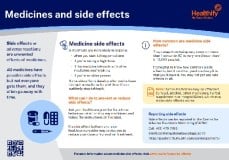
Medicines and side effects
Healthify He Puna Waiora, NZ, 2024
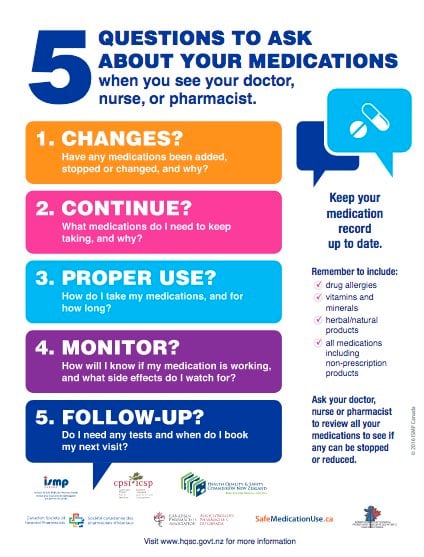
Health Quality and Safety Commission, NZ, 2019 English, te reo Māori
Free helplines


Credits: Healthify editorial team. Healthify is brought to you by Health Navigator Charitable Trust.
Reviewed by: Stephanie Yee, Pharmacist, Auckland
Last reviewed: