

If you're a frequent visitor to Healthify, why not share our site with a friend? Don't forget you can also browse Healthify without using your phone data.
Warts and verrucas
Key points about warts and verrucas
- Warts are small rough lumps or growths on your skin and can appear on different parts of your body.
- They're known as verrucas when they're on your feet.
- Warts are very common and are usually harmless.
- Warts can be rounded or flat and appear as a single wart or in cluster. Some can be itchy or painful.
- They're caused by strains of the human papillomavirus (HPV).
- Warts usually go away without treatment, but treatments are available if they're painful, spreading or you don’t like they way they look.
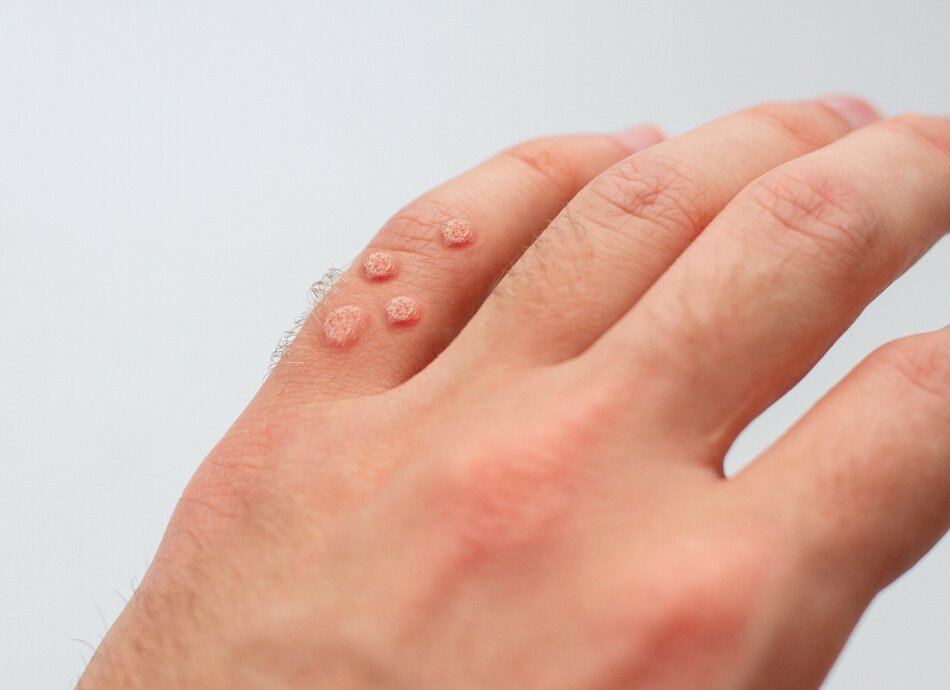
Warts are small rough lumps on your skin caused by a virus. They can occur anywhere on your body but are more common on your hands and feet – they’re known as verrucas when they appear on your feet. They’re not harmful, but they can be itchy, painful or embarrassing.
Warts are common, especially in childhood. They usually go away by themselves within a couple of years, but there are treatment options if they bother you, keep coming back, or are painful.
There are several types of warts. Each looks different and appears on different parts of your body.
Four common types of warts
- Common warts are usually found on the backs of your fingers or toes, around your nails and on your knees. They sometimes look like a tiny cauliflower.
- Plantar warts, also known as verrucas are found on the soles of your feet. They grow into your foot and can be quite painful when you stand or walk.
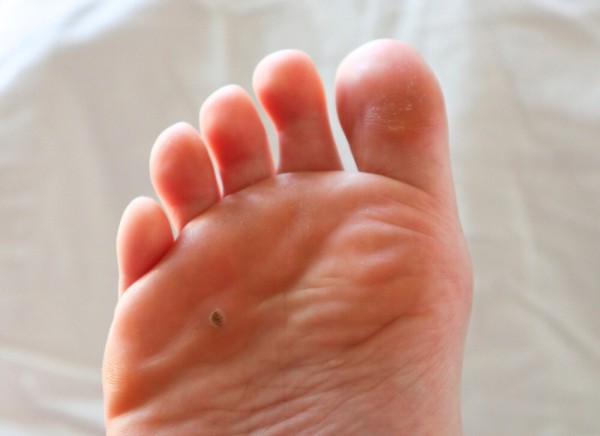
Image credit: Depositphotos
- Plane warts have a flat surface. They are often found in clusters and tend to appear in a line. They are most commonly found on your face, hands and shins.
- Filiform warts are on a long stalk like a finger or thread. They commonly appear on your face
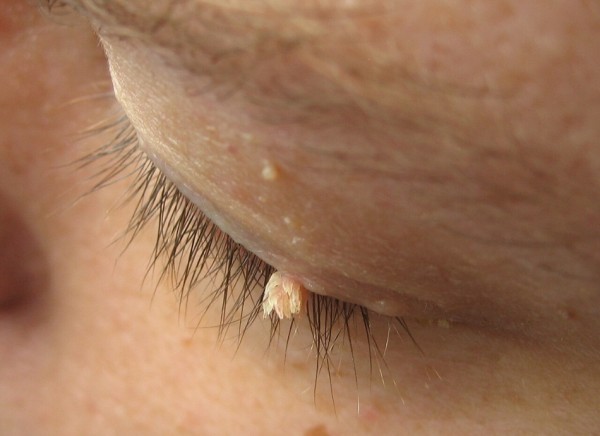
Image credit: Schweintechnik via Wikimedia Commons(external link)

Warts are caused by different strains of the human papillomavirus (HPV). The strains of HPV that cause harmless warts on your hands, legs or feet are different to those that cause genital warts and cervical cancer.
Warts happen when HPV virus infects the top layer of your skin and causes your skin cells to grow very fast. Sometimes just 1 or 2 warts develop on your skin. They may also grow in a cluster of several warts in the same area.
Anyone can get warts, but people who are more likely to get warts include:
- school-age children
- people with dermatitis
- people who have broken skin from cuts, scrapes, hangnails or bitten nails
- swimmers and others who spend more time in warm, damp places such as showers, changing rooms and swimming pools
- people with poor immunity or who are on long-term immunosuppressant medicines such as azathioprine or cyclosporin.
Warts are lumps, bumps or growths that range in size from a few millimetres to over a centimetre. They:
- are usually skin-coloured, although some may be darker
- can be rough, grainy, flat, rounded, finger-like or cauliflower-like
- appear as a single wart or appear in cluster with many of them together
- may have an overlying callus (hard skin)
- may be itchy or painful, especially verrucas (which are found on the soles of your feet).
- are worried about a wart or any growth or lump on your skin
- have a wart that keeps coming back, even when it's been treated
- have a wart that starts to bleed or there are changes in the way it looks.
Warts can be diagnosed by just looking at your skin and feeling it. Tests aren't usually needed. Occasionally a sample of your skin may be taken for testing if your healthcare provider thinks there might be a different reason for your symptoms.
Warts are usually harmless and go away without treatment but it may take months or years. For example, in children, half of warts disappear without treatment within 6 months, and about two-thirds are gone within 2 years. If your warts don’t cause any problems, you don't need to treat them.
Treatment can be helpful if warts are painful, spread too much or you don’t like the way they look. However, treatment can be uncomfortable and may need to be continued for several months.
Some of the treatments used to treat warts include:
- topical paints or gels
- cryotherapy or freezing treatment
- other treatments such as surgery.
Topical paints or gels
Topical paints or gels contain salicylic acid. You can buy these from your pharmacy.
- They're usually applied directly onto the wart once a day for several weeks.
- They work by removing the dead surface skin cells.
- They can cause skin soreness or irritation during treatment.
- About 70% of warts (7 out of every 10) improve within 12 weeks if you treat them every day.
It's important to follow the instructions on the packaging carefully because applying these treatments to normal skin around the wart can burn it.
Cryotherapy or freezing treatment
This is when liquid nitrogen is sprayed or applied to the wart. Liquid nitrogen is very cold and the freezing and thawing destroys the wart.
- It is normally repeated every 2 to 3 weeks.
- Freezing treatment is quite uncomfortable and may cause blistering of your skin for a few days or weeks.
- About 70% (7 out of every 10) of warts improve after 3 to 4 months of regular freezing.
- A hard freeze using liquid nitrogen might cause a permanent white mark or scar. It can also cause temporary numbness.
Other treatments
If the above treatment options don’t clear your warts, other methods such as surgery or laser treatment may be helpful. These treatments are usually done by specialists and only if other options have failed.
Apps reviewed by Healthify
You may find it useful to look at some skin care (dermatology) apps.
Warts are not very contagious, but they can be spread by close contact with someone who has them. The HPV virus can also be passed on to someone else by touching shared objects or surfaces – such as the area surrounding a swimming pool or shower, towels, razors or other personal items. If you already have warts, they can spread by scratching or touching the wart and then touching a different body area.
Some ways to prevent yourself from getting or spreading warts include:
Do's
- Do wear jandals or slippers in showers at pools or gyms.
- Do wash your hands after touching warts.
- Do change your socks daily if you have verrucas or plantar warts.
- Do cover your warts and verrucas with a plaster when swimming.
- Do take care that you don't cut warts when shaving.
Don'ts
- Don't scratch your warts and then bite your nails or put your finger in your mouth.
- Don't share towels, socks or shoes.
The following links provide further information on warts and verrucas. Be aware that websites from other countries may contain information that differs from New Zealand recommendations.
Viral warts(external link) DermNet NZ
Warts(external link) KidsHealth NZ
Warts(external link) Better Health Channel, Australia
Warts and verrucas(external link) Patient Info, UK
Apps
References
- Warts and verrucas(external link) Auckland Regional HealthPathways, NZ, 2025
- Warts(external link) Better Health Channel, Australia
- Viral warts(external link) DermNet NZ
- Warts and verrucas(external link) Health New Zealand | Te Whatu Ora, NZ, 2025
- Warts and verrucas(external link) Patient Info, UK
Viral wart(external link) DermNet NZ
Cryotherapy – warts and all(external link) Canterbury Initiative Education Session, NZ, 2016 (Password: educate)
Kwok CS, Aarons I, Murphy R. Destructive therapies for cutaneous warts – a review of the evidence(external link) Aust J Gen Pract. 2022;51(10):802–803
Plantar warts – a persistently perplexing problem(external link) BPAC, NZ, 2014
Podcast
Cutaneous warts(external link) Dr Georgina Harvey, Goodfellow Unit, NZ, 2022 (Duration 16:59)
What causes warts?
Warts are caused by the human papillomavirus (HPV). Warts happen when the HPV virus infects the top layer of your skin and causes the cells to grow very fast. The strains that cause warts on your hands and feet are different to those that cause genital warts.
Will warts go away on their own?
Yes, warts will often go away on their own, but it may take several months or years. About two-thirds of warts will clear up within 2 years. There are treatment options available if they bother you, keep coming back, or if they hurt.
Will warts spread?
Warts are contagious, but don’t spread very easily. They can spread on your body if you pick or scratch the infected skin and then touch other areas of your body. They can also spread between people through close contact, sharing towels and other personal items, or from using public spaces such as swimming pools and showers.
How are verrucas on feet treated?
Verrucas on your feet can be treated if they’re painful and causing problems. However, treatment can be uncomfortable and may need to be continued for several months. Some of the treatment options include topical paints or gels that contain salicylic acid, and cryotherapy or freezing treatment. Other treatments such as surgery or laser treatment may help if other options don’t work.
What are the black dots in verrucas?
The tiny black dots sometimes seen in warts and verrucas are actually dried blood contained in the capillaries (tiny blood vessels).
Need help now?



Credits: Healthify editorial team. Healthify is brought to you by Health Navigator Charitable Trust.
Reviewed by: Dr Grace Lee, FRNZCGP and Clinical Educator
Last reviewed: