

You can now add Healthify as a preferred source on Google. Click here to see us when you search Google.
Stye
Key points about styes
- A stye (chalazion or hordeolum) is when a gland in your eyes becomes blocked and can become inflamed. This causes watery eyes with red swollen eyelids.
- Styes are common and can clear up on their own in 6 weeks to 6 months.
- Treatment involves keeping your eyelids clean, wearing no eyelid makeup and using hot compresses with gentle eyelid massages.
- It's important to massage gently, without too much pressure, as it may burst. If it does burst, please see an optometrist or eye doctor.
- See an optometrist or eye doctor if it gets worse, becomes painful, or if your sight becomes constantly blurred.
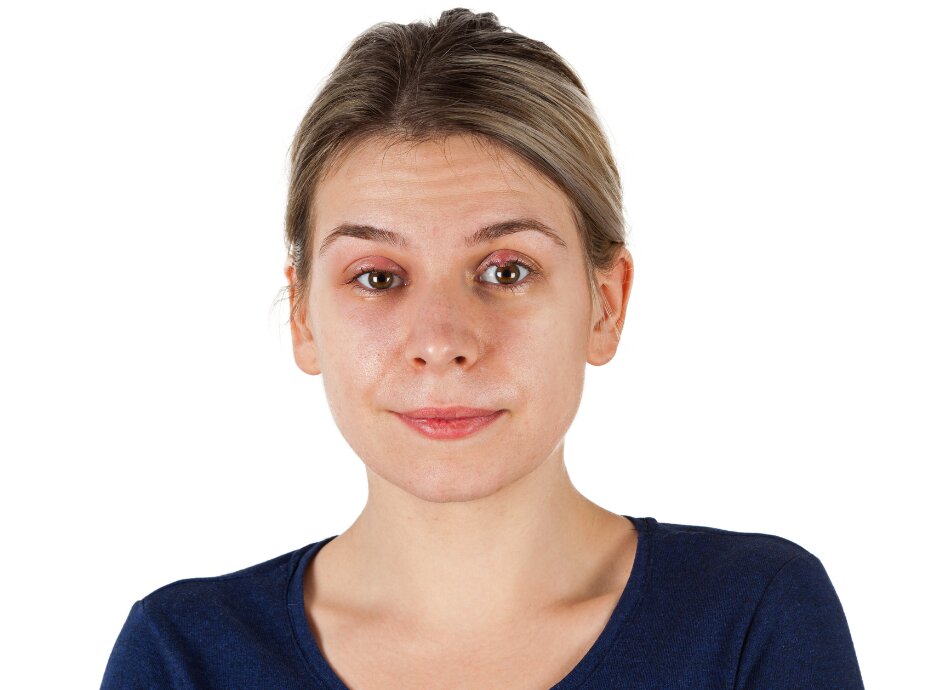
A stye is caused when the small oil glands in your eyelids become blocked. This causes an inflammatory reaction in the lid. Styes can heal on their own, usually in 6 weeks to 6 months. If you have a stye, you may also have a condition called posterior blepharitis which involves blocked oil glands in the eyelids. The glands are blocked because of the oil becoming hardened, like butter in the fridge, and getting stuck inside your oil glands.
A stye can cause:
- red, sore, swollen eyelids
- tender swellings in your eyelids
- watery eyes
- a lump on your eyelid.
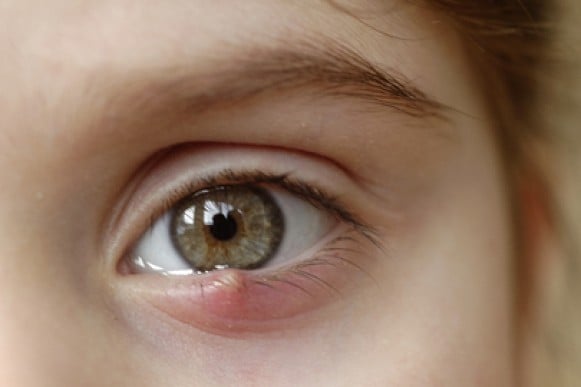
Image credit: 123RF
The aim of treatment is to keep your eyelids clean and free of irritants, and allow the natural healing process to clear the inflammation. You can do this treatment at home. It involves applying a warm compress to your eyelid to heat your eyelid glands, followed by eyelid massage to squeeze oil out of your glands. Keeping your eyelids clean also helps.
Warm compresses: Place a hot flannel, a heated wheat bag or a heated eye mask (usually available at pharmacies) on your closed eyelids for 10 minutes. The temperature should be reasonably warm, about 42 degrees.
Eyelid massage: After heating, massage your eyelids. Use the tip, or side, of your finger to firmly push the skin of your eyelids at the area close to your eyelashes. Do not push so hard that it becomes painful. This will help unblock the oil glands by melting the oil and squeezing it out. This also helps with dry eye. Do this twice a day long-term.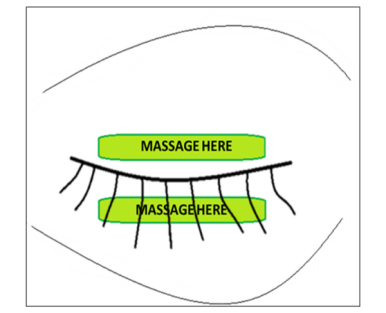
Eyelid cleaning: Make up a solution of baby shampoo (1 part baby shampoo and 10 parts water). Dip a clean cotton bud in the solution and clean away any crusts present on the eyelashes and rub along the eyelids. Use a clean cotton bud for each eyelid. Repeat this process twice a day.
If you follow these steps, most styes will heal.
Other self-care tips
- Avoid bursting the stye yourself at home.
- You can use lubricating eye drops from the pharmacy to provide comfort for your eyes, but this will not treat the problem.
- While your eyes are irritated and inflamed, avoid using eye make-up (eg, eye shadow and eyeliner) and other cosmetics around your eye.
- Also, avoid using contact lenses until the condition is under control.
Apps reviewed by Healthify
You may find it useful to look at some Skin care (dermatology) apps.
See your optometrist or doctor if you have followed the steps for treatment and:
- a stye persists or is causing distress
- your eyes become increasingly red or painful
- your sight becomes blurred.
You may need to see an eye specialist (ophthalmologist) for further treatment if necessary. No special tests are needed most of the time.
|
You should see an optometrist or doctor immediately if you have any of these: |
|---|
|
Stye(external link) NHS, UK
Auckland Eye(external link) NZ
Eyelid bump(external link) MedlinePlus, US
Apps
Need help now?

Credits: Healthify editorial team. Healthify is brought to you by Health Navigator Charitable Trust.
Reviewed by: Kenny Wu, Optometrist, Eye Institute, Auckland
Last reviewed:
Page last updated: