

If you're a frequent visitor to Healthify, why not share our site with a friend? Don't forget you can also browse Healthify without using your phone data.
Slapped cheek disease
Also called fifth disease
Key points about slapped cheek disease
- Slapped cheek disease (also called fifth disease) is common in young tamariki.
- It causes a bright red rash on the cheeks.
- Slapped cheek disease is usually a mild viral illness and is caused by the parvovirus B19.
- This virus spreads through coughing, sneezing and being in contact with people who have the virus.
- The content on this page comes from KidsHealth(external link).

Slapped cheek disease, also known as fifth disease, is a common and usually mild viral illness that mainly affects young tamariki. It causes a bright red rash on the cheeks.
Slapped cheek disease is caused by a virus called parvovirus B19. This virus is different from the parvovirus that affects pets, so it can't be passed between humans and animals.
Slapped cheek disease spreads easily through coughing, sneezing and being in contact with people who have the virus.
Symptoms of slapped cheek disease usually start about 2 weeks after being infected.
Early symptoms
The first symptoms of slapped cheek disease in tamariki are:
- fever
- headache
- runny nose
- sore throat.
Rash
- Face rash: A few days after the early symptoms start, a bright red rash can appear on the cheeks.
- Body rash: Your child may also have a rash on their chest, back, arms and legs. This rash can look like a lace pattern on their skin. This rash can come and go for several weeks or even months, especially if the skin is exposed to sunlight or heat.
Other symptoms
Other symptoms that tamariki with slapped cheek disease may get include:
- red eyes
- swollen glands
- runny poo (diarrhoea)
- joint pain or swelling.
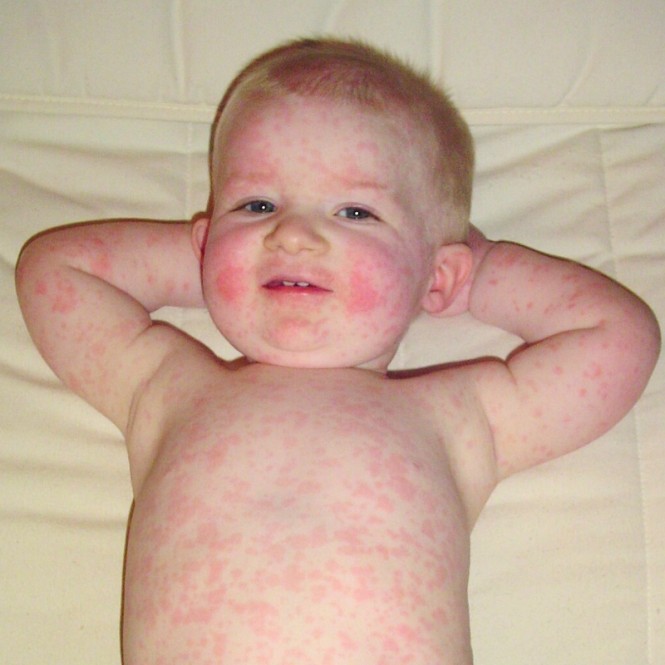
Image credit: Andrew Kerr via Wikimedia Commons(external link)

Call Healthline on 0800 611 116 or take your child to a healthcare provider if they:
- develop a rash and you don’t know what’s causing it
- have ongoing fevers
- have sore or swollen joints
- are unwell and you’re worried about them.
There's no specific treatment for slapped cheek disease. It’s caused by a viral illness and most tamariki get better by themselves.
Treatment for slapped cheek disease focuses on relieving your child’s symptoms.
Food and fluid
Encourage your child to drink plenty of fluids. Offer them small amounts, often. Your child may not feel like eating much when they have slapped cheek disease. Their appetite will return as they start to get better.
Paracetamol if needed
You can give paracetamol if your child is in discomfort or miserable with a fever. You must follow the dosage instructions on the bottle or packet. It's dangerous to give more than the recommended dose. See our paracetamol dose calculator to find out how much to give your child.
Never give your child aspirin, as this may increase the risk of Reye syndrome, which is a rare and serious illness.
Cool face cloth
If your child has a burning feeling over their cheeks, putting a cold face cloth on their cheeks can help relieve this.
Complications from slapped cheek disease are very rare in healthy tamariki and rangatahi (young people).
Because parvovirus affects blood cells, a rare complication of slapped cheek disease includes anaemia (low blood count).
Some tamariki are at higher risk of complications. This includes tamariki with:
- red blood cell problems such as anaemia
- a weakened immune system.
Complications in pregnancy
If you're pregnant and you get slapped cheek disease, or you’ve been in contact with someone who has the virus, see a healthcare provider immediately. Parvovirus can be dangerous for unborn pēpi (babies).
There's no vaccination for slapped cheek disease.
You can help prevent the spread of slapped cheek disease through careful hand washing.
Does my child with slapped cheek disease need to stay home from preschool or school?
Keep tamariki with slapped cheek disease at home if they're unwell and have symptoms such as a fever. There’s no need to keep your child home from childcare, preschool or school if they have a rash but are otherwise well.
Need help now?



Credits: This content has been collaboratively developed by Health New Zealand | Te Whatu Ora, KidsHealth, and Healthify He Puna Waiora to provide trusted health information.
Last reviewed: