

You can now add Healthify as a preferred source on Google. Click here to see us when you search Google.
Seborrhoeic dermatitis
Also known as seborrhoeic eczema, and cradle cap in infants
Key points about seborrhoeic dermatitis
- Seborrhoeic dermatitis is a common condition where there’s inflammation and flaking of your skin on your face, scalp and upper body.
- It affects babies, teenagers and adults. In babies, it’s called cradle cap when it affects their scalp.
- Dandruff is a mild form of seborrhoeic dermatitis of the scalp, where you have flaking but no redness or inflammation.
- Treatment includes self-care and using antifungal and anti-inflammatory medicines.
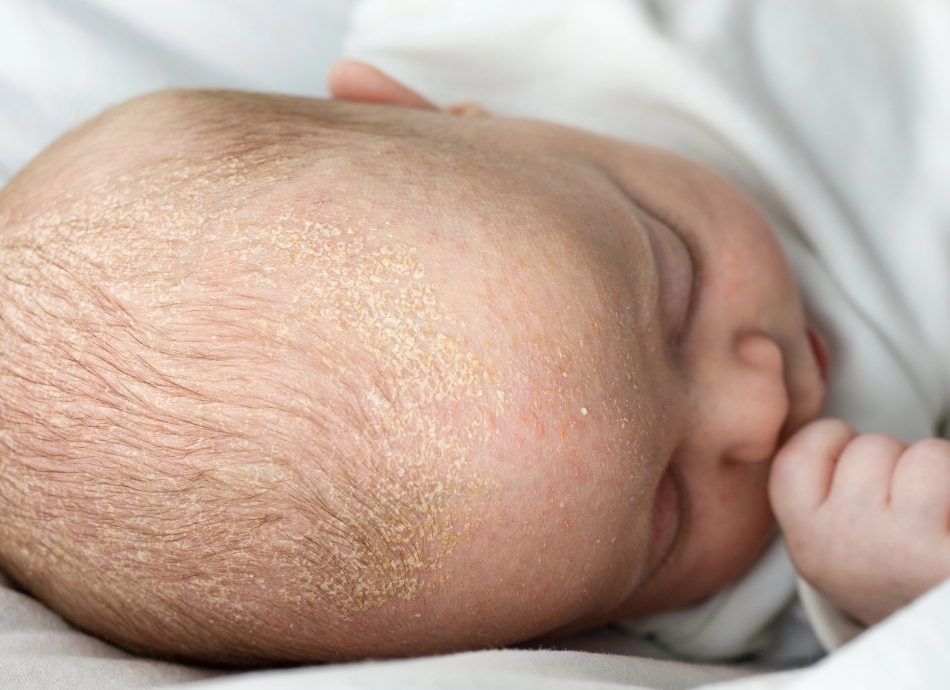
Dermatitis refers to a group of conditions that cause itchiness, redness and dry skin.
Seborrhoeic dermatitis is a flaky rash affecting the hairy parts of your face, scalp and chest as well as skin folds, such as behind your ears and sometimes between your breasts, in your armpits and groin.
The rash affects infants, teenagers (starting around puberty) and adults. It causes flaking, pink patches, and mild itching or soreness. It’s more common in males than in females. In babies, seborrhoeic dermatitis is commonly called cradle cap when it affects the scalp.
Dandruff is a mild form of seborrhoeic dermatitis of the scalp in which there is flaking without pink patches.
The exact cause of seborrheic dermatitis isn’t known, but it’s thought to be a reaction to a yeast called Malassezia. Malassezia is a normal part of your skin flora where the skin is oily, but it can irritate the skin of some people under certain circumstances.
Seborrhoeic dermatitis is usually mild. Severe seborrhoeic dermatitis in adults is uncommon but may relate to:
- having oily skin
- having a family history of seborrheic dermatitis or psoriasis
- having a weakened immune system, such as, if you’ve had an organ transplant or have HIV infection
- some neurological conditions, such as Parkinson’s
- certain medications
- stress or lack of sleep.
Flaking and a pink rash may be seen in your scalp, forehead, face (especially around your eyebrows and either side of your nose), chest, armpits and groin. The skin inside or behind your ears may also be affected. It’s usually very similar on the left and right sides of your face or body.
If you have mild seborrhoeic dermatitis, you may just have some flaky skin in 1 or 2 areas, or dandruff.
Although it's not common, seborrhoeic dermatitis may become more of a problem with more widespread patches covered with yellow-brown scale. Depending on your skin type, the affected skin may be red, lighter or darker than the surrounding skin.
Some people find their symptoms improve in summer, while others find seborrhoeic dermatitis to be less of a problem in winter. It may get worse if you use moisturisers, make-up, and steroid creams.
See your healthcare provider if:
- your symptoms don't get better with self-care or over-the-counter treatments
- patches of seborrheic dermatitis:
- leak fluid or pus
- form crusts, or
- become very red or painful.
Seborrhoeic dermatitis in babies
In babies, seborrhoeic dermatitis of the scalp (cradle cap) causes yellow scaly patches which can cover the whole scalp. It may look unsightly, but it doesn’t usually cause the baby any problems or discomfort. It usually goes away after a few months.
Some babies also get a mild rash that may flake or peel on their eyebrows, the skin next to their nose, or in the creases of the skin, such as around the neck, behind the ears or in the armpits. Sometimes it can cause a type of nappy rash in the folds of their groin. The rash isn’t particularly itchy, so your baby usually isn’t bothered by it.
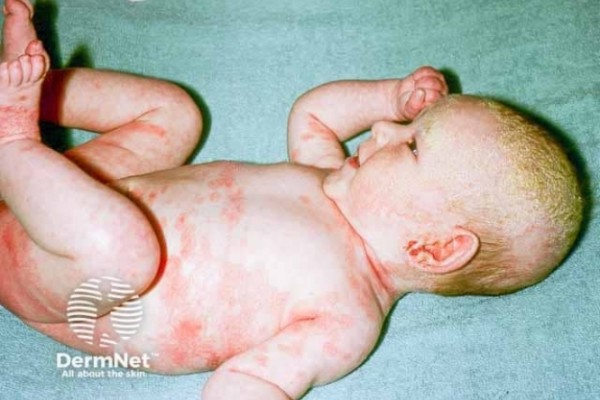
Image credit: DermNet NZ(external link)
Your healthcare provider will ask questions about your symptoms and can usually diagnose seborrhoeic dermatitis based on where your rash is and what it looks like.
You usually don’t need any particular tests but if the diagnosis isn’t certain, your healthcare provider may take some skin scrapings to be tested in the lab, arrange for a skin biopsy or refer you to a dermatologist (skin specialist) for an opinion.
Seborrhoeic dermatitis ranges in severity, but in adults, it's usually a long-term condition. Treatment aims to reduce the amount of yeast (fungus) in the affected areas.
Taking care of your scalp
Use an antifungal shampoo regularly
- Keep using the shampoo even when your symptoms have cleared to prevent the condition from coming back. For example, use it twice a week for up to 4 weeks and then once every 1 to 2 weeks.
- Leave the shampoo on your scalp for 5 to 10 minutes before rinsing it off.
- Avoid using the shampoo more than twice a week because it can cause irritation.
- Ketoconazole shampoo (eg, Nizoral® and Sebizole®) is a common antifungal shampoo. Read more about ketoconazole shampoo.
- Other suitable shampoos contain ciclopirox, zinc pyrithione, or selenium disulfide.
Other products applied to the scalp
- Tar-based shampoos help control flaking and scaling symptoms. They can be used alternately with a ketoconazole shampoo. Some people dislike their smell, but this can be disguised by shampooing a second time with your preferred brand or using a conditioner of your choice.
- Avoid using the shampoo more than twice a week because it can irritate your skin.
- If your scalp becomes very scaly, you may need a de-scaling ointment containing tar and salicylic acid. Apply it to the scaly patches an hour before washing it out. You may have to reapply it several times over several hours if the scaling is thick. A common brand is Coco-Scalp ointment.
- For more severe seborrhoeic dermatitis on the scalp, a topical steroid lotion or scalp application may be prescribed to help reduce inflammation and remove scaling. These are used daily for up to 2 weeks, but after that they shouldn't be used more than twice weekly long-term. Overuse can lead to worse seborrhoeic dermatitis and other problems.
Treatment for other parts of the body
Seborrhoeic dermatitis is usually mild on areas other than your scalp. Antifungal creams such as clotrimazole, miconazole, and especially ketoconazole are often effective. They're best used twice daily for a few days, then twice a week, then stopped when they're no longer needed.
Your healthcare provider may also recommend using ketoconazole shampoo to wash your body. This can be helpful for treating larger areas, such as your chest. Leave it on for about 5 minutes before rinsing off. Since shampoo can irritate dry skin, limit this to twice a week.
Treatment for babies
Seborrhoeic dermatitis in babies usually gets better on its own after a few months and doesn’t need any treatment. Gentle cleansing with a baby shampoo and removing scales with a soft brush may be all that’s needed (see the self-care section below). However, if your baby has severe cradle cap, your healthcare provider may treat it for a couple of weeks with a mild topical steroid or antifungal cream.
You can do the following things to help manage your seborrhoeic dermatitis at home.
- Use pH-balanced, non-cream soap substitutes (such as SebaMed) when you wash. Wash daily to help remove greasy oils from your body.
- Avoid moisturisers – if you must use one, choose a light product. Grease makes seborrhoeic dermatitis worse.
- If you wear make-up, choose products that don’t block your pores (non-comedogenic).
- Once your symptoms have settled, you can use antifungal shampoo once every 1 to 2 weeks while using a regular shampoo at other times.
- You can try washing affected areas of your body with antifungal shampoo, as this sometimes helps. Lather it up and leave it for 5 minutes before rinsing it off.
- If your eyelids are affected, carefully clean between your eyelashes with a gentle eyelid cleanser applied to a cotton bud.
Dietary changes and the use of supplements or probiotics are not supported by research. A low-inflammatory Mediterranean diet is generally recommended to support overall health but has not specifically been shown to be of benefit for seborrhoeic dermatitis.
For babies
Here are some options for caring for your baby’s cradle cap.
- Wash your baby’s scalp each day with a baby shampoo and then use a soft brush to loosen the scales.
- You can try softening the scales with baby oil, then gently brushing their scalp before washing with baby shampoo.
- It’s also okay to ignore cradle cap – it will get better in time.
Wash other areas of your baby’s skin regularly with a baby wash – avoid regular soap. Change nappies often when soiled or wet, and use barrier ointments, such as zinc and castor oil ointment or white soft paraffin ointment.
We don’t know how to prevent the return of seborrhoeic dermatitis, so it’s a matter of treating it when it comes back, as described above.
For babies, you can help reduce the chance of cradle cap by:
- washing your baby’s scalp with baby shampoo
- avoiding products that could irritate your baby’s skin
- using a soft brush to keep your baby’s scalp clean.
The severity of seborrhoeic dermatitis ranges. Flare-ups can occur when treatment is stopped, so some people need ongoing treatment, eg, antifungal shampoo twice weekly.
Cradle cap in babies usually gets better on its own within 3 to 4 months, although it can take longer.
The following is further reading that gives you more information on seborrhoeic dermatitis. Be aware that websites from other countries may contain information that differs from New Zealand recommendations.
Seborrhoeic dermatitis(external link) British Association of Dermatologists, UK
Brochure
Seborrhoeic dermatitis in adults – factsheet(external link) National Eczema Society, UK
References
- Seborrhoeic dermatitis(external link) DermNet, NZ, 2022
- Seborrhoeic dermatitis(external link) Patient, UK, 2023
- Seborrhoeic dermatitis in babies(external link) Patient, UK, 2025
- Seborrhoeic dermatitis(external link) MedlinePlus, US, 2023
- Seborrhoeic dermatitis in adults – factsheet(external link) National Eczema Society, UK
Need help now?

Credits: Healthify editorial team. Healthify is brought to you by Health Navigator Charitable Trust.
Reviewed by: Professor Amanda Oakley CNZM, Dermatologist, Health New Zealand | Te Whatu Ora, Waikato
Last reviewed: