

If you're a frequent visitor to Healthify, why not share our site with a friend? Don't forget you can also browse Healthify without using your phone data.
HbA1c test – diagnosing diabetes and prediabetes
Key points about HbA1c testing
- The HbA1c test measures your average blood glucose levels over the previous 3 months.
- It's used in 2 ways – to diagnose prediabetes or type 2 diabetes, and for ongoing monitoring if you have prediabetes or type 2 diabetes.
- The HbA1c test involves taking a sample of blood.

HbA1c is what’s known as glycated haemoglobin. Haemoglobin (Hb) is the protein in your blood that carries oxygen around your body.
Glucose (a type of sugar) in your blood can stick to the haemoglobin protein. When this happens the haemoglobin is called glycated haemoglobin or HbA1c. The higher your blood glucose levels are, the more glucose attaches to your haemoglobin and the higher your HbA1c level.
The HbA1c test measures the amount of glucose attached to your blood cells over the past 3 months. Unlike a finger prick glucose test (which shows your level right now and changes quickly in response to exercise, diabetes medicines or food) the HbA1c test assesses your blood glucose level over a longer period of time. It checks how well your lifestyle measures such as diet and exercise, plus any diabetes medicines, are working to control the amount of glucose in your blood.
The HbA1c test involves taking a sample of blood. It can be done at any time of the day and it doesn't matter if you've eaten or not.
The HbA1c test is used to diagnose prediabetes and type 2 diabetes. The result is reported as millimoles per mole (mmol/mol).
Normal HbA1c
A result of 40 mmol/mol or lower is normal if you haven't got diabetes or prediabetes.
Diagnosing prediabetes
Prediabetes is when the amount of glucose in your blood is higher than normal but not at a level where you would be diagnosed with diabetes. An HbA1c level from 41 to 49 mmol/mol indicates you have prediabetes (also called impaired glucose tolerance or IGT). This means you're at much higher risk of getting type 2 diabetes and heart disease.
Finding out you have prediabetes can be a chance to make changes. You may be able to stop it progressing to type 2 diabetes and increasing your risk of heart disease by making lifestyle changes (eg, eating healthily, losing weight and being more active). Read more about prediabetes.
Diagnosing type 2 diabetes
If you have symptoms of diabetes (such as excessive thirst, frequent peeing, or recurrent infections), only one high HbA1c result (50 mmol/mol or higher) is needed to confirm the diagnosis.
If you don't have symptoms of diabetes, two high HbA1c results (50 mmol/mol or higher) are needed to confirm the diagnosis. The second test can be done on the same day or the next day.
Once you have diabetes, you have it for life. But early treatment, including having a healthy lifestyle, can help to reduce damage to your eyes, kidneys, heart, feet and brain. Read more about type 2 diabetes.
Diagnosis using HbA1c levels
- Normal: 40 mmol/mol or below
- Prediabetes: 41 to 49 mmol/mol
- Diabetes: 50 mmol/mol or above
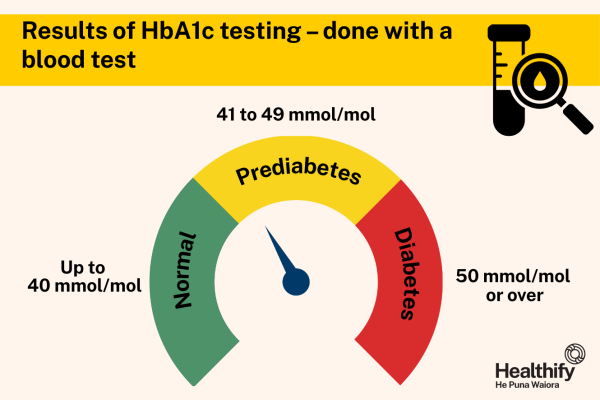
Image credit: Healthify He Puna Waiora
If you’ve been diagnosed with type 2 diabetes, the HbA1c test is also used to monitor your diabetes and to check how well controlled your blood glucose has been over the last 3 months. Read more about monitoring diabetes using HbA1c.
Sometimes HbA1c tests aren't reliable. This happens with certain blood conditions or changes in the blood system, such as bleeding, blood transfusions, iron deficiency and in late pregnancy. A different test may be used to test and monitor your blood glucose as a result. Read more about these diabetes screening and diagnostic tests.
What tests can be done to find out if I have diabetes?(external link) Diabetes New Zealand
Apps
References
- Yozgatli K et al. Accumulation of advanced glycation end products is associated with macrovascular events and glycaemic control with microvascular complications in type 2 diabetes mellitus(external link) Diabet Med. 2018 Apr 23;35(9):1242–1248.
- Type 2 diabetes management guidelines(external link) New Zealand Society for the Study of Diabetes, NZ
- Diabetes screening and diagnosis in adults(external link) Auckland Regional HealthPathways, NZ, 2025
- Type 2 diabetes management guidance – updated 2023 recommendations from the NZSSD(external link) New Zealand Society for the Study of Diabetes, NZ, 2023
How often should you have an HbA1c test?
How often an HbA1c test is done will depend on whether it’s being done for screening or monitoring.
- If you haven’t been diagnosed with prediabetes or diabetes your HbA1c should be checked from 45 years of age for men and 55 years of age for women.
- If you’re of Māori, Pacific or Indo-Asian (also called Indian or South Asian) ethnicity you should be checked from age 30 if you’re male and from 40 if you’re female.
- If you're overweight and have other diabetes risk factors, your healthcare provider may suggest earlier screening (from >18 years of age) and ongoing checks at least 3 yearly. Risk factors may include ethnicity, smoking, previous prediabetes, family history of diabetes before 40 years, and heart and blood pressure problems. Medications such as long-term steroids or antipsychotics, or a history of an organ transplant, may also lead to earlier testing.
- If you have prediabetes or diabetes in pregnancy (gestational diabetes), you should be monitored by having an HbA1c test done once a year. If you have diabetes, it’s usually done every 3 to 6 months.
Can I test my HbA1c at home?
No, you can’t test HbA1c at home, you need to have a blood test where a sample of blood is taken from a vein in your arm and sent to the lab for testing.
HbA1c test, do I need to fast?
Fasting, or not eating for a set number of hours, isn’t needed before having a blood test for HbA1c. You can eat and drink normally before you have the test.
Need help now?


Credits: Healthify editorial team. Healthify is brought to you by Health Navigator Charitable Trust.
Reviewed by: Dr Grace Lee, FRNZCGP and Clinical Educator
Last reviewed: