

If you're a frequent visitor to Healthify, why not share our site with a friend? Don't forget you can also browse Healthify without using your phone data.
Morning sickness
Key points about morning sickness
- Morning sickness in the first 12 weeks of pregnancy is very common – 50 to 66% of pregnancies are affected.
- Although feeling or being sick can be worse in the morning (hence the name) it can happen at any time, or even throughout the day.
- Morning sickness can be very unpleasant, but it's not usually harmful for mother or baby and most people feel better by 12 to 20 weeks.
- It can generally be managed with changes to what and when you eat – if not, medicine can help.
- A few people have severe morning sickness (hyperemesis gravidarum) that continues beyond 20 weeks.
- If you’re pregnant and have nausea and vomiting that’s severe and ongoing, see your lead maternity carer or usual healthcare provider.
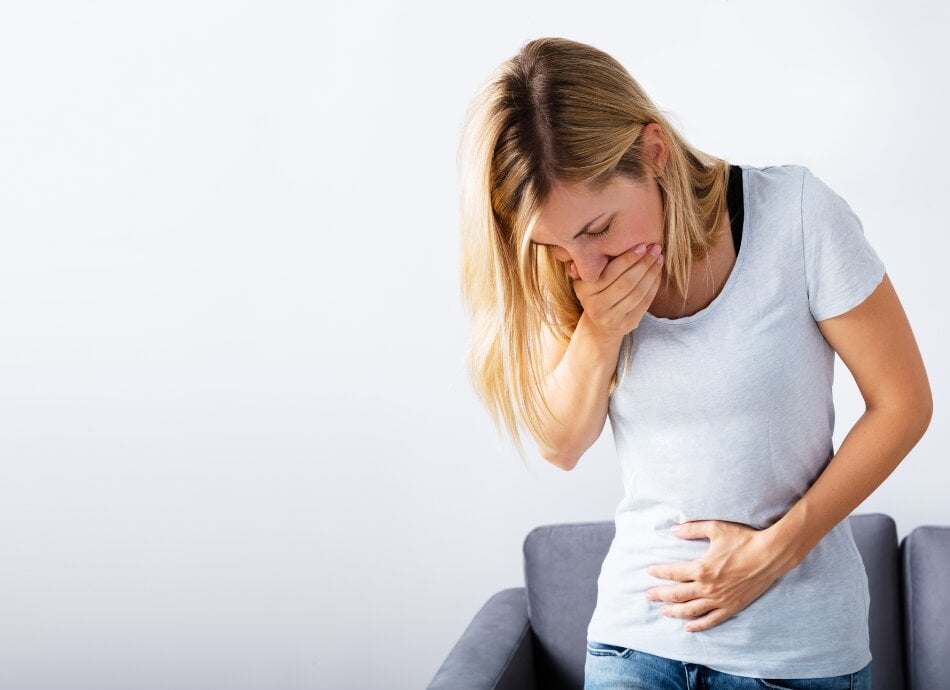
Morning sickness is when someone feels sick or vomits during pregnancy, especially in the first few months. It’s very common – about 50 to 66% of pregnant people get it, and it often happens in the morning but can happen at any time of day or night. Most people start to feel sick around week 4, and it usually gets better by weeks 12 to 20 but it can last longer.
Morning sickness isn’t usually dangerous, but if it’s severe and causes major weight loss or dehydration, it’s important to get help from your healthcare provider.
Severe morning sickness is called hyperemesis gravidarum.
Symptoms can occur at any time of the day and often include:
- nausea (feeling sick)
- vomiting (being sick)
- dry retching (like vomiting, but nothing is brought up)
- acid reflux
- sensitivity to the sight or smell of some foods, meaning they make you feel sick.
Not everyone experiences morning sickness in the same way. It's important to talk to your lead maternity carer (LMC) about how you're feeling.
It's not clear why people feel sick when they're pregnant, but the symptoms are thought to be due to a combination of factors such as:
- high levels of hormones, especially oestrogen.
- blood pressure changes during pregnancy, especially lowered blood pressure
- how your body uses energy from your food, particularly carbohydrates
- the physical and chemical changes that pregnancy triggers.
Morning sickness may be more likely to happen:
- when you have an empty stomach
- if you're stressed or tired
- if you come into contact with strong smells.
You can try these first – they often work well for mild to moderate symptoms
Eating and drinking
- Eat small, frequent snacks – an empty stomach can make nausea worse.
- Eat whenever you feel able, even small bites.
- Keep a dry snack (eg, plain crisps, crackers or plain biscuits) by your bed and eat it before you get up in the morning.
- Choose plain, bland food such as dry toast, rice, mashed potatoes, yoghurt, bananas, apples or soup
- Eat cold meals if cooking smells make you feel worse – cold food has less odour
- Avoid rich, spicy oily or very sweet foods if they trigger nausea.
- Sip fluids often throughout the day (small sips, not big gulps). Try chilled water, sparkling water, ginger ale, clear soup, ice blocks or frozen fruit pieces
- If plain water is hard to manage, add a squeeze of lemon or try oral rehydration drinks (available from pharmacies).
Toothbrushing and hygiene tips
- Brush your teeth later in the morning when nausea is less intense
- Use a child-size or soft toothbrush and mild-flavoured toothpaste
- Rinse with water or mouthwash if you can't manage toothpaste straight after vomiting – this protects your teeth.
Rest and environment
- Rest when you can – tiredness and stress make nausea worse
- Get fresh air – open a window or take gentle walks if you feel able
- Avoid strong smells such as perfumes, cooking, cleaning products or petrol
- Keep rooms cool and well-ventilated
- Ask your partner, family or friends to help with meals, chores, or caring for other children.
Natural and simple options
Many pregnant women try different thing to ease morning sickness, such as:
- ginger – ginger tea, biscuits, capsules
- vitamin B6 (pyridoxine) – ask your midwife or pharmacist before starting any supplement.
- acupressure wristbands (sold for travel sickness)
- peppermint
- chamomile.
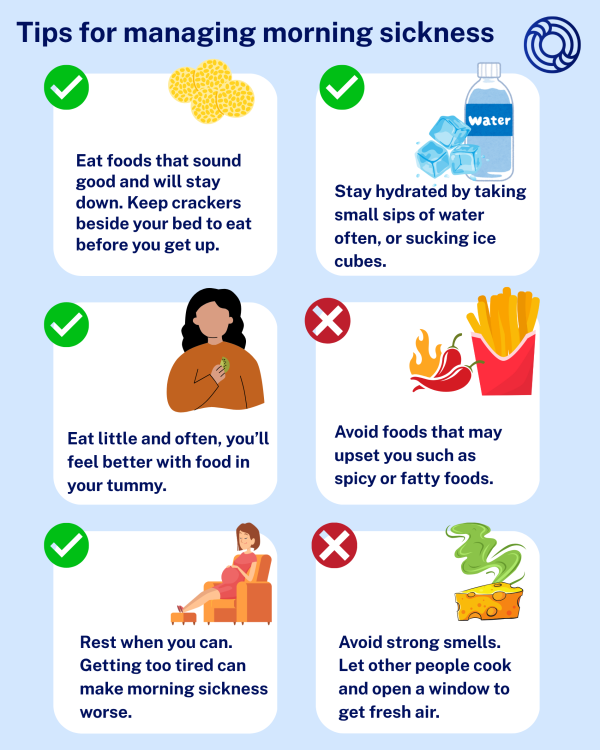
Image credit: Healthify He Puna Waiora
Video: How can I cope with morning sickness?
Midwife Kate Finch gives advice on how to deal with morning sickness. Click the image below and scroll to the bottom of the page to play video.
(external link)
(NHS, UK, 2017)
If self-care isn’t enough, talk to your midwife, healthcare provider or pharmacist. There are safe medicines used in Aotearoa New Zealand for morning sickness. See the treatment section below.
If self-care isn’t enough, talk to your midwife, healthcare provider or pharmacist. There are medicines in Aotearoa New Zealand that are safe to take for morning sickness. Read more about medicines for nausea and vomiting in pregnancy.
- Only take medicines that have been recommended by your midwife, general practice team or pharmacist. They will talk to you about the side effects as well as the potential risks and benefits for you and your baby.
- Avoid over-the-counter remedies that haven't been checked to make sure they're safe to use during pregnancy.
Specialist care
If your vomiting is severe, and you have a more serious form of morning sickness called hyperemesis gravidarum, you may need more specialist care or to go to hospital. Read more about hyperemesis gravidarum and how it's managed and find out how you know you need urgent help.
If you're vomiting and can’t keep any food or drink down, there is a chance that you could become dehydrated or malnourished.
Contact your healthcare provider or lead maternity carer (LMC) immediately if you:
- have very dark-coloured urine (pee/mimi) or don't pee for more than 8 hours
- can't keep food or fluids down for 24 hours
- feel severely weak, dizzy or faint when you stand up
- have abdominal (tummy) pain
- have a high temperature (fever) of 38°C or above
- bring up blood
- have pain when passing urine or have blood in your urine (this may be a urine infection)
- are losing weight
- get symptoms of COVID-19.
- Most morning sickness improves with simple changes and safe medicines.
- Don’t struggle alone – getting help early can stop things from becoming severe and help you feel more in control of your pregnancy.
Vomiting in pregnancy(external link) Health New Zealand | Te Whatu Ora
Nausea and vomiting(external link) New Zealand College of Midwives, NZ
Nausea and morning sickness(external link) NHS, UK
Pregnancy – morning sickness(external link) Better Health Channel, Australia
Brochures
Coping with nausea and vomiting in pregnancy(external link) The Royal Women's Hospital, Australia, 2018
Apps
References
- Nausea and vomiting(external link) New Zealand College of Midwives, NZ
- Pregnancy – morning sickness(external link) Better Health Channel, Australia, 2022
- Vomiting and morning sickness(external link) NHS, UK, 2023
- Vomiting in pregnancy (including hyperemesis gravidarum)(external link) Women’s Health Service, Christchurch Women’s Hospital, NZ, 2025
- Updated RCOG Green-Top Guideline on the management of nausea and vomiting in pregnancy and hyperemesis gravidarum(external link) RCOG, UK, 2024
- Morning sickness – nausea and vomiting of pregnancy(external link) ACOG, US, 2020
- Nausea and vomiting in pregnancy(external link) BPAC, NZ, 2011
Vomiting in pregnancy (including hyperemesis gravidarum)(external link) Women’s Health Service, Christchurch Women’s Hospital, NZ, 2025
Nausea and vomiting in pregnancy(external link) BPAC, NZ, 2011
Treatment of nausea and vomiting during pregnancy(external link) Christchurch Medicines Information Service, NZ, 2023
Need help now?

Credits: Healthify editorial team. Healthify is brought to you by Health Navigator Charitable Trust.
Reviewed by: Dr Lottie Wilson, General Practitioner, Queenstown
Last reviewed: