

You can now add Healthify as a preferred source on Google. Click here to see us when you search Google.
Eye – bleeding in the white of
Also known as a subconjunctival haemorrhage
Key points about bleeding in the white of your eye
- Subconjunctival haemorrhage is the medical name for bleeding in the white of your eye. Although this can look serious, it's usually harmless.
- Subconjunctival haemorrhage creates a bright red patch in your eye.
- It doesn't usually cause other symptoms and doesn't affect your vision.
- No treatment is needed and it will clear itself in about 2 weeks.
- You may need to see your healthcare provider if it keeps happening.
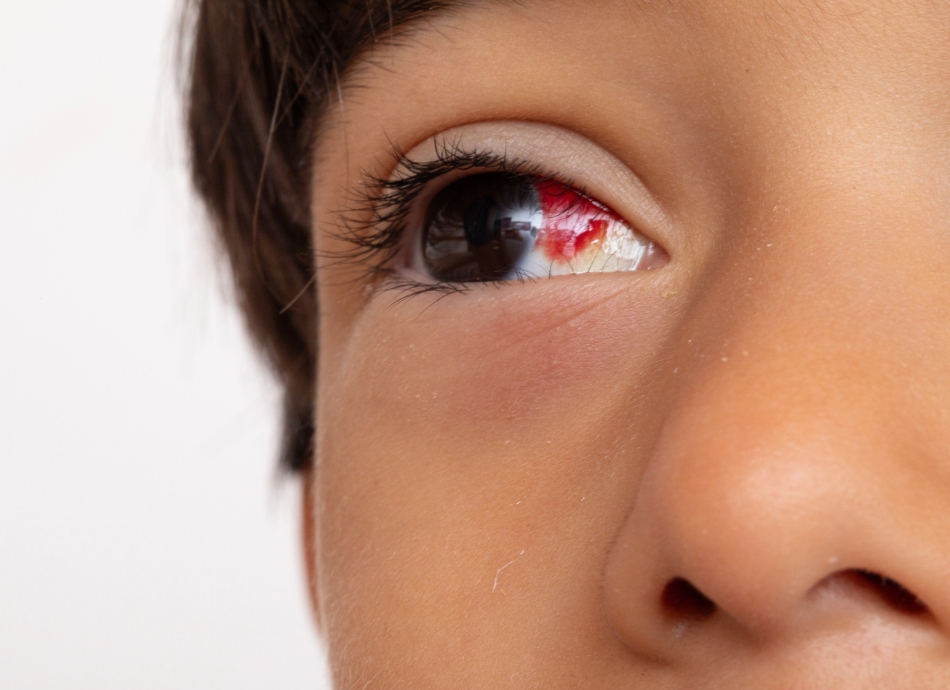
Subconjunctival haemorrhage is the medical name for bleeding in the white of your eye. It can look serious, but it's usually harmless.
You get a bright red patch in your eye due to bleeding from small blood vessels, but you don't usually get any other symptoms and it doesn't affect your vision.
Treatment isn't needed and the redness goes away in about 2 weeks. You may need to see your healthcare provider if it keeps happening.
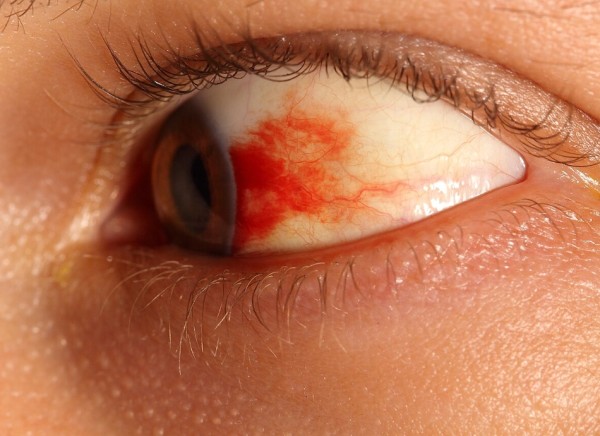
Image credit: Daniel Flather via Wikimedia Commons(external link)

There are many blood vessels that run in between your conjunctiva (the clear surface of your eye) and sclera (the white of your eye). Subconjunctival haemorrhage happens when some of these tiny blood vessels burst and bleed.
In most cases, there isn't a clear cause, but causes can include:
- an eye injury or head injury
- coughing, sneezing or vomiting (being sick)
- eye rubbing
- high blood pressure
- a bleeding disorder or a tendency to bleed easily
- medicines such as an anticoagulant (eg, aspirin)
- strenuous activity where you might be straining, such as heavy lifting.
Actions such as coughing, sneezing and straining can briefly raise your blood pressure which is why the capillaries (tiny blood vessels) in your eye might burst. Subconjunctival haemorrhages seem to occur more often in older adults – especially those with vascular conditions such as high blood pressure – and can also be quite common in newborn babies.
Bleeding in the white of your eye usually causes no symptoms other than the red patch. Occasionally you can feel some mild irritation, but you’re not likely to notice it until you look in a mirror. It doesn't affect your vision as the central part of your eye is not affected.
No treatment is needed. It'll fade and clear itself in about 2 weeks. However, see your healthcare provider if you:
- haven't had your blood pressure checked recently
- think an eye injury or a flying object caused it
- have bleeding in other parts of your body
- keep having subconjunctival haemorrhages.
If your eye is irritated you could use artificial tears to soothe it.
There are things you can do to reduce the risk of broken blood vessels in your eyes, and eye injuries in general.
- Avoid rubbing your eyes.
- Keep your contact lenses clean.
- Wear protective eyewear for sports, DIY and work.
- See your healthcare provider if you have a bleeding condition.
Subconjunctival haemorrhage | Ikura ki te whatu(external link) Health New Zealand | Te Whatu Ora, 2025
Subconjunctival haemorrhage(external link) Patient Info, UK
What is a subconjunctival haemorrhage?(external link) American Academy of Ophthalmology, US
References
- Unilateral red eye(external link) Auckland Regional HealthPathways, NZ, 2019
- Subconjunctival haemorrhage(external link) Patient Info Doctor, UK, 2022
The unilateral red eye(external link) GPeyes, NZ
‘The Eyes Have It’(external link) University of Michigan Kellog Eye Centre, US – this is an interactive resource from the University of Michigan Kellog Eye Centre about disorders of the eyes and visual system.
Need help now?



Credits: Healthify editorial team. Healthify is brought to you by Health Navigator Charitable Trust.
Reviewed by: Dr Grace Lee, FRNZCGP and Clinical Educator
Last reviewed: